Multi-technicians: how to efficiently organize complex interventions?
- 17/12/2025
- 15:41
reading time : 2 min

Content Marketing Manager
Some field operations require the mobilization of several technicians, sometimes from different teams or complementary professions. In this context, organizing multi-technician missions becomes a major challenge in order to guarantee quality of execution, control deadlines, and optimize costs.
Companies have to deal with a variety of constraints: team availability, required skills, location, equipment, site access, and regulatory deadlines. Traditional planning tools quickly reveal their limitations. Let’s take a look at the main challenges encountered and the solutions available to improve team coordination, with a focus on the example of Dalkia, a recognized player in the management of complex technical assignments.
Tables of Contents

The Challenges of Multi-Team Interventions
Managing a multi-technician intervention raises several operational challenges. These constraints directly impact how the assignment unfolds, the time spent on site, and customer satisfaction.
Coordinating Multiple Roles
Complex interventions often require the involvement of complementary profiles: specialized technicians, subcontractors, maintenance teams, or subject-matter experts. Coordinating technicians and field teams therefore requires a clear view of roles, tasks, and dependencies. Poor coordination between teams can lead to delays, duplicated efforts, or information loss.
Managing Availability Constraints
Each technician has their own schedule. While manageable individually, these calendars become difficult to synchronize when three, four, or five people need to be mobilized within the same time slot. Last-minute changes further increase this challenge, especially when requirements evolve or a specific skill set is needed.
Ensuring Skills Consistency
A multi-technician intervention relies on assigning the right resources. Companies must ensure alignment between available skills and planned interventions. This task often resembles a complex puzzle, particularly when complex intervention management relies on spreadsheets or non-specialized tools.
Optimizing Travel
Interventions involving multiple teams require coordinated travel. Poor planning can result in unnecessary trips or inefficient use of time. Cost control therefore depends on better resource allocation and intelligent grouping of assignments.
Ensuring Smooth Communication
Communication between planners, technicians, and clients must be seamless. Any information breakdown or poor handover can create on-site inconsistencies, slow down the intervention, or require a return visit. Real-time communication becomes essential to ensure accurate tracking and follow-up of the assignment.
SaaS Solutions for Resource Coordination
To address these challenges, companies are increasingly relying on specialized digital solutions. SaaS tools for mobile workforce scheduling automate a large part of coordination tasks, improve operational visibility, and reduce organizational errors. These tools notably provide:
A Consolidated View of Resources
An FSM platform offers an overall view of skills, availability, service areas, and priority levels. Planners can quickly identify available teams and build coherent groups based on site requirements.
Intelligent and Automated Scheduling
Dedicated tools automatically suggest the best combinations of technicians based on available time slots, distances, and skills. Multi-team FSM software thus becomes a reliable decision-support tool. These features help reduce planning time and limit on-site disruptions.
Real-Time Coordination
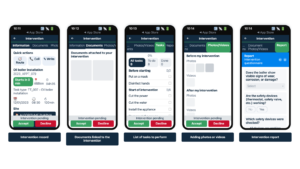
Mobile solutions allow technicians to access their schedules, key information, and required documents. At the same time, planners can monitor mission progress in real time, make adjustments when needed, and manage incidents. Communication is centralized and simplified.
Clear Traceability and Reporting
The capture of field data (time spent, tasks completed, photos, signatures, parts used) feeds into accurate reporting. This information is valuable for performance tracking, intervention documentation, and meeting regulatory requirements.
Focus: Nomadia FSM
Nomadia offers a solution designed to optimize field operations management. Nomadia Field Service Management enables organizations to:
Identify available resources and assign them based on their skills;
Plan complex interventions while integrating business-specific constraints;
Monitor missions in real time and manage unexpected events;
Provide field teams with a complete mobile environment to simplify their work;
Analyze performance and identify areas for improvement.
This approach aligns with current trends observed in Field Service Management.
Multi-technician interventions represent a real organizational challenge when they involve diverse skill sets, busy schedules, and multiple operational constraints. Without the right tools, coordination quickly becomes complex, potentially impacting quality, timelines, and customer satisfaction.
By relying on a modern, specialized FSM platform, companies can turn this complexity into a performance driver: improved resource visibility, optimized scheduling, real-time coordination, and more informed decision-making.

Dalkia Customer Case
Dalkia manages energy installations on a daily basis across a wide variety of sites, including public buildings, office properties, industrial sites, and healthcare facilities. These critical environments require flawless coordination between multiple specialized technicians, each operating under their own safety, accessibility, and regulatory constraints.
To ensure smooth mission execution, the company must orchestrate diverse skills in real time: heating engineers, HVAC technicians, automation specialists, safety experts, and more. Multi-technician scheduling thus becomes a strategic lever to reduce return visits, secure regulatory compliance, and guarantee consistent service quality across the entire asset portfolio.
Thanks to the Nomadia SaaS solution, Dalkia now benefits from:
A unified and up-to-date view of available resources;
Optimized scheduling that accounts for each technician’s skills, certifications, and constraints;
Simplified field management through the mobile application, enabling smooth handling of unexpected issues;
Reliable data capture, essential for reporting, contractual commitments, and continuous improvement.
This organization strengthens operational performance: faster interventions, reduced unnecessary travel, improved traceability, and stronger coordination between teams. The Dalkia case perfectly illustrates the value of an FSM solution in structuring and optimizing complex multi-technical operations, while supporting skill development and technician efficiency.
Go Further with Nomadia
Frequently Asked Questions
FAQ – The Most Frequently Asked Questions About Nomadia
Why Choose Nomadia?
As France’s leading publisher of Smart Mobility SaaS solutions, Nomadia supports more than 175,000 field professionals every day. Our solutions are easy to use, quick to deploy, and deliver significant and immediate return on investment.
Drawing on the expertise of both a software publisher-integrator and a consulting firm, Nomadia’s teams provide tailored support, from data consulting to the deployment of mobile devices. Finally, our technical support team is available 24/7 to assist you.
Who Are Nomadia Solutions Designed For?
Nomadia solutions support the digital transformation of all mobile professionals: field sales representatives, delivery drivers, technicians, auditors, healthcare workers, inspectors, service providers, security patrol officers, experts, and more.
Whether for SMEs or large enterprises, our solutions adapt to businesses of all sizes and across all industries.
How Much Does It Cost?
Nomadia Delivery offers transparent and flexible pricing, which primarily depends on the number of users (for example, planners and dispatchers) rather than a fixed cost per parcel.
Thanks to this model, you can control your delivery costs based on the number of resources (users) involved in route management, providing great flexibility to adjust your subscription according to the size of your fleet and your operational needs.
Is It Compatible with My Current ERP System?
Yes! Nomadia Delivery has been designed to integrate quickly and easily into your existing environment thanks to our powerful and secure APIs. Our solution is compatible with most ERP systems on the market. API integration enables the automatic synchronization of your transport orders, customer orders, and customer information, ensuring smooth and error-free delivery tracking. The solution also offers user-friendly import capabilities with data validation controls, as well as export options in multiple customizable formats.
Is It Suitable for Our Delivery Volume?
Yes, Nomadia Delivery is ideal for companies that manage a high volume of deliveries and want to optimize their routes, create balanced territories for their drivers, and ensure precise tracking of every parcel. Nomadia Delivery adapts to fleets of all sizes!
Can Multiple Warehouses or Depots Be Managed?
Yes, our solution allows you to manage multiple warehouses or depots. It centralizes data and optimizes routes or service operations for each of them.
Is There a Limit to the Number of Stops in Route Optimizations?
No, there is no strict limit to the number of stops in route optimizations. Our solution can handle large volumes of stops and quickly calculate optimized routes.
Project, request for a demonstration or a free trial?