
Interview: How to Reignite Your Sales Representatives' Passion for Prospecting

reading time : 2 min

Picture of Lucie Monnot
Lucie Monnot

Content Marketing Manager

We sat down with Nicolas Caron on the occasion of the release of Lève-toi et prospecte! (Get Up and Prospect!) — a book that puts prospecting back at the heart of the sales profession and (re)ignites in sales representatives the desire to win new customers. At a time when every company is seeking to bounce back in a context of health crisis that is upending the economic landscape, it is an understatement to say the subject is timely.
Nicolas Caron co-founded and led Halifax Consulting for 17 years, one of France’s leading sales training firms. The author of numerous books, he now devotes himself to writing and speaking at conferences for sales audiences. His website: https://nicolascaron.fr

Table of Contents

Entretien commercial redonner le goût de la prospection

Why this new book? And why prospecting?

Nicolas Caron — The first real reason is that I was absolutely delighted by the reception my previous book received — Lève-toi et vends! (Get Up and Sell!). All my other books were well received, but never like that one: for three years now I have been receiving messages every day from people thanking me. It is an immense pleasure and it motivated me to do it again.
 
The theme of prospecting imposed itself: in 30 years of my career, I have seen thousands of sales representatives, and prospecting is the thing that causes them the most anxiety and stress. Many do everything they can to avoid this part of the job, when it should be the most exciting: you are wearing your company’s jersey, you are bringing in new customers — it is a fantastic thing to do! It is like being a centre-forward in football, the one who scores the goals. But no, people find it complicated and tie themselves in knots instead of just getting on with it.
 
Since there are very few books on this subject, and especially very few books that actually make you want to prospect, I told myself there was a great challenge to take on: giving sales representatives the keys to rediscovering their enthusiasm and dedicating a meaningful — rather than incidental — portion of their time to prospecting, which should be their number one concern.

One of the first pieces of advice you give in the book is "Forget your prospecting targets." That is unlikely to go down well with sales managers and directors...

I would hope it makes them sit up and take notice, and that they make their own the maxim I repeat wherever I go: in sales, the result is not within your control. Even excellence does not guarantee the result. If the customer has decided to say no, they will say no, even if the sales representative was excellent.
By chasing after something they cannot control — the customer’s agreement or refusal — sales representatives put themselves in a state of anxiety that either makes them aggressive, out of fear of losing a sale, or turns them into sales beggars. These are not the most favorable attitudes for inspiring desire and confidence in a customer or prospective customer. Yet that is precisely what it is all about.
 
If the result is not within your control, what is within your control is the journey. The point of my advice is to focus on the journey, not the results. It is like in sport: it is not by focusing on the result that you achieve better results. On the contrary. It is the people who completely detach themselves from results but who, tirelessly, work on their technique, who achieve great outcomes. So, throughout the book, I explain how, by implementing simple daily actions, any sales representative can create and continuously feed what I call their personal “DistiLead©”.
Optimice la sectorización con IA y Nomadia Territory Manager
I tell sales representatives: “Don’t focus on the deals you’re going to sign this month. Instead, tell yourself it would be good to have at least 2 or 3 new first contacts per week.” If you do this every week, a mechanism inevitably kicks in. This amounts to setting yourself process objectives rather than outcome objectives — and from experience, I can tell you it pays off.
 
To come back to the sales manager: it seems entirely legitimate to me that they verify the quality of the means implemented by their sales representatives. Just as I have never blamed a sales representative for losing a deal when they had done everything possible, I would never blame a manager for monitoring their team’s activity indicators. Sales representatives are there to generate business; it is normal to expect a certain frequency of calls and appointments from them. There are activity benchmarks in this profession and they must be respected.

In many organizations, sales representatives are fed leads by dedicated lead generation teams. How has this changed the sales profession? Does it absolve them of any need to prospect?
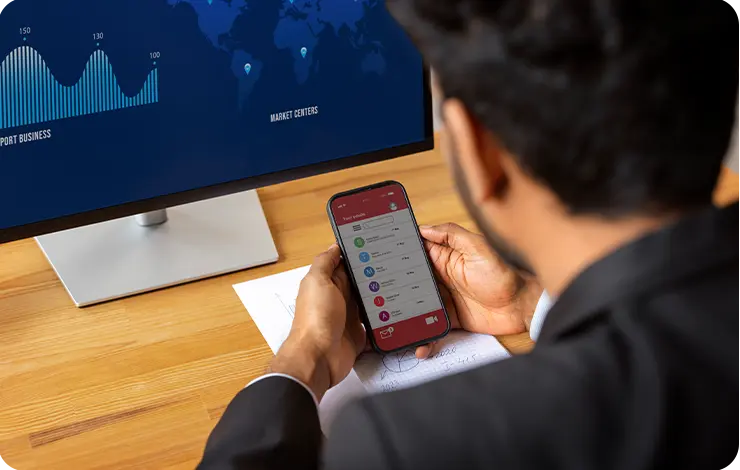
Sales tracking tool make the right choice
Things have not changed as much as one might think. When I was a young sales representative in the 1990s, I worked for a company that sold employee savings plans. At the time, there was no lead generation, no inbound marketing. What did they give us? Response coupons — paper coupons that customers interested in employee savings would fill in and send back to us by post. It was up to us, the sales representatives, to call them and convert. The second source of leads was trade shows — still the case today. The third was advertising. That also remains true. The moral of the story: techniques have evolved, but the objective of lead generation for sales teams is nothing new.
 
 
What happened with the contacts generated? More or less the same thing as today: sales representatives were happy to have leads falling from the sky, while not hesitating to criticize them when they were not exactly on target. And the more leads we were given, the less we felt obliged to prospect.

Back then, we already made the distinction between “hunters” and “farmers.” For me, a sales representative who does not bring in new customers is not a sales representative. They are someone from customer services! Yes, I am being harsh, but I think we are often too indulgent with sales teams. Everyone says that signing new customers is the noble part of the job. It is obviously the most rewarding. But you still have to go out and find those customers! And to do that, to bring in business regularly, you not only need to take the leads that marketing gives you, but also develop your own network and generate your own contacts. You need to do both, methodically and consistently.

The health crisis forced video calls on everyone. This medium offers many advantages for sales teams, but can it replace face-to-face meetings?

Video calling is a tremendous advance. It saves an incredible amount of time and, when done well, it is great. But — and I write this in the opening pages of Lève-toi et prospecte! — my conviction is that the best way to do business, to build a relationship, to “feel” the other person, is and will always be face-to-face. It is in person that you can best “listen to what the air is saying,” as they say in Japan.
 
Now that video calls have become the norm, we have an antidote to the “36% syndrome” — the idea that sales representatives rarely spend more than a third of their time actually selling, partly due to travel. In practice, this means more appointments, more productive time. Today, by necessity, everything is done by video, and it must be said that we are reaching saturation. Once the crisis is over, things will rebalance, but sales organizations will be more vigilant than ever about the return on time invested in field visits. This will require sales representatives to do two things: be more selective about which customers they visit in person and optimize their visit routes.

Occupational Risk Assessment Effective Application

There will be a window of opportunity when health restrictions are lifted: the thirst for conviviality and social interaction is such that the sales representatives who offer to visit their prospects in person will stand out and score points. A sales director who, for accounting reasons, tells their team “from now on everything is done by video” would miss this opportunity.

Sales representatives often complain about spending too much time filling in the CRM and doing reporting. Is this a real issue or a false problem?
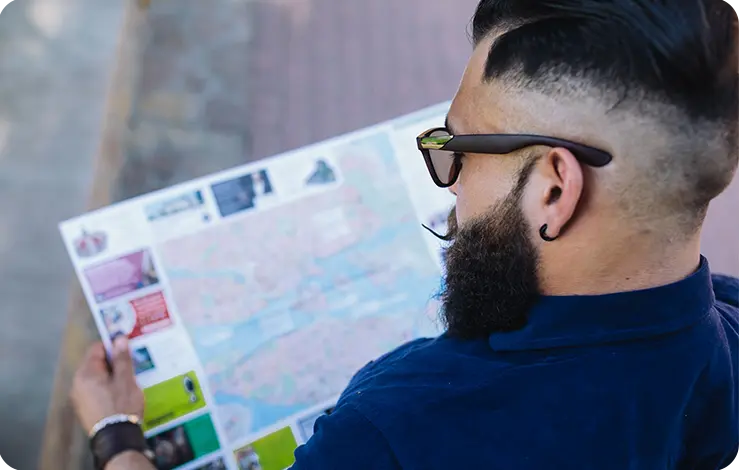
Geographic Information System Software The Guide
Companies where sales representatives happily fill in their CRM are very rare! I see two reasons for this. The first is that many sales representatives consider that customers are their customers rather than the company’s, so they put very little in the CRM because they do not want to share. For me, that is unacceptable. But — and this is the second reason — sales representatives are often asked to put things into the CRM that are not useful for their own sales effectiveness. If the CRM is primarily a reporting and profitability monitoring tool, it is a tool for the accountants, not for the sales representatives!
 
In other words, if you cannot convince your sales representatives to fill in the CRM, it is probably because they do not see what it brings them. This is true of all tools: we only take ownership of them and use them if we find a benefit in them. If someone gives me a tool that helps me organize my days, my appointments, and my travel in a few clicks, of course I am going to use it!

Since we are talking about tools and commercial prospecting, I encourage sales representatives to take an interest in video email and SMS and the platforms that offer this service. It is still little known and even less used in France, unlike in the United States. Instead of sending a standard email to your prospect, you send them a link to a short video where you address them personally, face to camera — to say, for example, that you have just visited one of their outlets and were extremely well received. You film yourself in front of the outlet in question, with the logo clearly visible on the thumbnail that appears in the email or SMS. I do not know a single outlet owner who would resist the temptation to watch the video! It is a tool as enjoyable as it is effective, to add to your arsenal of relationship-building tools.

What would be your 3 pieces of advice for a sales representative joining a new company? And the 3 pieces of advice you would give to their manager?

For the sales representative, I would say:
1/ Get close to the best performers. If we are talking about prospecting, this means getting close to those who bring in the most new customers. Since they are rarely numerous, they are easy to spot. Talk to them, observe their approach, what they put into practice, what their attitude is. And at the same time, of course, stay away from the doom-and-gloom crowd!
2/ Develop a deep understanding of the genuine benefits of the product you need to sell. If you make this effort, you will be in a completely different position when you prospect: you will not be calling your prospects to hit a target, you will be calling them to be of service, because you are genuinely convinced that you can help them. And you will convince them!
3/ Beware of social media and the legends of social selling! Whatever people say, the best sales representatives are not the ones you see most on LinkedIn. They are the ones who pick up the phone and make the effort to call. Again, there is no need to be binary about it. Of course you need to be on social media and make yourself visible there. But it will never replace meeting people in person, calling them, genuinely talking with them. I see too many young sales representatives wasting considerable time on social media, fooling themselves. Before generating leads and sales through this medium, you first need to have built real brand recognition. That does not happen overnight. And it is built first and foremost in real life.
For the manager:
1/ Clear the path for your sales representatives. You cannot blame a sales representative for not prospecting if you are asking them to do a thousand other things all day. Do not pile on contradictory demands. You must protect your sales representatives’ productive time so they can devote as much of it as possible to what they are paid to do.
2/ Raise the bar. Aim for sales excellence. Doing the sales job in a mediocre way is truly painful and frustrating. One of a manager’s missions is to stimulate excellence, to help sales representatives understand that this is how they will genuinely enjoy the job. Raising the bar also means not placing the entire burden of prospecting on the youngest or most recently hired members of the team. This kind of hazing exists in many organizations. Meanwhile, the old hands live off the clients they have had for 5 or 10 years. It is absurd and unfair to entrust to the least experienced what is supposedly the most difficult task. The manager’s role is also to restore the nobility of prospecting. There should be no exemptions: everyone must have conquest targets.
3/ Play! It is not by applying constant pressure that you perform better. Selling is a game of seduction. You have to learn to lose. When you lose a deal, it is not a catastrophe. You just need to win more than you lose.
I dare say the world has become too serious. We sell “sadly.” It becomes oppressive. We want to format sales representatives, to clone them, and then we ask them to make a difference with the customer. Since selling is a game, you have to play, have fun, celebrate successes — big and small alike. Fun never killed anyone. On the contrary!

         Project, request for a demonstration or a free trial?

Frequently Asked Questions

FAQ – The Most Frequently Asked Questions About Nomadia

Why Choose Nomadia?

As France’s leading publisher of Smart Mobility SaaS solutions, Nomadia supports more than 175,000 field professionals every day. Our solutions are easy to use, quick to deploy, and deliver significant and immediate return on investment.

Drawing on the expertise of both a software publisher-integrator and a consulting firm, Nomadia’s teams provide tailored support, from data consulting to the deployment of mobile devices. Finally, our technical support team is available 24/7 to assist you.

Who Are Nomadia Solutions Designed For?

Nomadia solutions support the digital transformation of all mobile professionals: field sales representatives, delivery drivers, technicians, auditors, healthcare workers, inspectors, service providers, security patrol officers, experts, and more.

Whether for SMEs or large enterprises, our solutions adapt to businesses of all sizes and across all industries.

How Much Does It Cost?

Nomadia Delivery offers transparent and flexible pricing, which primarily depends on the number of users (for example, planners and dispatchers) rather than a fixed cost per parcel.

Thanks to this model, you can control your delivery costs based on the number of resources (users) involved in route management, providing great flexibility to adjust your subscription according to the size of your fleet and your operational needs.

Is It Compatible with My Current ERP System?

Yes! Nomadia Delivery has been designed to integrate quickly and easily into your existing environment thanks to our powerful and secure APIs. Our solution is compatible with most ERP systems on the market. API integration enables the automatic synchronization of your transport orders, customer orders, and customer information, ensuring smooth and error-free delivery tracking. The solution also offers user-friendly import capabilities with data validation controls, as well as export options in multiple customizable formats.

Is It Suitable for Our Delivery Volume?

Yes, Nomadia Delivery is ideal for companies that manage a high volume of deliveries and want to optimize their routes, create balanced territories for their drivers, and ensure precise tracking of every parcel. Nomadia Delivery adapts to fleets of all sizes!

Can Multiple Warehouses or Depots Be Managed?

Yes, our solution allows you to manage multiple warehouses or depots. It centralizes data and optimizes routes or service operations for each of them.

Is There a Limit to the Number of Stops in Route Optimizations?

No, there is no strict limit to the number of stops in route optimizations. Our solution can handle large volumes of stops and quickly calculate optimized routes.

nomadia logo

Geoconcept becomes Nomadia

Geoconcept brands are officially
evolving into Nomadia

nomadia logo

TourSolver becomes
Nomadia TourSolver