Last-Mile Logistics: Key Trends for 2025

reading time : 2 min

Picture of Lucie Monnot
Lucie Monnot

Content Marketing Manager

In 2025, last-mile logistics players will need to accelerate across several key areas to satisfy both clients and consumers. What services, technologies, and delivery methods should be prioritized to meet the challenges of a year that is not shaping up under the best of circumstances?

Table of Contents

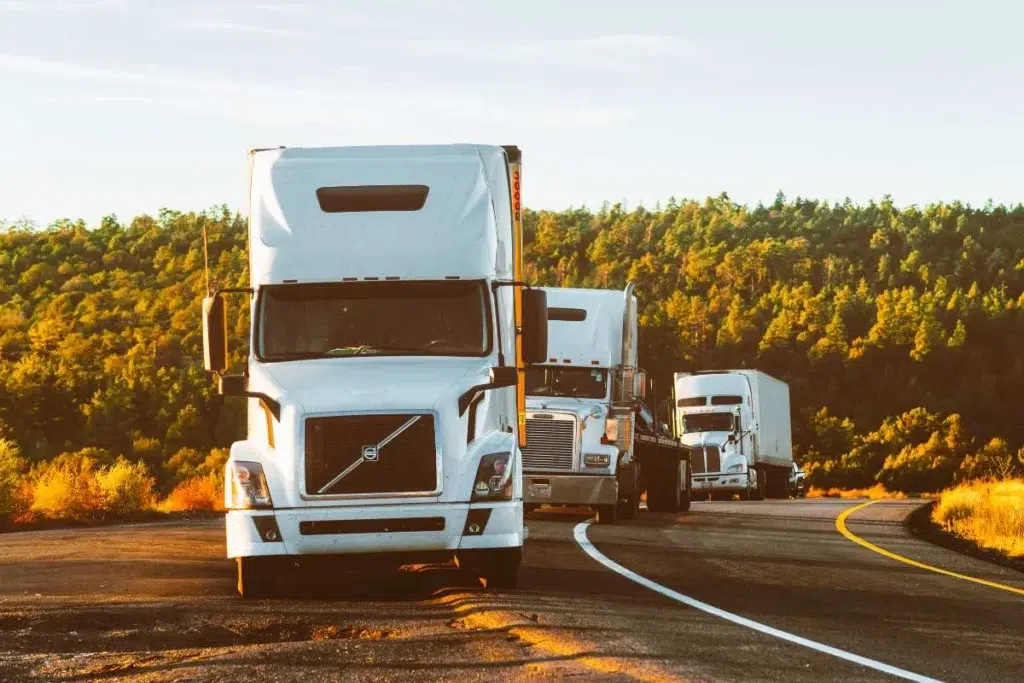
Flotte de camions circulant sur une route pour assurer le transport et la distribution des marchandises

A challenging context

Faced with an ocean of uncertainties — political, economic, fiscal, social, institutional, geopolitical — professional organizations in the transport and logistics sector are being extremely cautious in their forecasts for 2025. The consensus centers on the following:
  • The stabilization of inflation will continue, but will probably not be enough to revive general household consumption which, structurally, drives the French economy. Political instability and the deterioration of the social climate are amplifying wait-and-see behavior and fueling a loss of confidence, as evidenced by the rebound in the household savings rate to 18% of gross income at the end of 2024 (INSEE).
  • The stagnation of demand is likely to persist, with the consequence that in the logistics sector, overcapacity in warehousing and goods transport is mechanically pushing prices downward, while non-fuel costs remain on an upward trend (wages, vehicle maintenance, insurance, tolls, etc.). The profitability of companies, and therefore their viability, is inevitably weakened as a result.
  • Business failures are expected to increase, particularly in road freight, where over the period January to September 2024 they jumped by 37.8% compared to the same period in 2023. Concretely, of the 1,339 failures recorded, 939 ended in compulsory liquidation — with small structures of fewer than 10 employees being the most affected (source: Altarès — Upply). Observers’ concerns for 2025 relate to the deterioration of companies’ repayment capacity, which limits their access to credit and therefore their ability to invest.

E-commerce escapes the surrounding gloom

If the picture above gives little cause for optimism, one positive trend — essential for the activity and development prospects of last-mile players — deserves to be highlighted: e-commerce is doing well!

Over the first 9 months of 2024, online sales of products and services totaled €128 billion in revenue, representing growth of 9.6% compared to the first three quarters of 2023 — significantly above GDP growth (Fevad).
The third quarter marked the return of double-digit growth and, above all, confirmed the recovery in product sales that began in the first quarter. It is worth noting that, for the first time in 10 consecutive quarters, the change in the number of non-food product orders turned positive (+1%).
The strong figures from Black Friday and Black Week 2024 — with an 11% increase in online transactions compared to 2023 — provide grounds for hoping for a good fourth quarter and a promising 2025 for all those who, throughout the year, handle the routing, distribution, and delivery of e-commerce orders.

This will require these players to have at their disposal all the human and technical means to carry out these missions in line with the expectations of clients and consumers, while protecting their profitability.

Making optimization a priority

In 2025, carriers will need more than ever to secure their revenue and, above all, control their costs to protect their margins. The technologies that enable them to optimize their workforce, vehicle fleet, fleet utilization rate, and delivery routes are becoming an indispensable investment in order to:
  • Minimize the impact of demand stagnation on their business;
  • Maintain attractive prices in a rather declining market by planning routes designed to reduce kilometers traveled and fuel consumption;
  • Facilitate the use of subcontracting to handle activity peaks without increasing fixed costs;
  • Rationalize the size and composition of their fleet through enhanced capacity to analyze operational data.

Prioritizing out-of-home delivery

Home delivery remains the preferred option for French consumers, but — as across Europe — it has been losing ground for several years in favor of out-of-home delivery, which now accounts for 46% of e-commerce deliveries (Toluna Harris Interactive — Fevad survey, 2024).
Relay points lead the way, capturing nearly half of out-of-home deliveries (45%) thanks to increasingly extensive and comprehensive networks, including in rural and peri-urban areas. When it is not free, collection from a relay point is generally the cheapest delivery option offered by online retailers. It is also the most convenient solution for buyers, as they can choose the relay point that suits them and collect their parcel when they want or are able to, thanks to the broad opening hours of most relay points.
Automated lockers and click-and-collect share the other half of out-of-home deliveries, with automated lockers developing very rapidly — an option that is even more flexible than relay points for buyers, especially when the lockers are installed outdoors and accessible 24 hours a day.
It is no coincidence that all the major players in parcel distribution and delivery (Mondial Relay, La Poste/PickUp, Amazon, Vinted…) are investing in the installation of automated lockers. It should be noted that with fewer than 30,000 lockers at the end of 2024, France’s stock remains far below that of the United Kingdom, where it exceeds 300,000. The larger the locker stock and the better the territorial coverage, the more inclined customers will be to choose this delivery method — which enables carriers to:
  • Concentrate flows, as lockers and relay points drastically reduce the number of addresses to serve;
  • Reduce the number of vehicles on the roads;
  • Increase the number of fixed routes;
  • Minimize empty return journeys by collecting orders returned by customers;
  • Free themselves from time constraints.
All of this translates into minimized costs and contributes to maintaining attractive pricing — given that delivery price remains the top priority criterion for 55% of online shoppers, ahead of delivery times (27%) (Toluna Harris Interactive — Fevad, 2024).

Diversifying delivery options

While out-of-home delivery is on the rise, it obviously does not suit all product categories — particularly bulky items such as furniture, household appliances, or bicycles. Whether for out-of-home or home delivery, it is essential to understand that customers now want to have a choice of delivery terms. The survey conducted by SendCloud across 4 countries (France, Germany, the United Kingdom, and the Netherlands) shows that preferences vary significantly by country.
It is worth noting the French preference for next-day delivery — which is very demanding from a logistics perspective — and the importance they place on being able to choose the date and time of their deliveries, which complicates shipment planning and route organization.

Meeting the ecological imperative

Finally, consumers are increasingly sensitive to the ecological impact of the delivery of their online purchases. According to the SendCloud survey, this concern is particularly pronounced among French consumers — more than 47% of whom consider this issue to be important or very important, compared to 37% of Dutch, 39% of German, and 44% of British consumers.
17% of French consumers say they are prepared to make a financial effort in order to benefit from “green” delivery — electric vehicles or, better still, bicycles or cargo bikes (Toluna Harris Interactive — Fevad survey, 2024). This last option, rightly considered the most virtuous, is set to gain further ground thanks to the structuring of a genuine cycle-logistics sector supported by public authorities. To date, 200 cycle-logistics companies operate on behalf of third parties in 74 cities, and their activity is consolidating thanks to the development of next-generation infrastructure. In Paris, the Gobelins logistics hub — to be delivered in the first half of 2025 — is a good example. Entirely dedicated to urban distribution and last-mile delivery, it will accommodate both 44-tonne trucks and cargo bikes for B2B and B2C deliveries. This type of infrastructure is decisive for increasing the number of players (shippers and carriers) capable of offering environmentally responsible urban deliveries to their customers.

And what about AI?

Everything you read about important trends for the logistics sector gives AI a prominent place. You may wonder why we are only addressing the subject at the very end of this post. The answer is simple: for us, as software publishers, AI is not a trend — it has long been at the heart of all the services and software that Nomadia develops to help companies in transport and logistics operate in a socially responsible, ecologically sustainable, and economically profitable way. And if you want to join the companies that are managing to combine all three of these dimensions in 2025, now is the perfect time to discuss it with our experts!


Frequently Asked Questions

FAQ – The Most Frequently Asked Questions About Nomadia

Why Choose Nomadia?

As France’s leading publisher of Smart Mobility SaaS solutions, Nomadia supports more than 175,000 field professionals every day. Our solutions are easy to use, quick to deploy, and deliver significant and immediate return on investment.

Drawing on the expertise of both a software publisher-integrator and a consulting firm, Nomadia’s teams provide tailored support, from data consulting to the deployment of mobile devices. Finally, our technical support team is available 24/7 to assist you.

Who Are Nomadia Solutions Designed For?

Nomadia solutions support the digital transformation of all mobile professionals: field sales representatives, delivery drivers, technicians, auditors, healthcare workers, inspectors, service providers, security patrol officers, experts, and more.

Whether for SMEs or large enterprises, our solutions adapt to businesses of all sizes and across all industries.

How Much Does It Cost?

Nomadia Delivery offers transparent and flexible pricing, which primarily depends on the number of users (for example, planners and dispatchers) rather than a fixed cost per parcel.

Thanks to this model, you can control your delivery costs based on the number of resources (users) involved in route management, providing great flexibility to adjust your subscription according to the size of your fleet and your operational needs.

Is It Compatible with My Current ERP System?

Yes! Nomadia Delivery has been designed to integrate quickly and easily into your existing environment thanks to our powerful and secure APIs. Our solution is compatible with most ERP systems on the market. API integration enables the automatic synchronization of your transport orders, customer orders, and customer information, ensuring smooth and error-free delivery tracking. The solution also offers user-friendly import capabilities with data validation controls, as well as export options in multiple customizable formats.

Is It Suitable for Our Delivery Volume?

Yes, Nomadia Delivery is ideal for companies that manage a high volume of deliveries and want to optimize their routes, create balanced territories for their drivers, and ensure precise tracking of every parcel. Nomadia Delivery adapts to fleets of all sizes!

Can Multiple Warehouses or Depots Be Managed?

Yes, our solution allows you to manage multiple warehouses or depots. It centralizes data and optimizes routes or service operations for each of them.

Is There a Limit to the Number of Stops in Route Optimizations?

No, there is no strict limit to the number of stops in route optimizations. Our solution can handle large volumes of stops and quickly calculate optimized routes.

nomadia logo

Geoconcept becomes Nomadia

Geoconcept brands are officially
evolving into Nomadia

nomadia logo

TourSolver becomes
Nomadia TourSolver