
Logistics outsourcing: definition, challenges, and impacts for businesses
- 26/02/2026
- 16:42
reading time : 2 min

Content Marketing Manager
In an increasingly competitive and digitalized economic environment, companies are seeking to become more efficient and agile. Logistics outsourcing is emerging as an appropriate response to these challenges: by entrusting all or part of their supply chain to specialized service providers, they can refocus on their core business while optimizing their operations.
More than just delegation, logistics outsourcing improves performance, controls costs, and allows for better adaptation to market changes. Nomadia offers comprehensive insight into the challenges, activities involved, and advantages and limitations of logistics outsourcing.
Table of Contents
What is logistics outsourcing?
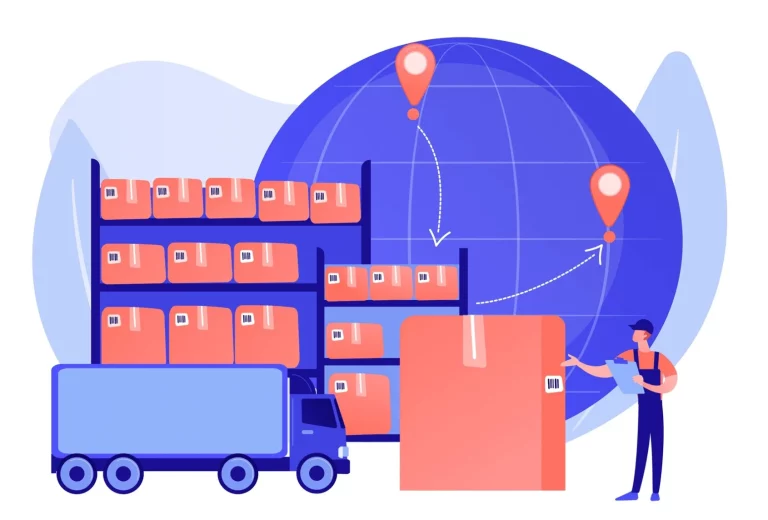
Logistics outsourcing involves entrusting all or part of the activities related to the supply chain to an external logistics provider. The latter takes care of functions such as transport and logistics, storage, inventory management, order preparation, and delivery. The aim is to enable the company to focus on its strategic activities while benefiting from the expertise and resources of a specialized partner.
Logistics outsourcing arose from the need for companies to adapt to a constantly changing market. With the rise of e-commerce, increasing customer expectations in terms of speed and traceability, and the growing complexity of supply chains, companies need flexible solutions. By outsourcing, they gain access to specialized logistics expertise, advanced technologies, and suitable infrastructure without having to make massive internal investments.
There are several forms of logistics outsourcing, tailored to the specific needs of businesses:
- Partial outsourcing: Only certain activities (such as transportation or storage) are entrusted to a logistics provider.
- Total outsourcing: All operational logistics are managed by an external partner, from procurement to final delivery.
- Co-sourcing: Close collaboration between the company and the service provider, where responsibilities are shared to optimize logistics performance.
Why do companies use logistics outsourcing?
Companies are increasingly turning to logistics outsourcing to meet economic, strategic, and operational challenges. Here are the main reasons behind this trend.
Reducing logistics costs
One of the primary reasons is to reduce logistics costs. Outsourcing allows fixed costs to be transformed into variable costs, adapted to the volume of activity. Companies can save on their logistics expenses by opting for outsourced logistics management. This includes savings on storage, transportation, and inventory management costs.
Refocusing on core business
By entrusting operational logistics to a logistics provider, companies free up resources to focus on their strategic activities. For example, a fashion brand can focus on creating collections and marketing, while its logistics partner manages the supply chain, from warehousing to delivery.
Benefit from specialized expertise
Logistics providers offer cutting-edge expertise in transportation and logistics, as well as advanced technologies. This allows companies to improve their logistics performance without having to develop these skills in-house.
Gain flexibility
Logistics outsourcing offers great flexibility to adapt to variations in demand, particularly in sectors such as e-commerce. Companies can adjust their logistics capacities to peaks in activity without investing in additional infrastructure.
The most commonly outsourced logistics activities
When a company opts for logistics outsourcing, certain activities are more frequently entrusted to logistics providers due to their complexity or the need for specialized expertise.
Transportation and logistics are among the first activities to be outsourced. Companies call on partners to manage the flow of goods, optimize delivery routes, and reduce logistics costs. Solutions such as Nomadia Delivery improve delivery efficiency while ensuring complete traceability.
Warehousing and inventory management are also commonly outsourced activities. Logistics providers offer suitable infrastructure (automated warehouses, inventory management systems) and expertise to optimize stock levels and reduce shortages. This allows companies to benefit from a more fluid and responsive logistics organization.
Order fulfillment is another key activity that is often outsourced. Providers use advanced technologies to speed up these processes and minimize errors, improving logistics performance and customer satisfaction.
With the rise of e-commerce, returns management has become a major challenge. Logistics providers offer dedicated solutions to efficiently process returns, reduce refund times, and optimize the reintegration of products into stock.

- The advantages and limitations of logistics outsourcing
Logistics outsourcing offers major benefits, but it also presents challenges that must be anticipated in order to reap the full rewards.
Key advantages
- Cost reduction: Outsourcing reduces logistics costs by avoiding heavy investments. Companies can thus transform fixed costs into variable costs, adapted to their activity.
- Access to specialized expertise: Logistics providers bring advanced skills in logistics organization and advanced tools, improving logistics performance without internal effort.
- Flexibility and scalability: Logistics outsourcing allows companies to adapt quickly to changes in demand, particularly during seasonal peaks.
- Improved service quality: Thanks to optimized processes, companies can offer faster and more reliable delivery, boosting customer satisfaction.
Limitations to consider
- Loss of control: Outsourcing can reduce direct control over certain operations, requiring increased coordination with the service provider.
- Dependence on the service provider: Choosing an unsuitable logistics provider can lead to delays or hidden costs. It is crucial to select a partner that is aligned with the company’s values and objectives.
- Confidentiality risks: Sharing sensitive data with a third party requires strict security and compliance guarantees.
The challenges of management and coordination in outsourced logistics
To successfully outsource logistics, companies must overcome major challenges in managing logistics operations. Effective coordination between the company and its logistics provider is essential to ensure a smooth and efficient supply chain.
The key to successful outsourced logistics lies in clear and regular communication. Companies must establish key performance indicators (KPIs) shared with their provider to measure logistics performance and adjust strategies in real time. Collaborative tools, such as logistics management platforms, make it possible to track flows and anticipate potential disruptions.
Although certain operations are outsourced, the company must maintain a global view of its supply chain. This involves defining common objectives with the service provider and setting up regular reviews to evaluate results. For example, using solutions such as Nomadia Field Service Management allows you to supervise field activities and ensure optimal coordination.
Unforeseen events (delays, stock shortages, quality issues) can impact operational logistics. Proactive risk management, including contingency plans, is essential to maintain business continuity and limit the impact on customer satisfaction.