
Last-mile logistics: the keys to more efficient and sustainable urban distribution
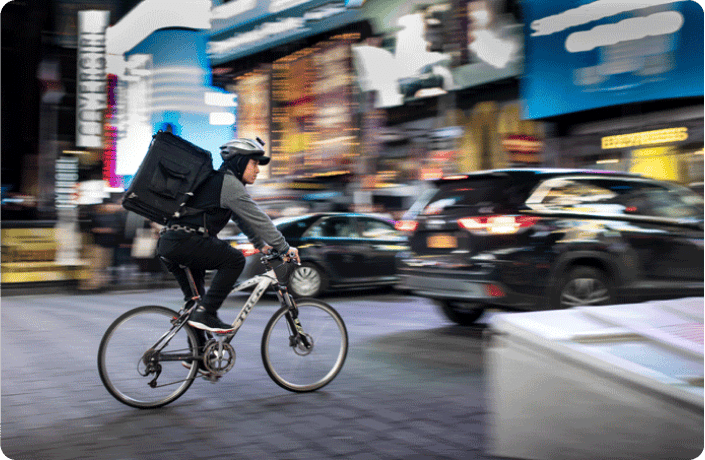
Last-mile logistics has become an essential link in the performance of distribution chains, particularly in urban areas. Between ever-increasing customer expectations, pressure on deadlines, high costs, and environmental requirements, companies must review their models to become more efficient.
The digital transformation of the sector, route optimization, real-time fleet management, and the pooling of flows are opening up new opportunities. Here are the main challenges facing this logistics sector and the levers for optimizing it in order to create a smart and sustainable model.
Why has last-mile logistics become a strategic challenge for businesses?
The rapid growth of e-commerce, the increase in home deliveries, and the densification of urban areas have turned last-mile logistics into a top priority for many companies. This final segment of the distribution chain concentrates costs, constraints, and risks: traffic congestion, tight delivery time slots, access difficulties, and high customer expectations.
To remain competitive, logistics players must now be able to deliver fast and efficiently, but also in a responsible way. The pressure is high: operational performance, cost control, and on-time delivery, while also integrating environmental and regulatory challenges specific to urban areas.
In this context, last-mile logistics is no longer just a link in the supply chain—it has become a strategic lever for value creation, brand image, and sustainability for businesses.
The main challenges of last-mile logistics
Last-mile logistics often faces several challenges that must be taken into account, such as:
- High costs and distance variability: Highly fragmented routes, frequent stops, returns, failed deliveries, or redeliveries significantly increase costs;
- Urban complexity: Heavy traffic, low-emission zones (LEZ), limited parking availability, and restricted delivery time windows all complicate operational planning;
- Rising customer expectations: Real-time tracking, precise delivery windows, flexibility, and traceability. Even minor delays or inaccuracies can impact customer satisfaction;
- Vehicle utilization and efficiency issues: Low fill rates, sub-optimized routes, and high mileage traveled;
- Environmental impact: Multiple trips, emissions, and urban disturbances. Social and regulatory pressure is pushing companies to rethink delivery models.
These combined challenges make last-mile logistics difficult to manage without the right tools and a rigorous methodology.
Levers to optimize last-mile logistics
To overcome these obstacles, several levers can improve both performance and operational robustness. The main ones include:
Route optimization
A route planning solution makes it possible to group deliveries, optimize itineraries, minimize distances traveled, and maximize vehicle fill rates.
Fleet management and real-time tracking
Monitoring the fleet, gaining real-time visibility into delivery status, adjusting routes in case of unexpected events or customer absence, and rapidly replanning operations all enhance responsiveness and service quality.
Multi-modal delivery mix
Combining vehicle-based delivery with walking deliveries, cargo bikes, or other soft mobility solutions in dense urban areas makes it easier to access city centers, avoid parking constraints, and reduce emissions.
Flow pooling and delivery consolidation
Grouping orders, pooling routes, centralizing depots, or using urban micro-hubs helps make logistics more efficient. This reduces the number of delivery rounds and lowers environmental impact.
Supporting digital logistics transformation
Integrating digital tools (SaaS, DMS, tracking, reporting, data analytics) enables automation, analysis, control, and continuous performance improvement. Digitalization facilitates anticipation, planning, and traceability.
The Nomadia Delivery solution optimizes every step of the process to turn all your deliveries into a competitive advantage without compromising on environmental responsibility. This DMS provides a solid framework for managing efficient and responsible last-mile logistics.
How can logistics performance be combined with environmental responsibility?
Reconciling performance and sustainability is not a contradiction. To achieve this, action must be taken on several fronts:
Reducing distances and unnecessary trips: By optimizing routes and consolidating deliveries, traveled kilometers—and therefore emissions—are reduced;
Promoting green and soft delivery modes: Electric vehicles, cargo bikes, and walking deliveries;
Pooling flows: Working with multiple shippers and grouping orders from different customers to maximize route fill rates;
Measuring impact: Using monitoring indicators, CSR reporting, and carbon data to manage environmental impact and communicate transparently;
Adapting operations to urban realities: Complying with local constraints (time windows, LEZ, access, parking), anticipating disruptions, and planning accordingly.
Towards an intelligent urban logistics model
To build truly sustainable and high-performing urban logistics, several conditions must be met—starting with the adoption of an advanced DMS platform such as Nomadia Delivery. With it, you can optimize routes, manage fleets, track deliveries in real time, and analyze performance. This is the foundation of efficient logistics.
It is also essential to mix transport modes according to the context. Vehicles for bulky parcels, cargo bikes or pedestrians for proximity deliveries: flexibility is key. Pooling deliveries also helps reduce unnecessary trips.
Finally, monitoring and measuring environmental and operational impact (kilometers traveled, emissions, route efficiency, fill rates) is essential to manage an effective CSR strategy.
Last-mile logistics is now a strategic challenge for companies delivering in urban areas. To address these challenges, it is crucial to adopt a comprehensive and structured approach. By combining route optimization, intelligent flow management, multi-modal delivery, resource pooling, and digitalization, it is possible to achieve a balance between logistics performance and sustainability.