Safety and quality of life at work: how can we reduce the risks for lone workers in the field?
- 13/04/2026
- 15:57
Reading time : 2 min
Today, many mobile employees work alone: technicians, maintenance workers, delivery drivers, and field sales representatives. Exposed to sometimes unpredictable environments, they face risky situations without immediate assistance.
The risks faced by lone workers are therefore a major challenge in terms of safety, regulatory compliance, and quality of life at work. For companies, it is no longer just a matter of responding to incidents, but of implementing a genuine QWL prevention approach in the field, incorporating tools, procedures, and employer responsibility.

The occupational risks of working alone
The risks of working alone cover a range of situations in which an employee works out of sight or out of reach of immediate assistance. This configuration greatly increases the potential severity of incidents, whether they are physical, environmental, or organizational in nature.
Among the most common occupational risks associated with working alone are:
- Physical accidents (falls, fainting, injuries),
- Assaults or incivility,
- Risks related to the work environment: unfrequented areas, night work, industrial sites, or prolonged travel.
Isolation makes it difficult to detect these incidents quickly and delays the arrival of emergency services, thereby increasing the human and operational consequences.
Beyond the physical risks, working alone can also generate significant mental stress. Feelings of isolation, stress related to the lack of immediate support, and the pressure of having to manage situations independently contribute to a gradual deterioration in quality of life at work. These factors have a direct impact on the commitment, motivation, and performance of mobile employees.
From a regulatory standpoint, employers are required to assess occupational risks and implement appropriate preventive measures, particularly when employees work alone. This responsibility is part of the general safety obligation set out in Article L4121-1 of the French , which requires the protection of workers’ physical and mental health. The prevention principles defined in Article L4121-2 and the risk assessment formalized in the single document (DUERP), in accordance with Article R4121-1, also apply to situations of isolated work. Clearly identifying these risks makes it possible to implement a prevention approach adapted to the realities on the ground.
PTI and prevention solutions
In order to address the risks faced by lone workers, the implementation of appropriate solutions relies on a combination of organizational prevention and technological tools. The objective is clear: to quickly detect risky situations and intervene as early as possible.
Identifying and assessing risky situations
Prevention begins with a detailed mapping of isolated work situations. Not all mobile employees are exposed to the same risks: a technician working on an industrial site, a night maintenance worker, and a sales representative on the road do not work in the same environments.
This analysis makes it possible to identify the specific PTI occupational risks for each job:
- Physical injury,
- Illness,
- Assault,
- Stress related to isolation
- Difficulty raising the
When it comes to protecting lone workers, this assessment phase is essential for deploying truly effective measures.
Deploying reliable PTI solutions adapted to the field
PTI solutions are an essential pillar of prevention. They automatically detect abnormal situations (falls, prolonged immobility, loss of verticality) or send a manual alert in case of danger. These devices significantly reduce response times and facilitate intervention by emergency services or internal teams.
To be effective, these solutions must be easy to use, reliable, and adapted to the constraints of the field: mobility, autonomy, variable network coverage. A well-integrated PTI solution enhances the safety of mobile employees while reassuring teams, who know that they are not alone when faced with the unexpected.
Integrating prevention into workplace quality of life in the field
Reducing the risks faced by lone workers is an integral part of a QWL prevention approach in the field. Training employees in the right reflexes, defining clear procedures, and establishing a reassuring framework all contribute to improving teams’ sense of security and commitment. Prevention then becomes a lever for trust, loyalty, and performance.
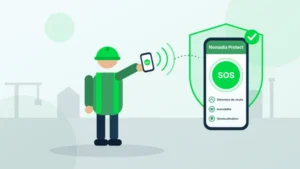
With this in mind, Nomadia Protect supports companies by offering a PTI solution designed for use in the field, enabling mobile employees to be kept safe while meeting legal obligations regarding employee safety.
The link between safety and employer attractiveness
Managing risks for lone workers is not just a regulatory obligation or an operational requirement. It also plays a key role in employer attractiveness and the ability of companies to recruit, engage, and retain their field talent. In a context of tension in many mobile professions, safety is becoming an increasingly decisive criterion for employees.
Safety as a pillar of quality of life at work in the field
For mobile employees, the perception of safety directly influences their quality of life at work. Working alone, without the possibility of immediate assistance, can generate stress, a feeling of abandonment, or a significant mental burden. Conversely, knowing that the company has put in place prevention measures and appropriate solutions helps to reinforce a feeling of protection and recognition.
QWL prevention in the field therefore requires concrete actions:
- Risk assessment,
- Training,
- Clear procedures,
- Tools for raising the alarm and ensuring rapid response in the event of a problem.
This comprehensive approach improves employee well-being and promotes long-term engagement.
A key factor in engagement and retention
Taking lone worker risks into account sends a strong signal to teams: their safety is a priority. This positioning strengthens the relationship of trust between the employer and mobile employees. Employees feel supported, which limits turnover and promotes loyalty, particularly in jobs where isolation is common.
Furthermore, a work environment that is perceived as safe helps improve individual and collective performance. Reassured employees are more focused, more autonomous, and more inclined to make a long-term commitment to their field assignments.
A lever for employer branding and recruitment
The safety of mobile employees is also becoming an employer branding argument. In a competitive job market, candidates are increasingly attentive to working conditions, risk prevention, and companies’ concrete commitments to safety.
Highlighting PTI devices, a clear prevention policy, and dedicated safety tools allows companies to stand out and attract qualified candidates. By integrating lone worker risk management into their HR strategy, companies strengthen their regulatory compliance, operational performance, and employer attractiveness. Safety is no longer a constraint, but a real lever for competitiveness and social sustainability.