Logistics Traceability: A Pillar of an Optimized Supply Chain
- 23/07/2026
- 11:11
reading time : 6 min

Content Marketing Manager
Table of Contents

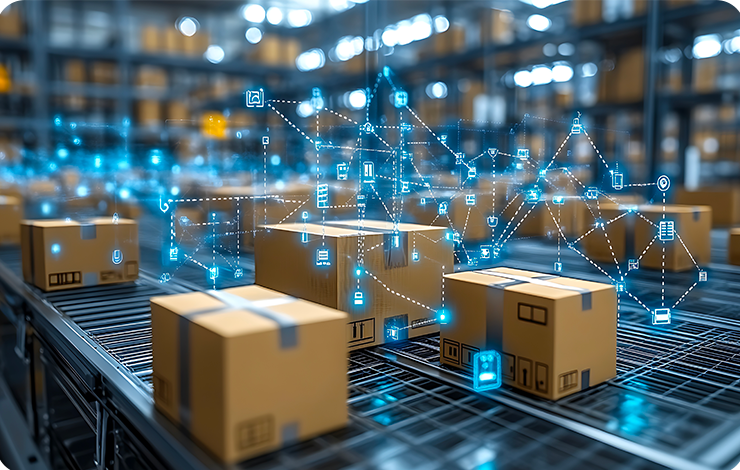
A wide scope covered by logistics traceability
- the receipt of inputs,
- production,
- order preparation,
- product dispatch,
- delivery by the carrier, including transit through distribution centers,
- handover of the parcel to the customer.

An essential tool for overall security
- the origin of products,
- manufacturing and handling conditions and processes,
- materials used,
- packaging,
- recycling.
- on a daily basis, by verifying the strict application of regulations,
- in the event of a problem, particularly a health-related one, by facilitating the detection and immediate withdrawal from the market of non-compliant or defective products.
The choice of tools, key to optimal traceability
- The Enterprise Resource Planning system (ERP) centralizes all information from different internal departments.
- The Warehouse Management System (WMS) collects data and transfers it to processing programs such as the ERP.
- The fleet management software (TMS) integrates with the WMS to organize the routes of fleet vehicles and track deliveries.

Frequently Asked Questions
FAQ – The Most Frequently Asked Questions About Nomadia
Why Choose Nomadia?
As France’s leading publisher of Smart Mobility SaaS solutions, Nomadia supports more than 175,000 field professionals every day. Our solutions are easy to use, quick to deploy, and deliver significant and immediate return on investment.
Drawing on the expertise of both a software publisher-integrator and a consulting firm, Nomadia’s teams provide tailored support, from data consulting to the deployment of mobile devices. Finally, our technical support team is available 24/7 to assist you.
Who Are Nomadia Solutions Designed For?
Nomadia solutions support the digital transformation of all mobile professionals: field sales representatives, delivery drivers, technicians, auditors, healthcare workers, inspectors, service providers, security patrol officers, experts, and more.
Whether for SMEs or large enterprises, our solutions adapt to businesses of all sizes and across all industries.
How Much Does It Cost?
Nomadia Delivery offers transparent and flexible pricing, which primarily depends on the number of users (for example, planners and dispatchers) rather than a fixed cost per parcel.
Thanks to this model, you can control your delivery costs based on the number of resources (users) involved in route management, providing great flexibility to adjust your subscription according to the size of your fleet and your operational needs.
Is It Compatible with My Current ERP System?
Yes! Nomadia Delivery has been designed to integrate quickly and easily into your existing environment thanks to our powerful and secure APIs. Our solution is compatible with most ERP systems on the market. API integration enables the automatic synchronization of your transport orders, customer orders, and customer information, ensuring smooth and error-free delivery tracking. The solution also offers user-friendly import capabilities with data validation controls, as well as export options in multiple customizable formats.
Is It Suitable for Our Delivery Volume?
Yes, Nomadia Delivery is ideal for companies that manage a high volume of deliveries and want to optimize their routes, create balanced territories for their drivers, and ensure precise tracking of every parcel. Nomadia Delivery adapts to fleets of all sizes!
Can Multiple Warehouses or Depots Be Managed?
Yes, our solution allows you to manage multiple warehouses or depots. It centralizes data and optimizes routes or service operations for each of them.
Is There a Limit to the Number of Stops in Route Optimizations?
No, there is no strict limit to the number of stops in route optimizations. Our solution can handle large volumes of stops and quickly calculate optimized routes.