How Can CMMS Software Address Maintenance Challenges?
- 27/07/2026
- 15:20
reading time : 2 min

Content Marketing Manager
Table of Contents

What are the challenges of maintenance?
Breakdown prevention
Cost reduction
Another challenge is the reduction of operating costs. By ensuring regular and planned maintenance, companies extend the lifespan of equipment, thereby reducing investments in costly equipment replacements. In addition, well-planned operations reduce the cost of emergency interventions, which are generally more expensive in terms of spare parts and labor.
Compliance with safety standards
Improving equipment performance
- How often does each type of asset break down? Consequently, what is the average time between failures (MTBF)?
- What are the most common causes of malfunction?
- What is the cost of interrupting production processes? Which assets are the most costly and why?
- What is the average time spent correcting incidents (MTTR)?
- Are there procedures in place to deal with issues?
What is CMMS software for maintenance?
How can CMMS address maintenance challenges?
- technical documentation for each piece of equipment,
- the schedule and history of operations,
- the status of spare parts inventories,
- breakdowns and critical equipment,
- and more.
- a reduction in machine downtime, in the likelihood of major breakdowns, and in overall costs,
- an increase in productivity, in the longevity of equipment, and in the profitability of installations,
- improved communication within the team: the transmission of work orders and due dates, even in the event of updates, takes place quickly between managers and agents in the field, limiting the risk of confusion,
- increased operator accountability through dashboards that clearly indicate the name of the person responsible for a given task, the progress status, deadlines, the time devoted (and any delays),
- enhanced safety of premises and workers through the immediate identification and resolution of potential issues.
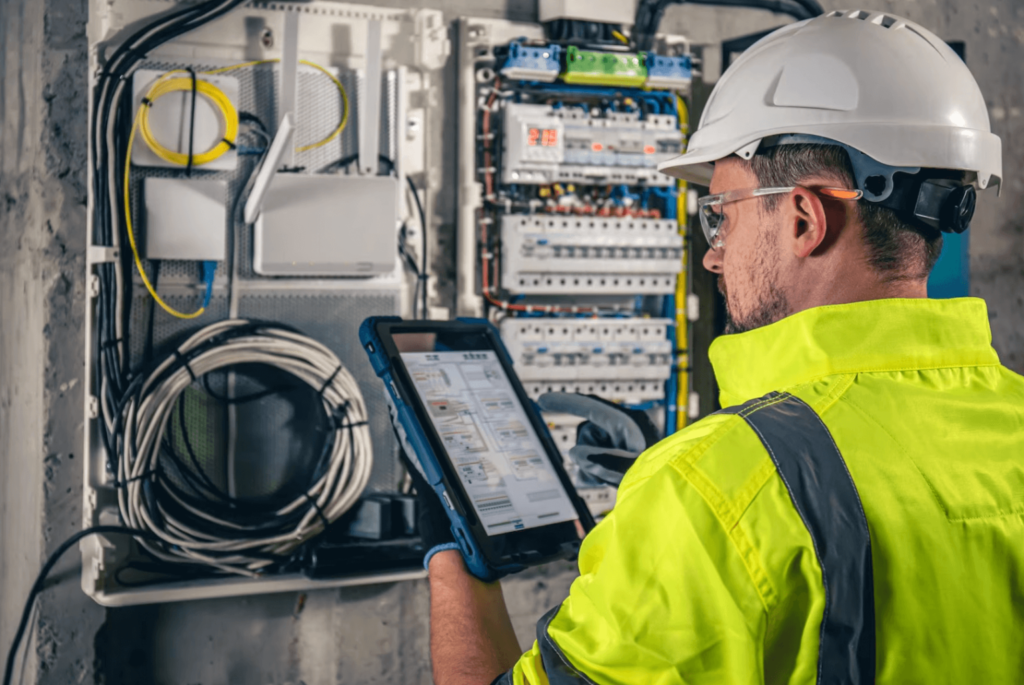
How can CMMS address maintenance challenges?
- Software customization: before deploying the system, adapt it to the specificities of your company. This includes defining maintenance levels (preventive, corrective), importing data on your equipment (references, maintenance history), and configuring alerts and notifications to anticipate operations.
- Team training: ensure that all the teams involved, whether technicians, managers, or system administrators, receive thorough training. It is essential that everyone understands how to use the software to enter information, schedule operations, and consult maintenance histories.
- Progressive deployment: implement the CMMS gradually. Start with one department or group of equipment before extending it to the whole company. This makes it possible to test the system under real conditions and to adjust processes if necessary.
- Integration of historical data: import previous maintenance histories, equipment data, spare parts inventories, and maintenance contracts. This avoids starting from scratch and optimizes the first months of operation.
Projet, demande de démonstration ou d’essai gratuit ?
Frequently Asked Questions
FAQ – The Most Frequently Asked Questions About Nomadia
Why Choose Nomadia?
As France’s leading publisher of Smart Mobility SaaS solutions, Nomadia supports more than 175,000 field professionals every day. Our solutions are easy to use, quick to deploy, and deliver significant and immediate return on investment.
Drawing on the expertise of both a software publisher-integrator and a consulting firm, Nomadia’s teams provide tailored support, from data consulting to the deployment of mobile devices. Finally, our technical support team is available 24/7 to assist you.
Who Are Nomadia Solutions Designed For?
Nomadia solutions support the digital transformation of all mobile professionals: field sales representatives, delivery drivers, technicians, auditors, healthcare workers, inspectors, service providers, security patrol officers, experts, and more.
Whether for SMEs or large enterprises, our solutions adapt to businesses of all sizes and across all industries.
How Much Does It Cost?
Nomadia Delivery offers transparent and flexible pricing, which primarily depends on the number of users (for example, planners and dispatchers) rather than a fixed cost per parcel.
Thanks to this model, you can control your delivery costs based on the number of resources (users) involved in route management, providing great flexibility to adjust your subscription according to the size of your fleet and your operational needs.
Is It Compatible with My Current ERP System?
Yes! Nomadia Delivery has been designed to integrate quickly and easily into your existing environment thanks to our powerful and secure APIs. Our solution is compatible with most ERP systems on the market. API integration enables the automatic synchronization of your transport orders, customer orders, and customer information, ensuring smooth and error-free delivery tracking. The solution also offers user-friendly import capabilities with data validation controls, as well as export options in multiple customizable formats.
Is It Suitable for Our Delivery Volume?
Yes, Nomadia Delivery is ideal for companies that manage a high volume of deliveries and want to optimize their routes, create balanced territories for their drivers, and ensure precise tracking of every parcel. Nomadia Delivery adapts to fleets of all sizes!
Can Multiple Warehouses or Depots Be Managed?
Yes, our solution allows you to manage multiple warehouses or depots. It centralizes data and optimizes routes or service operations for each of them.
Is There a Limit to the Number of Stops in Route Optimizations?
No, there is no strict limit to the number of stops in route optimizations. Our solution can handle large volumes of stops and quickly calculate optimized routes.
Project, request for a demonstration or a free trial?