Corrective Maintenance: Definition, Benefits, and Tools

reading time : 2 min

Picture of Lucie Monnot
Lucie Monnot

Content Marketing Manager

Unexpected breakdowns are a company’s greatest enemy. They can result in significant financial losses. This is why corrective maintenance is an essential solution for quickly restoring the proper operation of industrial equipment. In this article, we examine its main advantages and disadvantages, as well as the tools required for successful implementation, with a particular focus on CMMS software.

Table of Contents

Tout savoir sur la maintenance curative en industrie

     Projet, demande de démonstration ou d’essai gratuit ?

What is corrective maintenance?

  • Definition of corrective maintenance
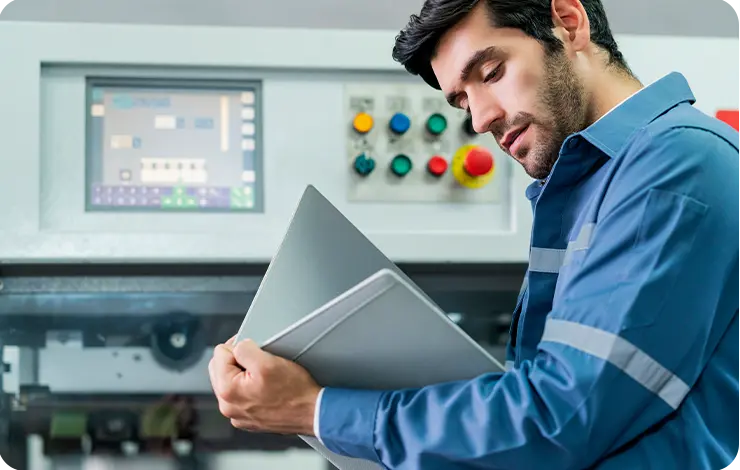
Corrective maintenance is a process aimed at repairing and restoring equipment, machinery, or systems when a breakdown or failure is detected. Unlike preventive maintenance and other types of maintenance, which anticipate and prevent problems before they occur, corrective maintenance takes place after the problem has manifested itself.
Its main objective? To restore the equipment to normal working order as quickly as possible in order to minimize production interruptions and negative impacts on operations.
  • The different types of corrective maintenance

Planned corrective maintenance

Planned corrective maintenance involves organizing repairs and operations in advance after a problem has been detected. This type of maintenance is often used when the detected failure does not immediately affect production or operations and makes it possible to schedule repairs at an appropriate time, thereby reducing disruption and optimizing the use of resources.

Unplanned corrective maintenance

Unplanned corrective maintenance, also known as breakdown maintenance, occurs unexpectedly. It is necessary when sudden and critical failures arise, requiring immediate intervention to avoid significant production losses or safety risks. This type of maintenance is often more costly and disruptive because it requires the rapid mobilization of resources and spare parts.

Immediate vs. deferred corrective maintenance

Immediate corrective maintenance: this type of maintenance is carried out immediately after a breakdown or failure is detected. It is generally reserved for critical situations where the repair time must be minimized to avoid major interruptions or safety risks.
Deferred corrective maintenance: in this case, the repair is postponed until a later time when the equipment can be stopped without affecting production. This approach makes it possible to better plan the necessary resources, order spare parts, and coordinate the work with other maintenance or production activities.
Distinguishing between these types of corrective maintenance enables companies to better manage resources, optimize downtime, and minimize the costs associated with breakdowns and emergency repairs. By integrating these practices into an overall maintenance management strategy, organizations can improve equipment reliability and ensure operational continuity.

Why is corrective maintenance important?

Corrective maintenance plays a decisive role in industrial equipment management for several reasons. It reduces downtime by intervening quickly to repair failures, thereby maintaining operational continuity. This is particularly important in industries where interruptions can result in significant financial losses. By improving safety, corrective maintenance helps quickly identify and eliminate the risks posed by defective equipment. This ensures a safer working environment.
 
In terms of cost, although unplanned corrective maintenance can be expensive, it is sometimes unavoidable. By combining planned and deferred approaches, companies can better manage their maintenance budgets, thereby avoiding costly emergency repairs. In addition, repairing equipment as soon as failures are detected helps prevent more serious damage that could reduce machine lifespan. In this way, investment in industrial assets is maximized.
 
Finally, corrective maintenance ensures flexibility and responsiveness. The ability to respond quickly to unexpected failures enables companies to remain flexible and responsive to operational challenges, which is essential for maintaining competitiveness in constantly changing markets.
By incorporating an effective corrective maintenance strategy, companies can not only ensure operational continuity, but also optimize the performance and reliability of their equipment. This contributes to better productivity and safety, as well as more efficient resource management.

The advantages and disadvantages of corrective maintenance

  • Advantages
Corrective maintenance offers several significant advantages that make it an essential component of industrial equipment management.
First, it enables rapid and targeted intervention. When a breakdown or failure is detected, corrective maintenance aims to resolve the problem immediately, thereby restoring the equipment to normal operation. This minimizes unexpected downtime and enables operations to resume quickly. This is essential for maintaining productivity.
Another advantage is the simplicity of its implementation. Unlike preventive maintenance, corrective maintenance is reactive and takes place only when necessary. This can reduce initial costs because there is no need to plan frequent maintenance operations.
It can also extend equipment lifespan. By intervening quickly to repair failures, corrective maintenance prevents minor problems from becoming major failures that could irreversibly damage machinery. This helps keep equipment in good working order for longer, thereby maximizing return on investment.
  • Disadvantages
Despite its advantages, corrective maintenance also has several disadvantages that must be taken into account.
The main disadvantage is the unpredictability of breakdowns. Since corrective maintenance takes place after a failure has occurred, it can result in sudden and unexpected production interruptions. This can cause delays, productivity losses, and, in some cases, financial penalties.
In addition, corrective maintenance can be more expensive in the long term. Emergency operations often require additional resources, such as technician overtime, express shipping costs for spare parts, and additional costs associated with production stoppages. These costs can quickly add up, particularly when breakdowns are frequent.
Another disadvantage is the potential for accelerated equipment deterioration. If failures are not detected and repaired quickly, they can cause additional damage to machine components, thereby reducing the equipment’s overall lifespan. Repeated interventions on failed machines can also lead to wear and reduced equipment reliability.
Finally, excessive reliance on corrective maintenance can create a stressful working environment for maintenance teams. The need to respond quickly to breakdowns and work under pressure to minimize downtime can lead to fatigue and human error, affecting repair quality and workplace safety.
In conclusion, although corrective maintenance is essential for managing unexpected failures and quickly restoring equipment operation, it should be balanced with preventive and predictive maintenance strategies in order to optimize costs, improve equipment reliability, and ensure operational continuity.
This is why tools are necessary for implementing corrective maintenance more effectively.

Tools for managing corrective maintenance

Corrective maintenance requires a variety of tools to diagnose, repair, and restore failed equipment. Here is an overview of the main tools used in this area, divided into several key categories.
  • Diagnostic tools
Diagnostic tools are essential for quickly and accurately identifying the causes of breakdowns. They include:
Multimeters: used to measure voltage, current, and resistance, multimeters are essential for checking electrical circuits and diagnosing electrical problems.
Vibration analyzers: these devices detect abnormal vibrations in rotating machinery, making it possible to identify mechanical problems such as imbalances, misalignments, or defective bearings.
Thermal cameras: used to detect hot spots and thermal anomalies, thermal cameras help identify overheated electrical components or lubrication problems.
Circuit analyzers: these tools make it possible to test circuit continuity and identify short circuits or breaks in wiring.
Maintenance corrective définition avantages outils
  • Management and documentation tools
To ensure effective corrective maintenance, it is also essential to have management and documentation tools.
Computerized Maintenance Management Systems (CMMS): this software helps plan, monitor, and document all maintenance activities. It provides real-time information about equipment condition, maintenance histories, and available spare parts. CMMS improves the traceability of maintenance operations, optimizes resource management, and enables more precise planning of corrective maintenance work.
Mobile maintenance applications: these allow technicians to receive notifications, access maintenance manuals, consult equipment histories, and report completed work directly from the field. These applications improve the responsiveness and efficiency of maintenance teams.
Spare parts databases: rapid and accurate access to spare parts databases ensures that the right parts are available when needed, minimizing downtime.
There are many aspects of maintenance management to master. The solution is to centralize and monitor this management with the right tools. Nomadia Field Service is a solution that helps you optimize and manage maintenance operations. Benefit from a solution designed to simplify the management of all your team members.
  • Safety tools
Safety is paramount during corrective maintenance operations. Technicians must be equipped with:
Personal protective equipment (PPE): helmets, gloves, safety glasses, and work clothing resistant to flames and chemicals are essential for protecting technicians from physical and chemical risks.
Lockout/tagout systems (LOTO): used to secure equipment and prevent accidental start-ups during maintenance operations.
Gas detectors: essential in environments where dangerous gas leaks may occur, gas detectors alert technicians to hazardous levels of toxic or flammable substances.
By using CMMS software along with a combination of diagnostic, repair, management, and safety tools, companies can improve the efficiency of their corrective maintenance processes, reduce the costs associated with unexpected breakdowns, and extend equipment lifespan. These tools enable both proactive and reactive management of maintenance operations, thereby ensuring optimal performance of industrial installations.

Frequently Asked Questions

FAQ – The Most Frequently Asked Questions About Nomadia

Why Choose Nomadia?

As France’s leading publisher of Smart Mobility SaaS solutions, Nomadia supports more than 175,000 field professionals every day. Our solutions are easy to use, quick to deploy, and deliver significant and immediate return on investment.

Drawing on the expertise of both a software publisher-integrator and a consulting firm, Nomadia’s teams provide tailored support, from data consulting to the deployment of mobile devices. Finally, our technical support team is available 24/7 to assist you.

Who Are Nomadia Solutions Designed For?

Nomadia solutions support the digital transformation of all mobile professionals: field sales representatives, delivery drivers, technicians, auditors, healthcare workers, inspectors, service providers, security patrol officers, experts, and more.

Whether for SMEs or large enterprises, our solutions adapt to businesses of all sizes and across all industries.

How Much Does It Cost?

Nomadia Delivery offers transparent and flexible pricing, which primarily depends on the number of users (for example, planners and dispatchers) rather than a fixed cost per parcel.

Thanks to this model, you can control your delivery costs based on the number of resources (users) involved in route management, providing great flexibility to adjust your subscription according to the size of your fleet and your operational needs.

Is It Compatible with My Current ERP System?

Yes! Nomadia Delivery has been designed to integrate quickly and easily into your existing environment thanks to our powerful and secure APIs. Our solution is compatible with most ERP systems on the market. API integration enables the automatic synchronization of your transport orders, customer orders, and customer information, ensuring smooth and error-free delivery tracking. The solution also offers user-friendly import capabilities with data validation controls, as well as export options in multiple customizable formats.

Is It Suitable for Our Delivery Volume?

Yes, Nomadia Delivery is ideal for companies that manage a high volume of deliveries and want to optimize their routes, create balanced territories for their drivers, and ensure precise tracking of every parcel. Nomadia Delivery adapts to fleets of all sizes!

Can Multiple Warehouses or Depots Be Managed?

Yes, our solution allows you to manage multiple warehouses or depots. It centralizes data and optimizes routes or service operations for each of them.

Is There a Limit to the Number of Stops in Route Optimizations?

No, there is no strict limit to the number of stops in route optimizations. Our solution can handle large volumes of stops and quickly calculate optimized routes.

         Project, request for a demonstration or a free trial?

nomadia logo

Geoconcept becomes Nomadia

Geoconcept brands are officially
evolving into Nomadia

nomadia logo

TourSolver becomes
Nomadia TourSolver