FSM Software: Definition, Benefits, and Tools

reading time : 2 min

Picture of Lucie Monnot
Lucie Monnot

Content Marketing Manager

Managing field teams is vital for any company that relies on a mobile workforce. FSM software, or Field Service Management software, is a key tool. It helps optimize field operations management, improve customer satisfaction, and reduce costs.
In this article, you will find the definition of FSM software, its key benefits, and the features that can transform your field service operations.

Tables of Contents

Geomarketing optimize business marketing strategies

What is FSM software, or Field Service Management software?

Field Service Management software, or FSM software, is a tool that centralizes service management to coordinate and optimize field service operations.
 
These systems are used to manage tasks related to sending technicians or workers to external sites, where they carry out operations such as installation, equipment maintenance and repair.

The benefits of FSM software

Field service management software offers many benefits for companies that rely on customer-facing services. Here are some of the main advantages.
  • Improved efficiency
FSM software optimizes field operations by automating planning, dispatching, and work order tracking. Thanks to advanced algorithms and artificial intelligence tools, these solutions reduce the need for manual intervention, thereby minimizing human error.
For example, the system can automatically assign a technician based on their location and skills, avoiding unnecessary travel.
The result: technicians spend less time on the road and more time carrying out their assignments. This optimization not only increases productivity, but also reduces response times and task completion times.
  • Improved customer satisfaction
One of the main objectives of FSM software is to improve the customer experience. By facilitating accurate and responsive planning, these tools enable companies to respond quickly to customer requests, often within shorter-than-expected timeframes. In addition, immediate access to operation histories and customer preferences gives technicians a complete view of customer needs.
For example, a technician can consult notes from a previous visit to offer a tailored solution or anticipate recurring problems. This personalization strengthens customer trust and improves loyalty. This is particularly important in Field Service Management.
  • Cost savings
Using FSM software generates significant savings on several fronts. By optimizing technician routes, these solutions reduce the number of kilometers traveled, leading to lower fuel and vehicle maintenance costs. In addition, reducing unnecessary travel also minimizes equipment wear and CO2 emissions, contributing to more sustainable practices.
FSM software also optimizes customer tracking and team efficiency. By structuring processes, it helps avoid repeat visits and forgotten equipment. The result? Fewer return visits and savings on the printing and management of physical documents.
  • Real-time communication
One of the most valuable features of FSM software is its ability to provide instant and transparent communication between field technicians and headquarters. Technicians can receive real-time updates about their assignments, report problems, or request clarification in just a few clicks. This speeds up problem resolution and improves team coordination.
Customers also benefit from this responsiveness because they are informed in real time about the progress of their requests. This reduces uncertainty and increases satisfaction.
  • Better use of human resources
Service Delivery Management satisfaction client
FSM software maximizes workforce efficiency by optimizing technician assignments. By taking factors such as location, skills, and availability into account, companies can allocate tasks strategically.
For example, a technician specialized in electrical systems will be assigned first to an operation requiring that expertise, avoiding inefficient or incomplete operations. This not only ensures a higher-quality service, but also reduces unnecessary workloads for technicians, which can have a positive impact on morale and overall productivity.
  • Emergency management
Field Service Management software excels at managing urgent operations, a major challenge for service companies. When a critical incident occurs, the system can quickly identify the closest and best-qualified technician, while providing detailed information about the problem and the tools required.
This significantly reduces response times and ensures that emergencies are resolved quickly. Customers also receive regular updates, improving their perception of the service even in stressful situations.

The features of FSM software

  • Planning and task management
Effective operation planning is essential. FSM software makes it possible to manage technician availability, assign tasks, and optimize routes to reduce travel costs. This helps maximize productivity and improve customer service.
  • Work order management
This feature makes it possible to track the complete lifecycle of work orders, from creation through to invoicing. Field service management software users can manage tasks transparently, facilitating communication between field personnel and office teams.
  • Mobile tracking
Mobile access allows technicians to access real-time information and update task statuses directly from the field. Team responsiveness and effective information management enable better communication and tracking, both of which contribute to customer satisfaction.
  • Preventive maintenance management
FSM software helps plan and monitor preventive maintenance activities, reducing breakdowns and unexpected downtime. This optimizes equipment lifespan and ensures service continuity.
  • Reporting and analytics
The ability to generate detailed reports on performance, costs, and customer satisfaction is essential. Monitoring enables companies to identify trends and make improvements based on concrete data. This is one of the key features of FSM software.

Industries that use FSM software

FSM software for maintenance

  • Industrial maintenance: management of preventive and corrective operations on industrial equipment.
  • Multi-technical services: coordination of teams specializing in different technical fields, including electrical, mechanical, and hydraulic services.
  • Multi-service operations: planning and monitoring of various operations for companies or public authorities.

FSM software for equipment installation and repair

  • IT equipment: management of operations for the installation, maintenance, and repair of IT hardware.
  • Electronic equipment: tracking operations involving consumer or professional electronic equipment.
  • Household appliances: planning the installation and repair of household appliances in customers’ homes.

FSM software for technical support

  • Management of support requests and technician dispatching to resolve customer problems.
  • Real-time operation tracking and knowledge base updates.

FSM software for building maintenance

  • Plumbing: management of emergency operations and planned work.
  • Electrical services: monitoring electrical installations and repairs.
  • Climate engineering: planning maintenance for heating and air-conditioning systems.

FSM software for healthcare

  • Planning maintenance operations for medical equipment.
  • Managing home visits for nursing care or personal assistance services.

Choosing your FSM software

  • Understand your specific needs
Every company has specific requirements. Start by listing the essential features your team needs, such as operation planning, work tracking, and inventory management. Involve technicians and operational staff to identify the gaps that FSM software could address.
  • Assess the key features
Make sure that the software offers important features such as work order management, task planning and assignment, and customer relationship management tools. Also look for advanced options, such as data analytics and GPS integration, to improve resource management. These are essential features for Field Service Management software.
  • Consider ease of use
Easy-to-use software is essential for ensuring successful adoption by field teams. Choose an intuitive interface and conduct usability tests with several team members to gather their feedback.
  • Check scalability
Choose FSM software that can grow with your business. This means that it should be able to add users and manage increasing volumes of data without any loss of performance.
  • Assess the provider’s reputation
Look for customer reviews and feedback to assess the reliability of the provider and, consequently, of the FSM software. Good technical support is also essential for resolving any problems that may arise quickly.
  • Consider integration
Make sure that the software can integrate easily with other tools you already use, such as accounting systems or CRMs. This reduces data silos and facilitates operational management.
All these recommendations are designed to help you find the Field Service Management software that best matches your company. To guide you further, here is an overview of a leading solution on the market.
FSM routine technical support delivered tomorrow

Nomadia Field Service, your FSM software

Nomadia Field Service is Field Service Management software designed to optimize the operations of mobile teams across various industries. This software, which is part of Nomadia’s SaaS solutions, enables companies to better manage technical operations, task planning, and performance monitoring.
Nomadia Field Service uses artificial intelligence to optimize operation planning. Its optimization engine can take up to 150 different parameters into account to adapt schedules in real time. This makes it possible to:
  • Reduce the number of kilometers traveled by an average of 15%.
  • Increase the number of operations per technician by 110%.
  • Improve team productivity by 20%.
Nomadia’s FSM software provides 360-degree functional coverage, including:
  • Tracking and geolocation: Nomadia provides real-time tracking of vehicles and operations, enabling planners to monitor assignment execution and send alerts in the event of delays or cancellations.
  • Collaboration and communication: the software includes collaborative work tools, such as locating nearby colleagues, internal messaging, and even support features using augmented reality.
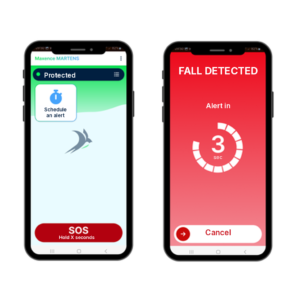
  • Protection of lone workers: Nomadia Field Service provides features to protect lone workers, including fall and inactivity detection systems, as well as an SOS button for emergencies.
  • Customization and integration: the platform offers extensive customization to adapt to each company’s specific processes, with API integration options to connect the software to other information systems.
In addition, Nomadia’s FSM software focuses on environmental responsibility:
  • A 20% to 30% reduction in CO2 emissions through optimized travel.
  • Support for fleet electrification.
  • Carbon footprint measurement.
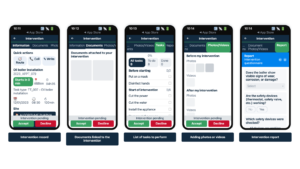
Nomadia Field Service is designed for rapid deployment and offers an easy-to-use interface, facilitating adoption by users.

     Projet, demande de démonstration ou d’essai gratuit ?

Frequently Asked Questions

FAQ – The Most Frequently Asked Questions About Nomadia

Why Choose Nomadia?

As France’s leading publisher of Smart Mobility SaaS solutions, Nomadia supports more than 175,000 field professionals every day. Our solutions are easy to use, quick to deploy, and deliver significant and immediate return on investment.

Drawing on the expertise of both a software publisher-integrator and a consulting firm, Nomadia’s teams provide tailored support, from data consulting to the deployment of mobile devices. Finally, our technical support team is available 24/7 to assist you.

Who Are Nomadia Solutions Designed For?

Nomadia solutions support the digital transformation of all mobile professionals: field sales representatives, delivery drivers, technicians, auditors, healthcare workers, inspectors, service providers, security patrol officers, experts, and more.

Whether for SMEs or large enterprises, our solutions adapt to businesses of all sizes and across all industries.

How Much Does It Cost?

Nomadia Delivery offers transparent and flexible pricing, which primarily depends on the number of users (for example, planners and dispatchers) rather than a fixed cost per parcel.

Thanks to this model, you can control your delivery costs based on the number of resources (users) involved in route management, providing great flexibility to adjust your subscription according to the size of your fleet and your operational needs.

Is It Compatible with My Current ERP System?

Yes! Nomadia Delivery has been designed to integrate quickly and easily into your existing environment thanks to our powerful and secure APIs. Our solution is compatible with most ERP systems on the market. API integration enables the automatic synchronization of your transport orders, customer orders, and customer information, ensuring smooth and error-free delivery tracking. The solution also offers user-friendly import capabilities with data validation controls, as well as export options in multiple customizable formats.

Is It Suitable for Our Delivery Volume?

Yes, Nomadia Delivery is ideal for companies that manage a high volume of deliveries and want to optimize their routes, create balanced territories for their drivers, and ensure precise tracking of every parcel. Nomadia Delivery adapts to fleets of all sizes!

Can Multiple Warehouses or Depots Be Managed?

Yes, our solution allows you to manage multiple warehouses or depots. It centralizes data and optimizes routes or service operations for each of them.

Is There a Limit to the Number of Stops in Route Optimizations?

No, there is no strict limit to the number of stops in route optimizations. Our solution can handle large volumes of stops and quickly calculate optimized routes.

         Project, request for a demonstration or a free trial?

nomadia logo

Geoconcept becomes Nomadia

Geoconcept brands are officially
evolving into Nomadia

nomadia logo

TourSolver becomes
Nomadia TourSolver