Maintenance Schedule: Definition and Implementation

reading time : 2 min

Picture of Lucie Monnot
Lucie Monnot

Content Marketing Manager

To operate efficiently and make the best use of your time, companies need to be well organized. Maintenance schedules are designed to support this objective.
Before exploring why and how to deploy this tool within your company, let’s look at what a maintenance schedule is and how it differs from a maintenance plan.
 

Table of contents

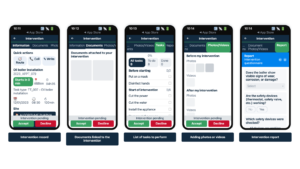
Maintenance intervention planning ENGIE Solutions challenge

What is a maintenance schedule?

To define a maintenance schedule, we first need to clarify what we mean by maintenance.
Maintenance includes the inspection, servicing and repair of a company’s or individual’s various equipment and installations, such as air conditioning, heating, home automation, electrical networks and wastewater systems.
Some industries are subject to particularly strict maintenance requirements to guarantee hygiene and safety. This is the case, for example, in the food industry, aerospace, petrochemicals, pharmaceuticals, logistics and construction.
For individuals, maintenance contracts are often signed when new equipment is purchased. These contracts include specific commitments from the seller regarding intervention terms and deadlines.
  • Maintenance schedule: definition
A maintenance schedule is a document used to organize the assignment of technicians to maintenance tasks for different types of equipment.
Assignments can be made on a daily, weekly or monthly basis, depending on the equipment concerned.
Some equipment requires daily maintenance, while monthly or even annual maintenance may be sufficient for other assets.
A maintenance schedule generally takes the form of a calendar or table, which explains the use of the term “schedule”.
This term is often incorrectly confused with a maintenance plan. However, the two documents have very different purposes and are actually complementary.
  • Difference between a maintenance schedule and a maintenance plan
A maintenance plan does not serve the same agenda function as a schedule.
It is more like a program that specifies the resources, procedures and recommendations associated with maintenance tasks.
For example, the plan may specify:
  • which equipment requires maintenance;
  • when it should be serviced;
  • what equipment and materials are required;
  • the budget that should be allocated.
In other words, the maintenance plan explains what needs to be done and how, while the maintenance schedule represents the timetable used to visualize recurring or urgent interventions.

Why implement a maintenance schedule?

Maintenance is crucial to the smooth operation of a company, making its schedule a valuable tool with multiple benefits.
A well-designed maintenance schedule enables the team responsible for maintenance, or for managing external providers, to organize work effectively, anticipate unexpected events, respect everyone’s working hours and respond more quickly to technical emergencies.
The benefits of a carefully prepared maintenance schedule include the following:
  • Prioritization of all maintenance activities, ensuring that the right intervention takes place in the right location at the right time.
  • A safety margin, providing an additional safeguard for the technician and the equipment being maintained.
  • An extended equipment lifespan through regular inspections and adjustments.
  • Better workload distribution for each technician. The maintenance schedule provides an immediate overview of who is assigned to each task. This makes it easier to identify significant workload gaps between technicians.
  • Better task management when staffing issues arise. If one of your technicians or service providers is unavailable, you can quickly identify another person who can replace them for the planned intervention or interventions.
  • Maintenance route optimization from a geographic perspective. By knowing which technician will be working at a specific location on a given day, you can group several interventions together and avoid unnecessary return trips. This optimization saves time and energy while reducing intervention costs.
  • Improved customer satisfaction by preventing equipment breakdowns that could slow production or lead to defective products.
  • Better working conditions for employees because equipment is inspected, operational and safe.
  • Better working conditions for technicians and subcontractors through improved schedule organization and balanced task allocation. Maintenance staff benefit from real-time visibility.
Effective communication is one of the keys to both operational efficiency and professional well-being.

How to implement a maintenance schedule

  • Steps
Implementing an effective maintenance schedule requires several key steps.
First, make sure to schedule all recurring operations, meaning tasks carried out at regular intervals.
To do this, use the maintenance plans that specify the deadlines to be respected for each piece of equipment. Then select the required interventions and identify the technician or technicians to assign to them.
Second, make sure to maintain a safety margin.
In practice, this means keeping time slots available “just in case”. Equipment may experience a breakdown or malfunction, so having an available time slot for an urgent intervention provides additional security and helps the team respond quickly.
Next, schedule urgent interventions.
To do this, you need to identify the problem accurately and define its priority level. You may also need to order spare parts and inspect the intervention site so that the technician carrying out the work has all the necessary information.
Finally, remember to analyze the work carried out after the fact.
Performance indicators, such as the expenses incurred or the downtime of the equipment concerned, provide an overall view of performance and help you optimize your maintenance schedule more effectively over time.
This makes it possible to determine, for example, the actual number of hours required to repair a particular type of equipment.
  • Tools
It may be tempting to choose software that every company already has access to: Excel.
However, Excel quickly reaches its limits because it was not designed to serve as a maintenance scheduling tool.
Although it is extremely useful for many administrative tasks, Excel is quickly limited when it comes to planning maintenance operations.
Using it for this purpose can expose you to:
  • unnecessary expenses caused by poor route management;
  • an increased risk of breakdowns and accidents;
  • reduced service quality.
These are already several good reasons to choose a tool specifically designed to create and manage your maintenance schedule.
Nomadia offers several field service management solutions for technicians and operations managers, helping you plan and manage field interventions effectively.
Our solutions allow you to create a 100% configurable maintenance schedule tailored to your needs.
Your technicians can respond more quickly, while you can manage operations in real time at any time.
Your teams will become more productive while enjoying better working conditions, and your customers will be more satisfied because agreed deadlines are respected more consistently.

     Projet, demande de démonstration ou d’essai gratuit ?

Frequently Asked Questions

FAQ – The Most Frequently Asked Questions About Nomadia

Why Choose Nomadia?

As France’s leading publisher of Smart Mobility SaaS solutions, Nomadia supports more than 175,000 field professionals every day. Our solutions are easy to use, quick to deploy, and deliver significant and immediate return on investment.

Drawing on the expertise of both a software publisher-integrator and a consulting firm, Nomadia’s teams provide tailored support, from data consulting to the deployment of mobile devices. Finally, our technical support team is available 24/7 to assist you.

Who Are Nomadia Solutions Designed For?

Nomadia solutions support the digital transformation of all mobile professionals: field sales representatives, delivery drivers, technicians, auditors, healthcare workers, inspectors, service providers, security patrol officers, experts, and more.

Whether for SMEs or large enterprises, our solutions adapt to businesses of all sizes and across all industries.

How Much Does It Cost?

Nomadia Delivery offers transparent and flexible pricing, which primarily depends on the number of users (for example, planners and dispatchers) rather than a fixed cost per parcel.

Thanks to this model, you can control your delivery costs based on the number of resources (users) involved in route management, providing great flexibility to adjust your subscription according to the size of your fleet and your operational needs.

Is It Compatible with My Current ERP System?

Yes! Nomadia Delivery has been designed to integrate quickly and easily into your existing environment thanks to our powerful and secure APIs. Our solution is compatible with most ERP systems on the market. API integration enables the automatic synchronization of your transport orders, customer orders, and customer information, ensuring smooth and error-free delivery tracking. The solution also offers user-friendly import capabilities with data validation controls, as well as export options in multiple customizable formats.

Is It Suitable for Our Delivery Volume?

Yes, Nomadia Delivery is ideal for companies that manage a high volume of deliveries and want to optimize their routes, create balanced territories for their drivers, and ensure precise tracking of every parcel. Nomadia Delivery adapts to fleets of all sizes!

Can Multiple Warehouses or Depots Be Managed?

Yes, our solution allows you to manage multiple warehouses or depots. It centralizes data and optimizes routes or service operations for each of them.

Is There a Limit to the Number of Stops in Route Optimizations?

No, there is no strict limit to the number of stops in route optimizations. Our solution can handle large volumes of stops and quickly calculate optimized routes.

         Project, request for a demonstration or a free trial?

nomadia logo

Geoconcept becomes Nomadia

Geoconcept brands are officially
evolving into Nomadia

nomadia logo

TourSolver becomes
Nomadia TourSolver