Solving Vehicle Routing Problems

reading time : 2 min

Picture of Lucie Monnot
Lucie Monnot

Content Marketing Manager

The vehicle routing problem, or VRP, is a combinatorial optimization problem whose objective is to minimize the resources required to complete a vehicle route.
Solving this problem means finding the best delivery routes while minimizing costs such as fuel consumption and travel time.
This major logistics challenge affects every sector involving vehicle routes, from home deliveries to waste collection.
This article explains how modern tools and well-designed strategies can help solve this challenge, making deliveries more efficient and cost-effective.

Table of contents

Résoudre les problèmes de tournées de véhicules

Introduction to the vehicle routing problem

Definition of the problem

The vehicle routing problem is a classic topic in logistics and operations research.
It involves:
  • Determining the optimal routes for a vehicle fleet delivering products or services to a group of customers.
  • Minimizing total costs, which may include distance traveled, travel time and other associated costs such as fuel consumption.

There is no known method that can quickly find an optimal solution for every situation, particularly when the number of customers increases.
However, algorithms and tools are available to minimize the complexity of vehicle routing problems. We will explore them later in this article.
Zoom logiciel optimisation tournées Nomadia

The main challenges

Vehicle routing problems involve several different challenges.
  • Route optimization
Planning the most efficient routes to minimize distance traveled and time spent on the road is a major challenge.
This requires taking various factors into account, including:
  • time constraints and delivery windows;
  • traffic conditions;
  • road restrictions, such as weight and height limits;
  • vehicle loading capacity.
  • Meeting delivery windows
Customers often expect their orders to be delivered within specific time slots.
Meeting these delivery windows while optimizing routes for other deliveries can be particularly difficult, especially when unexpected delays occur.
  • Resource management
This includes effectively managing vehicles and drivers.
It also involves assigning the right vehicles to the right routes according to their capacity and availability, as well as managing driver working hours to comply with regulations governing driving and rest times.
  • Demand fluctuations
Delivery demand can vary considerably, making capacity planning difficult.
Peak periods, such as holidays and sales events, require a high degree of flexibility and adaptability to respond effectively to increased demand.
  • Cost reduction
Minimizing operating costs, including fuel, vehicle maintenance and driver overtime, while maintaining a high level of service is a constant challenge.
This requires continuous route optimization and effective resource management.
  • Environmental impact
As awareness of the environmental impact of logistics operations increases, companies face growing pressure to reduce their carbon footprint.
This may involve using electric vehicles, optimizing routes to reduce fuel consumption and planning consolidated deliveries to minimize the number of trips.
  • Managing unexpected events
Delays caused by unexpected traffic conditions, accidents, severe weather or vehicle problems can disrupt planned routes.
Being able to respond quickly and adjust routes in real time is essential for minimizing disruption.

Generate realistic and profitable route plans and monitor their execution in real time with our SaaS solution.

Discover TourSolver

Trois professionnels en bureau se penchant sur un ordinateur portable pour analyser des données, l'un d'eux au téléphone

Vehicle routing problems: traditional methods

Algorithmes classiques

Traditional solution methods can be divided into three main categories:
  • classical algorithms;
  • heuristic approaches;
  • ant colony optimization.
Each method has its own characteristics and areas of application.

Classical algorithms

Classical algorithms for solving delivery routing problems include methods such as the following:
  • Linear programming: Used to model the problem as a set of linear equations. This is effective for small-scale problem instances.
  • Constraint programming: Focuses on satisfying constraints, including vehicle capacity and time windows, in order to find a feasible solution.
  • Exhaustive search: Evaluates every possible combination to identify the best solution. This is impractical for large-scale problems because of combinatorial explosion.
These methods aim to find the optimal solution to the problem by systematically exploring all possibilities.
However, they quickly become impractical for real-world problems.

Heuristic approaches

Une application mobile pour les chauffeurs livreurs
Heuristic approaches are search methods designed to find an optimal or near-optimal solution within a reasonable amount of time.
They are particularly useful for large-scale problems where exact methods fail because of computational complexity.
They include:
  • Greedy algorithms: Select the best available option at each stage without looking back. This quickly produces a solution, but it is not necessarily optimal.
  • Local search: Starts with an initial solution and then explores neighboring solutions to identify improvements.
  • Ant colony optimization
Ant colony optimization is a method that imitates the behavior of ants searching for the shortest path between their colony and a food source.
Ants explore their environment and deposit pheromones along their paths, guiding other ants toward the most efficient routes.

Principle

Virtual ants construct solutions by traveling through a graph of cities or delivery points.
They choose routes partly at random, but the probability of selecting a route is influenced by the amount of pheromone deposited on it. This allows the algorithm to explore and exploit the search space.

Application

This approach is particularly effective for finding good solutions to complex problems because it balances exploration and exploitation.
Each method has its own advantages and disadvantages. The choice depends on:
  • the size of the problem;
  • the specific constraints;
  • the available resources.
Heuristic approaches and ant colony optimization are often preferred for large-scale problems because they are efficient and can produce high-quality solutions within a reasonable timeframe.

Vehicle routing problems: new technologies

Artificial intelligence and machine learning

These technologies make it possible to develop dynamic and adaptive route management systems.
They can learn from historical data to optimize routes in real time.
For example, AI can predict delivery times more accurately by considering factors such as traffic, weather conditions and customer preferences.
This helps minimize delays and improve customer satisfaction.

Using blockchain for route traceability

Blockchain offers an innovative way to improve transparency and traceability in delivery routes.
Blockchain technology can create a decentralized and tamper-proof record of all transactions and movements of goods.
This allows all stakeholders, including suppliers, carriers and customers, to access accurate and up-to-date information about delivery status.
Improved traceability helps resolve problems quickly, reduces the risk of fraud and theft, and increases trust between stakeholders.
 
Blockchain can also facilitate smart contract management by automating certain logistics operations and reducing processing times.
These innovative technologies not only optimize operations, but also improve service quality and help meet customers’ growing expectations regarding delivery speed and reliability.
Nomadia Delivery combines advanced optimization and traceability to create a more efficient and responsible logistics chain.

Practical applications across different industries
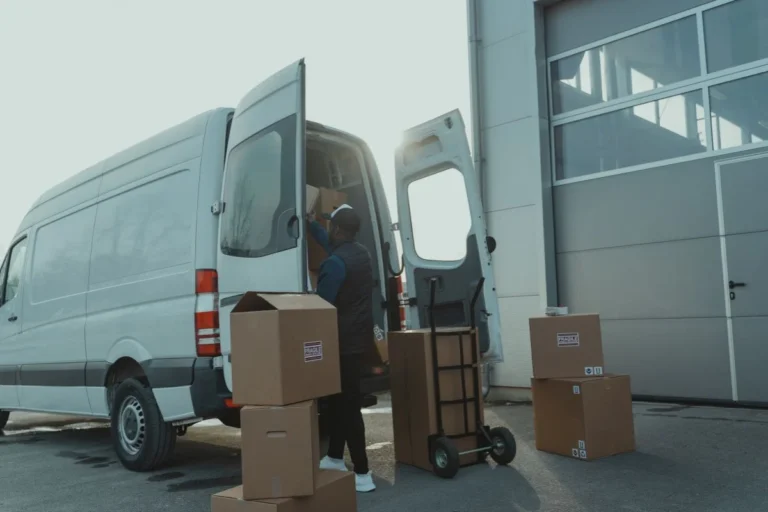
Vehicle routing problems play an important role in optimizing operations and reducing costs across a wide range of industries.
Livreur chargeant des colis cartonnés à l'arrière d'un camion de livraison blanc devant un entrepôt industriel

Transportation and logistics

In transportation and logistics, vehicle routing problems involve determining the most efficient routes for a vehicle fleet delivering goods to different customers.
The objective is to minimize total costs, including distance traveled, delivery time and fuel consumption, while respecting constraints such as delivery windows and vehicle capacity.
Solutions to these problems can lead to more efficient resource utilization, shorter delivery times and improved customer satisfaction.

Home delivery services

For home delivery services, including meal, grocery and parcel delivery, vehicle routing problems help optimize delivery routes to ensure fast and efficient deliveries.
By considering customer preferences regarding delivery times and optimizing routes in real time to avoid traffic congestion, companies can improve productivity while keeping operating costs low.
This also helps increase customer satisfaction through punctual deliveries.

Waste collection

Tri biodéchets point au 1er janvier 2024
In waste collection, vehicle routing problems help plan collection routes to maximize efficiency while minimizing operating costs and environmental impact.

By optimizing routes, municipalities and companies can reduce the number of vehicles required, lower fuel consumption and CO₂ emissions, and improve service coverage.
 
This often requires taking specific constraints into account, such as the types of waste collected, vehicle capacity and landfill or disposal site schedules.

Vehicle routing problems can therefore be solved using both classical and innovative methods.
Route planning tools are also an effective way to find the best delivery routes while minimizing costs.

Frequently Asked Questions

FAQ – The Most Frequently Asked Questions About Nomadia

Why Choose Nomadia?

As France’s leading publisher of Smart Mobility SaaS solutions, Nomadia supports more than 175,000 field professionals every day. Our solutions are easy to use, quick to deploy, and deliver significant and immediate return on investment.

Drawing on the expertise of both a software publisher-integrator and a consulting firm, Nomadia’s teams provide tailored support, from data consulting to the deployment of mobile devices. Finally, our technical support team is available 24/7 to assist you.

Who Are Nomadia Solutions Designed For?

Nomadia solutions support the digital transformation of all mobile professionals: field sales representatives, delivery drivers, technicians, auditors, healthcare workers, inspectors, service providers, security patrol officers, experts, and more.

Whether for SMEs or large enterprises, our solutions adapt to businesses of all sizes and across all industries.

How Much Does It Cost?

Nomadia Delivery offers transparent and flexible pricing, which primarily depends on the number of users (for example, planners and dispatchers) rather than a fixed cost per parcel.

Thanks to this model, you can control your delivery costs based on the number of resources (users) involved in route management, providing great flexibility to adjust your subscription according to the size of your fleet and your operational needs.

Is It Compatible with My Current ERP System?

Yes! Nomadia Delivery has been designed to integrate quickly and easily into your existing environment thanks to our powerful and secure APIs. Our solution is compatible with most ERP systems on the market. API integration enables the automatic synchronization of your transport orders, customer orders, and customer information, ensuring smooth and error-free delivery tracking. The solution also offers user-friendly import capabilities with data validation controls, as well as export options in multiple customizable formats.

Is It Suitable for Our Delivery Volume?

Yes, Nomadia Delivery is ideal for companies that manage a high volume of deliveries and want to optimize their routes, create balanced territories for their drivers, and ensure precise tracking of every parcel. Nomadia Delivery adapts to fleets of all sizes!

Can Multiple Warehouses or Depots Be Managed?

Yes, our solution allows you to manage multiple warehouses or depots. It centralizes data and optimizes routes or service operations for each of them.

Is There a Limit to the Number of Stops in Route Optimizations?

No, there is no strict limit to the number of stops in route optimizations. Our solution can handle large volumes of stops and quickly calculate optimized routes.

         Project, request for a demonstration or a free trial?

nomadia logo

Geoconcept becomes Nomadia

Geoconcept brands are officially
evolving into Nomadia

nomadia logo

TourSolver becomes
Nomadia TourSolver