Picking and Order Preparation: Steps and Optimization
- 07/09/2023
- 09:56
reading time : 2 min

Content Marketing Manager
Picking is a crucial step in the logistics chain. It’s a complex task that can be time-consuming and costly.
In this article, we will explain how to optimize your picking process and enhance customer satisfaction. We will introduce various picking methods, tools, and technologies that can help you save time and reduce errors.
We will also provide tips on organizing your picking area, training your teams, and implementing quality controls.
Tables of Contents

What does ‘picking’ mean?
- Definition
Picking, in the context of logistics, represents the process of gathering items in a warehouse or distribution center for shipment or internal use. The ultimate goal is to provide products requested by customers quickly and accurately while minimizing errors and maximizing operational efficiency.
- Different Types of Picking
There are several picking methods adapted to different logistics needs and constraints. Here are the main types of picking you may encounter:
- Piece Picking (or Order Picking):
This method involves collecting items as orders are received. Each order is processed individually, and operators pick the specific items requested for that particular order. This approach is generally suitable for small and medium-sized businesses with a low volume of orders.
- Batch Picking:
With this approach, orders are grouped into batches, and operators prepare multiple orders simultaneously. This optimizes the travel time within the warehouse, as operators can pick several items at once. This method is more appropriate for businesses with a moderate to high volume of orders.
- Zone Picking:
In zone picking, the warehouse is divided into specific zones, and each operator is responsible for a designated zone. When an order is received, different operators work together to pick items from the various zones, and then they assemble them to form the complete order. This approach is ideal for large warehouses with extensive inventories.
- Wave Picking:
With wave picking, orders are processed in multiple “waves” throughout the day. Operators focus on a specific group of orders during each wave. This helps distribute the workload more evenly and optimizes movements within the warehouse.
Picking and Order Preparation: Why is it Important?
As mobile professionals, your time is valuable. Implementing a well-organized order preparation system allows you to save time and improve the efficiency of your operations. With an optimized picking process, you can speed up order processing, reduce errors, and increase overall productivity for your business.
The quality of order preparation directly impacts customer satisfaction. Frequent errors in orders can lead to delivery delays and a poor customer experience. On the other hand, with a precise and well-managed picking system, you can deliver orders quickly and accurately, enhancing customer satisfaction and strengthening your reputation.
A good order preparation process helps you maintain accurate inventory records. This assists in avoiding stockouts and making informed replenishment decisions. You can keep an adequate stock level to meet customer demand without unnecessary overstocking, which can result in additional costs.
Efficient management of picking and order preparation allows for effective item consolidation and reduces the number of fragmented shipments. By optimizing packaging and minimizing unnecessary packages, you can decrease shipping costs, leading to long-term savings for your business.
Depending on your industry, the demand for your products can vary significantly over time. A flexible and well-designed order preparation system allows you to easily adapt to these fluctuations. You can adjust your resources and processes to meet the changing needs of your market, which is crucial for staying competitive.
Picking and Order Preparation: The Steps
When it comes to picking and order preparation, keep in mind that these processes can vary based on the specifics of each company. However, we can identify three main activities that are generally present in all warehouses.
The first step in this process is the picking or collection of products within the storage area. This involves locating the specific items necessary to fulfill a given order. To optimize this step, it’s essential to have a logical warehouse organization with a well-designed storage system to facilitate the quick retrieval of products.
The second step is the sorting or grouping of products to fulfill the order. At this stage, various items collected earlier must be assembled to compose the complete customer order. It’s crucial to adopt efficient sorting methods that minimize errors and reduce the time required for this phase.
Finally, the last step involves preparing and packaging parcels for shipment. Proper packaging ensures that products are well-protected during transportation and arrive in perfect condition to the recipient. At this stage, it’s important to ensure that parcels are correctly labeled to avoid any confusion during delivery.
Optimizing Picking and Order Preparation:
When selecting a SaaS solution for your picking and order preparation process, prioritize those that can seamlessly integrate with your existing systems. A smooth integration will ensure a seamless transition and allow your teams to work efficiently while reducing the risks of errors and disruptions.
Opt for a platform that provides a real-time overview of your inventory. This will allow you to precisely track stock levels, anticipate replenishment needs, and avoid stockouts. Centralized management also facilitates the coordination of mobile teams by providing them with up-to-date information necessary to process orders efficiently.
Nomadia offers a solution to assist you in managing your inventory!
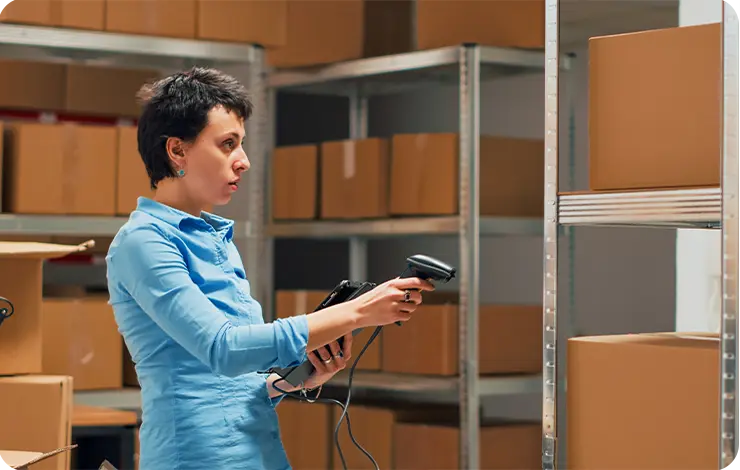
For enhanced precision in the picking process, Radio Frequency Identification (RFID) technology and barcodes are invaluable allies. You can use them to track items in the warehouse, during picking, and all the way to shipment. This helps reduce human errors and speeds up order validation, ultimately improving customer satisfaction.
Ensure that your picking area is ergonomically organized by placing the most frequently requested items within easy reach and minimizing unnecessary movements. This will reduce the time required to prepare each order and contribute to the satisfaction of your mobile teams by avoiding unnecessary effort.
The quality of the prepared products is paramount for customer satisfaction. Implement regular quality checks to verify order accuracy before shipment. A well-chosen SaaS solution can facilitate this process by providing tracking and verification tools.
Frequently Asked Questions
FAQ – The Most Frequently Asked Questions About Nomadia
Why Choose Nomadia?
As France’s leading publisher of Smart Mobility SaaS solutions, Nomadia supports more than 175,000 field professionals every day. Our solutions are easy to use, quick to deploy, and deliver significant and immediate return on investment.
Drawing on the expertise of both a software publisher-integrator and a consulting firm, Nomadia’s teams provide tailored support, from data consulting to the deployment of mobile devices. Finally, our technical support team is available 24/7 to assist you.
Who Are Nomadia Solutions Designed For?
Nomadia solutions support the digital transformation of all mobile professionals: field sales representatives, delivery drivers, technicians, auditors, healthcare workers, inspectors, service providers, security patrol officers, experts, and more.
Whether for SMEs or large enterprises, our solutions adapt to businesses of all sizes and across all industries.
How Much Does It Cost?
Nomadia Delivery offers transparent and flexible pricing, which primarily depends on the number of users (for example, planners and dispatchers) rather than a fixed cost per parcel.
Thanks to this model, you can control your delivery costs based on the number of resources (users) involved in route management, providing great flexibility to adjust your subscription according to the size of your fleet and your operational needs.
Is It Compatible with My Current ERP System?
Yes! Nomadia Delivery has been designed to integrate quickly and easily into your existing environment thanks to our powerful and secure APIs. Our solution is compatible with most ERP systems on the market. API integration enables the automatic synchronization of your transport orders, customer orders, and customer information, ensuring smooth and error-free delivery tracking. The solution also offers user-friendly import capabilities with data validation controls, as well as export options in multiple customizable formats.
Is It Suitable for Our Delivery Volume?
Yes, Nomadia Delivery is ideal for companies that manage a high volume of deliveries and want to optimize their routes, create balanced territories for their drivers, and ensure precise tracking of every parcel. Nomadia Delivery adapts to fleets of all sizes!
Can Multiple Warehouses or Depots Be Managed?
Yes, our solution allows you to manage multiple warehouses or depots. It centralizes data and optimizes routes or service operations for each of them.
Is There a Limit to the Number of Stops in Route Optimizations?
No, there is no strict limit to the number of stops in route optimizations. Our solution can handle large volumes of stops and quickly calculate optimized routes.
Project, request for a demonstration or a free trial?