
What is the best delivery route planner
for businesses?
- 17/04/2026
- 14:23
Reading time : 2 min

Responsable Content Marketing
If you’re choosing a delivery route planner for a business, there isn’t a single “best” tool for everyone : the right one depends on your fleet size, delivery volume, need for automation, and integrations. That said, a few platforms consistently stand out.
Efficiently organizing delivery routes is key to satisfying customers and improving logistics performance. With increasing orders, speed requirements, and environmental challenges, manual methods and spreadsheets quickly reach their limits This shift is accelerating fast: the global route optimization software market was valued at $8.51 billion in 2023 and is projected to reach $21.46 billion by 2030 (Grand View Research, 2024), driven by rising delivery volumes and AI adoption.
To increase efficiency, companies would do well to rely on delivery optimization solutions capable of planning relevant routes, tracking the fleet in real time, and adapting to the unexpected. This article takes stock of what a delivery route is and the benefits of optimized planning using a dedicated tool.
Sommaire
What is a delivery route?
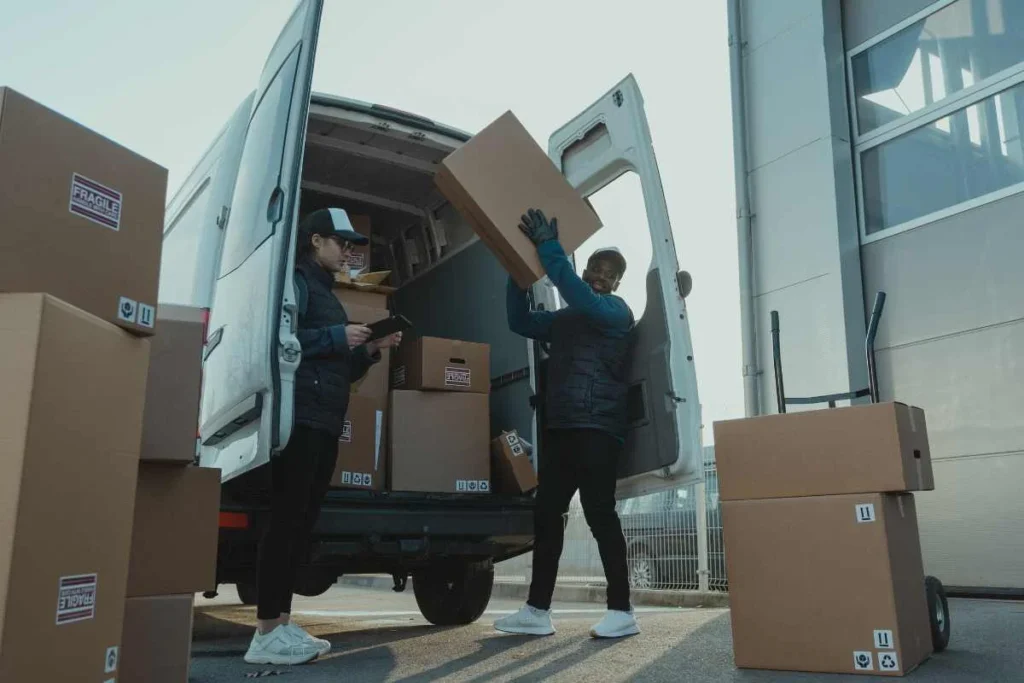
A delivery route is the route taken by a vehicle to deliver packages or goods to several locations: homes, businesses, or collection points. Its purpose is to limit unnecessary travel and reduce logistics costs.
Planning a delivery route depends on several factors, such as the distance between deliveries, the volume of packages, customer time constraints, traffic conditions, and vehicle capacity. With a route planning solution like the one offered by Nomadia, companies can automate this process and improve the efficiency of their logistics operations.
Top Delivery Route Planning Software in 2026
Choosing the right route planning software can have a dramatic impact on your delivery efficiency, costs, and customer satisfaction. Here is a comparison of the leading solutions available in 2026.
Nomadia TourSolver — Best for complex, enterprise-grade logistics
Best for: Mid-size to large companies, 3PL operators, complex multi-fleet logistics across Europe.
Nomadia TourSolver stands out as the most powerful and complete route optimization solution on the European market. Built for organizations that cannot afford approximation, it combines advanced AI algorithms with deep operational expertise.
✅ Key strengths
- Handles 150+ simultaneous business constraints: time windows, vehicle capacity, driver skills, low-emission zones (LEZ), electric vehicles, and intermodal logistics
- Predictive AI that anticipates traffic disruptions and dynamically recalculates routes in real time
- Up to 30% reduction in operational costs and CO₂ emissions (Nomadia TourSolver customer benchmark, 2025 — consistent with McKinsey & Company estimates of 15–30% savings from AI-powered routing)
- End-to-end traceability: from depot departure to last-mile delivery and return
- Multi-profile mobile app: adapted for delivery drivers, field technicians, and sales agents
- Native integrations with major TMS, WMS, and ERP systems
👉 TourSolver is the reference choice for any logistics organization looking to industrialize and scale delivery operations across Europe with precision and reliability.
Request a free demo →Routific — Best overall for SMBs
Best for: Small to medium delivery businesses, food delivery, local logistics.
Routific offers a strong balance of ease of use and powerful route optimization. Its AI-based routing includes traffic awareness, live tracking, and customer delivery notifications, with documented results of up to 25% cost reduction per delivery (Routific internal benchmark, 2024)
- Strengths: Intuitive interface, proven optimization engine, customer notification tools
- Limitations: Less suited for complex enterprise constraints or large multi-fleet operations
- Pricing: The platform is billed per order
Wise Systems — Best for enterprise fleets
Best for: Large logistics operations, 3PL, enterprise delivery networks.
Wise Systems is designed for scaling large fleets efficiently, handling complex constraints such as vehicle capacity, time windows, and dynamic routing with real-time route changes.
- Strengths: Robust constraint management, dynamic dispatching, built for scale
- Limitations: Enterprise-focused, less accessible for smaller teams
- Pricing: On request
Maptive — Best for mapping + sales/delivery teams
Best for: Businesses combining sales routes and deliveries.
Built on Google Maps data, Maptive allows route imports via Excel or CRM and can generate up to 35% shorter routes compared to manual planning (Maptive internal benchmark, 2024).
- Strengths: Strong mapping capabilities, flexible import options, intuitive interface
- Limitations: Less suited to pure last-mile delivery operations
- Pricing: From $250 / 45 days
Root Planner — Best simple and flexible tool
Best for: Growing businesses that want control without complexity.
Root Planner combines automatic route creation with manual drag-and-drop editing, easy order imports (CSV, API, manual), and a focus on simplicity and usability.
- Strengths: User-friendly, flexible, quick to get started
- Limitations: Fewer advanced features for large-scale operations
- Pricing: On request
Bodha Route Planner — Best lightweight AI tool
Best for: Startups or small fleets looking for a modern, simple solution.
Bodha focuses on saving time, fuel, and operational costs through simplified AI-powered logistics, used by thousands of small businesses worldwide.
- Strengths: Simple, modern UX, AI-powered routing
- Limitations: Limited advanced constraint management
- Pricing: On request
Quick comparison table
| Solution | Best for | Key strength | Pricing |
|---|---|---|---|
| 🥇 Nomadia TourSolver | Enterprise / Complex logistics | 150+ constraints, predictive AI, CO₂ tracking | 15-day free trial |
| Routific | SMBs | Ease of use + optimization | The platform is billed per order |
| Wise Systems | Large fleets / 3PL | Dynamic routing, scale | On request |
| Maptive | Sales + delivery teams | Google Maps-based, CRM import | From $250 / 45 days |
| Root Planner | Growing businesses | Simplicity + flexibility | On request |
| Bodha | Startups / small fleets | Lightweight AI | On request |
Nomadia’s delivery route planning solution supports you in your management!
How to choose the right software for your business
Before selecting a delivery route planning solution, clearly define your needs, constraints, and growth objectives. Here are the key criteria to evaluate.
Business constraints
Evaluate time windows, vehicle capacity, driver skills, low-emission zone (LEZ) compliance, and any industry-specific rules your tool must handle automatically.
Fleet size & growth
Consider the number of drivers and vehicles today — but also your growth trajectory. Choose a solution that scales with your operations without requiring a tool change.
Integration needs
Ensure compatibility with your existing TMS, WMS, ERP, or CRM. Seamless data flow between systems avoids double entry and improves logistics consistency.
Ease of use
An intuitive interface reduces onboarding time, limits planning errors, and ensures fast adoption by both dispatchers and drivers via the mobile app.
Scalability
The software must adapt to your organisation's evolution — more vehicles, new geographies, additional constraints — without requiring a platform migration.
Pricing model
Compare models: per driver, per task, monthly SaaS subscription, or on-request enterprise pricing. Factor in the expected ROI from cost and emissions savings.
How to organize delivery routes?
- Step 1: Collect and analyze data
The first step is to gather the information needed for planning: delivery addresses, volumes to be transported, customer time constraints, vehicle capacities, and traffic conditions. This analysis provides a solid foundation and identifies areas for optimization.
- Step 2: Group deliveries by geographic area
Data analysis can then be used to identify deliveries that can be consolidated. Grouping orders located in the same area limits unnecessary travel, reduces distances traveled, and optimizes the use of resources.
- Step 3: Optimize routes and allocate resources
The use of dedicated planning tools facilitates the calculation of efficient routes, taking into account deadlines, traffic, and delivery priorities. Solutions such as those offered by Nomadia also allow for the balanced allocation of vehicles and drivers, avoiding overloads or underutilization.
- Step 4: Communicate information to drivers
Once the route has been defined, it is important to clearly communicate instructions to drivers: addresses, schedules, specific instructions, and any last-minute changes. Smooth communication contributes to smooth execution.
- Step 5: Track the route and adjust in real time
Real-time delivery tracking provides continuous visibility into the progress of routes. It allows you to quickly identify potential delays due to traffic, road conditions, or unforeseen circumstances in the field, and adjust routes or priorities as necessary. This ability to react immediately helps limit operational impacts and maintain service quality.
- Step 6: Analyze performance after the route
At the end of each route, analyzing key performance indicators provides valuable feedback on the effectiveness of planning. Meeting deadlines allows you to assess the reliability of the routes defined, while customer satisfaction reflects the perceived quality of service, particularly in terms of punctuality and communication. Studying logistics costs helps measure the profitability of routes and identify potential areas for optimization. By cross-referencing this data, companies can identify concrete areas for improvement, adjust their planning choices, and gradually refine their routes to increase long-term efficiency.
The challenges of delivery route planning
Last-mile delivery now represents 53% of total shipping costs, up from 41% in 2018 (SmartRoutes, 2024). These four challenges explain why.
- Route optimization
Route optimization is one of the main challenges of delivery route planning. The goal is to reduce distances traveled, limit travel time, and control operating costs.Appropriate planning tools can be used to generate relevant routes that take into account delivery constraints, driver availability, and customer expectations.
- Managing time constraints
Meeting delivery deadlines while taking into account work schedules, delivery windows, and periods of heavy traffic can be complex.An effective planning solution helps organize routes by automatically taking these constraints into account to ensure smooth execution. - Real-time delivery tracking
Real-time tracking provides greater visibility into the progress of routes. It allows you toanticipate delays, adjust routes in case of unforeseen events, and improve communication with customers, thereby contributing to better service quality. - Contingency management
Unforeseen events are part of everyday life on delivery routes: traffic jams, technical incidents, or last-minute changes. A powerful planning solution allows you to react quickly, reorganize deliveries, and limit the impact of these contingencies on operations and customer satisfaction.
Why is a delivery optimization solution essential today?
Delivery routes have changed significantly in recent years. Using a dedicated automation and real-time tracking tool is now essential in order to adapt and provide an efficient service.
The difficulties encountered without a delivery optimization solution
Route planning is no longer limited to gathering addresses and mapping routes. The diversity of factors to be taken into account (time constraints, vehicle capacity, customer location, traffic density, low-emission zones, and delivery priorities) requires an automated approach.
Without a delivery optimization solution, several difficulties arise:
- The time spent manually adjusting plans reduces productivity.
- Planning errors result in extra miles and additional costs : failed deliveries cost an average of $17.20 per order or ~$197,730/year for a mid-size operator (Wise Systems, 2023).
- Visibility across all operations becomes unclear or partial.
The goal of a dedicated solution is to reduce these inefficiencies by automating calculations and providing a comprehensive view of business constraints. This improves service quality and controls logistics costs.
The advantages of a dedicated tool
One of the main advantages of a dedicated delivery route planning tool is the significant time savings it offers. By automating the planning process, the tool saves you valuable hours by reducing manual tasks and optimizing your delivery routes.
With a delivery optimization solution, you can optimize the use of your resources. The tool takes into account various factors such as vehicle capacity, time constraints, and driver availability, and proposes optimized delivery routes and schedules. This allows you to optimize the efficiency of your operations and reduce delivery costs.
By optimizing delivery routes, a dedicated tool can help reduce your company’s logistics costs. By minimizing distances traveled and avoiding duplication or delays, you save on fuel costs, overtime, and penalties for late deliveries. Good delivery route planning means on-time deliveries and better appointment management. By using a dedicated tool, you can guarantee on-time deliveries, reduce errors, and provide a more satisfying customer experience.
How a route optimization solution works
A modern solution such as Nomadia TourSolver is based on various technological pillars:
- Advanced algorithms capable of simulating thousands of route combinations,
- Real-time data from traffic, weather conditions, or delivery statuses,
- Mobile capabilities that allow drivers to track their schedules and planners to respond quickly.
In its most advanced form, this type of tool integrates with other company systems to maximize the consistency of logistics processes and avoid double entries.
You can get real-time updates on vehicle locations and delivery statuses and quickly resolve any issues. This improves the visibility of your operations and allows you to make adjustments quickly.
In short, choosing the right delivery optimization solution is key to improving overall performance.
Before choosing a solution, it is important to clearly define your delivery route planning needs. Identify your constraints, your objectives, and the features you need to optimize your routes. This step will allow you to select software that is truly suited to your business. Delivery routes can be more or less complex depending on the number of deliveries, time constraints, or available resources. The software you choose must be able to handle this complexity and offer optimized routes using powerful algorithms.
Ease of use is also an important criterion. An intuitive interface allows planning teams to save time, limit errors, and quickly adopt the tool. It is also essential that the software integrates easily with your existing systems, such as inventory management or delivery tracking, to ensure smooth data flow and consistent logistics management. Finally, choose a flexible and scalable solution that can adapt to changes in your organization and the evolution of your business without having to change tools in the short term.
The future of delivery is intelligent
In 2026, delivery route planning is no longer a matter of spreadsheets and guesswork. The best logistics teams rely on predictive AI, real-time adaptability, and deep constraint management — reducing costs, emissions, and failed deliveries at scale.
AI is now a standard
The market is accelerating accordingly: route optimization software is forecast to grow by $10.49 billion between 2025 and 2030, at a CAGR of 21.0% (Research and Markets, 2026).
One size doesn't fit all
From lightweight tools for small fleets to enterprise platforms managing thousands of stops — the right solution depends on your constraints and ambition.
Europe needs a European solution
LEZ compliance, GDPR, language, regulations — logistics in Europe requires a platform built specifically for European operations.
Nomadia TourSolver
The most complete route optimization platform on the European market — built for organizations that cannot afford approximation.
- ✓ 150+ simultaneous business constraints
- ✓ Up to 30% reduction in costs & CO₂
- ✓ End-to-end traceability
- ✓ Predictive AI & real-time recalculation
- ✓ Native TMS, WMS & ERP integrations
- ✓ Dedicated French-speaking support
Ready to transform your delivery operations?
Join Europe's leading logistics teams — plan smarter, deliver faster, emit less.

Project, request for a demonstration, or free trial?