Worker Protection: The Complete Free Guide

reading time : 2 min

Picture of Lucie Monnot
Lucie Monnot

Content Marketing Manager

Worker safety and well-being are fundamental pillars of every professional environment. But how can you ensure that your employees are effectively protected? This article explains everything you need to know.

Tables of Contents

Protection du travailleur le guide gratuit et complet

What Is Worker Protection?


Worker protection refers to all the measures and safeguards put in place to ensure:
  • Worker safety
  • Worker well-being
  • Workers’ rights in their professional environment
It includes the prevention of occupational risks, the protection of employees’ physical and mental health, and respect for their fundamental rights. The objective is to create an environment that supports professional development while minimizing the dangers associated with work-related activities.

The Risks Associated with Lone Working and the Protection Available

Working alone exposes employees to specific risks. Appropriate protection must therefore be put in place to ensure their safety and well-being. Understanding these risks is the first step towards effective prevention and an appropriate response.
  • Preventing Accidents and Hazards for Lone Workers
Accident prevention is an essential priority when it comes to lone working. Strict procedures are needed to identify and minimize risks. This includes providing suitable protective equipment, organizing regular training sessions and maintaining continuous communication to raise employees’ awareness of potential dangers.
Lone workers may face various hazards, including falls, unexpected medical issues and emergency situations. To address these challenges, advanced safety devices, such as real-time monitoring and automatic alerts, can be deployed. The objective is to ensure a rapid response whenever necessary and create a safer working environment.
  • The Impact of Lone Working on Physical and Mental Health
Lone working can have a significant impact on employees’ physical and mental health. Loneliness, stress and fatigue can build up over time, affecting overall well-being. To reduce these effects, support measures are essential.
Promoting mental health is a key part of these initiatives. Organizations can provide awareness programs, stress-management training and support resources. At the same time, regular medical consultations and fitness programs can help maintain the physical health of lone workers.
In conclusion, minimizing the risks associated with lone working requires a comprehensive approach to worker protection. Accident prevention and attention to physical and mental health are central to this process.
Nomadia understands the importance of protecting workers.
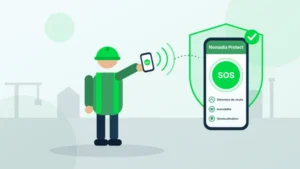
That is why it has developed an application to protect your employees.

Discover Nomadia Protect

How Can Lone Workers Be Protected?

The safety of lone workers is a major concern in today’s professional environment. Combining preventive measures with suitable tools is essential to guarantee their well-being.
  • Real-Time Geolocation
Integrating real-time geolocation devices remains an essential pillar of lone worker protection. These tools not only make it possible to track the location of lone workers, but also to intervene quickly when necessary. Real-time location data improves responsiveness in potential emergency situations.
  • Dedicated Safety Applications
Adopting applications specifically designed to protect lone workers facilitates instant communication and the management of critical situations. These applications provide a user-friendly interface, enabling effective use even in demanding working conditions.
Lone Worker Protection and Safety The Complete Guide
  • Smart Motion Sensors
Integrating smart motion sensors into personal protective equipment makes it possible to detect abnormal or unusual movements. These sensors play a preventive role by quickly identifying potentially dangerous situations.
  • Connected Alarms
Connected alarm systems are essential tools for protecting lone workers. By reacting instantly to emergencies, these alarms help minimize response times and ensure that assistance can be provided quickly.
  • Mobile Video Monitoring Devices
Mobile video monitoring devices provide a real-time view of the working environment of lone employees. This complementary technology strengthens monitoring and supports rapid intervention when risks are identified.
In conclusion, protecting lone workers requires a balanced combination of preventive measures and the appropriate use of suitable tools. This comprehensive approach aims to create a secure working environment that fosters confidence and supports the well-being of employees working alone.
From vehicle tracking to applications dedicated to lone workers, Nomadia provides innovative and eco-friendly mobility solutions for your field teams.

Worker Protection Regulations

Working in a safe environment is a fundamental right for every employee. This is why worker protection regulations play such an important role. These standards are designed to safeguard employee well-being and are essential for creating optimal working conditions.
The relevant authorities have established a comprehensive regulatory framework to ensure worker health and safety. These regulations cover a wide range of areas, from preventing workplace accidents to managing occupational risks. Every company must comply rigorously with these standards in order to create a safe and healthy professional environment.
The French Labor Code provides the foundation for these regulations by defining the rights and responsibilities of employers and employees. It addresses issues such as working conditions, statutory working hours and workplace safety requirements. This legal framework provides a solid basis for protecting workers within organizations.
Worker protection is not limited to physical safety. It also includes psychosocial well-being.

Employer Obligations Regarding Worker Protection

  • Compliance with Safety Standards
Compliance with safety standards is central to an organization’s responsibilities towards its workers. Companies must introduce internal policies designed to identify and reduce risks, thereby ensuring a safe working environment.
  • Ongoing Safety Training
Ongoing training is a key element in preventing accidents. Companies should commit to providing regular safety training, going beyond role-specific professional skills to cover health and safety issues.
  • Compliance with Legal Standards
Complying with legal and regulatory standards is an essential obligation. This includes meeting requirements relating to working hours, decent working conditions and sector-specific regulations. These standards form the foundation of an organization’s commitment to worker protection.
  • Providing Personal Protective Equipment
Every worker has the right to access personal protective equipment appropriate to their role. From safety glasses to helmets, companies must ensure the availability of suitable PPE for all employees.
  • Transparent Communication about Risks
Transparent communication about potential risks is essential. Companies should maintain an open dialogue with employees about the risks associated with their roles. This approach raises awareness and strengthens the organization’s safety culture.
  • Support in the Event of Health Problems
Recognizing the importance of workers’ overall health is essential. Companies must provide appropriate support when employees experience health problems, whether through medical benefits, employee assistance programs or flexible working arrangements.
In summary, worker protection represents a fundamental commitment that every company should take seriously. These obligations go beyond legal requirements and should become core values embedded in the organization’s culture, creating a working environment where safety and well-being are the top priorities.

Projet, demande de démonstration ou d’essai gratuit ?

Frequently Asked Questions

FAQ – The Most Frequently Asked Questions About Nomadia

Why Choose Nomadia?

As France’s leading publisher of Smart Mobility SaaS solutions, Nomadia supports more than 175,000 field professionals every day. Our solutions are easy to use, quick to deploy, and deliver significant and immediate return on investment.

Drawing on the expertise of both a software publisher-integrator and a consulting firm, Nomadia’s teams provide tailored support, from data consulting to the deployment of mobile devices. Finally, our technical support team is available 24/7 to assist you.

Who Are Nomadia Solutions Designed For?

Nomadia solutions support the digital transformation of all mobile professionals: field sales representatives, delivery drivers, technicians, auditors, healthcare workers, inspectors, service providers, security patrol officers, experts, and more.

Whether for SMEs or large enterprises, our solutions adapt to businesses of all sizes and across all industries.

How Much Does It Cost?

Nomadia Delivery offers transparent and flexible pricing, which primarily depends on the number of users (for example, planners and dispatchers) rather than a fixed cost per parcel.

Thanks to this model, you can control your delivery costs based on the number of resources (users) involved in route management, providing great flexibility to adjust your subscription according to the size of your fleet and your operational needs.

Is It Compatible with My Current ERP System?

Yes! Nomadia Delivery has been designed to integrate quickly and easily into your existing environment thanks to our powerful and secure APIs. Our solution is compatible with most ERP systems on the market. API integration enables the automatic synchronization of your transport orders, customer orders, and customer information, ensuring smooth and error-free delivery tracking. The solution also offers user-friendly import capabilities with data validation controls, as well as export options in multiple customizable formats.

Is It Suitable for Our Delivery Volume?

Yes, Nomadia Delivery is ideal for companies that manage a high volume of deliveries and want to optimize their routes, create balanced territories for their drivers, and ensure precise tracking of every parcel. Nomadia Delivery adapts to fleets of all sizes!

Can Multiple Warehouses or Depots Be Managed?

Yes, our solution allows you to manage multiple warehouses or depots. It centralizes data and optimizes routes or service operations for each of them.

Is There a Limit to the Number of Stops in Route Optimizations?

No, there is no strict limit to the number of stops in route optimizations. Our solution can handle large volumes of stops and quickly calculate optimized routes.

         Project, request for a demonstration or a free trial?

nomadia logo

Geoconcept becomes Nomadia

Geoconcept brands are officially
evolving into Nomadia

nomadia logo

TourSolver becomes
Nomadia TourSolver