Everything You Need to Know About Connected PPE and Their Effectiveness
- 01/09/2023
- 16:06
reading time : 2 min

Content Marketing Manager
Personal Protective Equipment (PPE) is essential to ensure the safety of professionals in their workplace. However, with the advancement of technology, new types of PPE have emerged: connected PPE. In this article, we explain what connected PPE is and how it can enhance the safety and efficiency of mobile professionals.
Tables of Contents
Connected PPE: What Is It?
- Definition
Connected Personal Protective Equipment (PPE) refers to individual protective gear equipped with sensors, communication devices, and smart features. They are designed to collect and analyze real-time data to enhance the safety and performance of mobile workers. These connected PPE are interconnected through technologies such as the Internet of Things (IoT) and wireless communication, enabling the monitoring and rapid response to potential risks.
- The 3 Categories of PPE
- Superficial Mechanical Aggressions:
PPE in this category are designed to protect against mechanical risks such as impacts, cuts, scrapes, and light abrasions. Integrated sensors can monitor the impact of these aggressions and alert when predefined safety thresholds are exceeded. These connected PPE provide protection while ensuring the comfort and mobility of workers.
- Intermediate Risks between I and III:
PPE in this category are intended to protect against risks greater than those in the first category but less severe than those in the third category. They may include protective equipment for chemical, electrical, thermal, or moderate height fall risks. Integrated sensors monitor specific parameters related to these risks and enable early detection of hazardous situations.
- Very Serious Risks:
PPE in this category are designed to protect against very serious risks such as significant height falls, high electrical risks, corrosive chemicals, or extremely dangerous environments. These connected PPE incorporate sophisticated sensors that monitor critical working conditions in real time and can trigger instant alerts in case of imminent danger. They also allow for valuable data recording for safety analysis and improvement.
The Benefits of Connected PPE
One of the primary advantages of connected Personal Protective Equipment (PPE) is real-time safety monitoring. Thanks to integrated sensors, connected PPE can measure and transmit information on factors such as temperature, humidity, pressure, vibrations, and more. These data enable you to detect potential risks, adjust your actions accordingly, and prevent accidents.
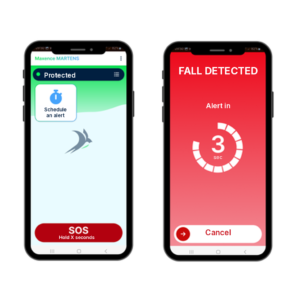
Moreover, connected PPE can feature automatic alerting capabilities. When predefined safety thresholds are exceeded, connected PPE can trigger alarms or send notifications to specific recipients. This increased responsiveness allows for quick intervention in case of a hazardous situation, thereby minimizing risks to your safety.
Connected PPE also offers tracking and location features. With integrated geolocation technology, you can be tracked in real-time, which is particularly valuable during solo missions or in high-risk environments. In case of an emergency, your position can be swiftly identified, facilitating rescue operations.
Furthermore, connected PPE can provide information about your physical activity and health status. Integrated motion and heart rate sensors can collect data on your exertion level, fatigue, and overall well-being. This information helps you better manage your energy, avoid overexertion, and make informed decisions to maintain your health and productivity at its best.
Connected PPE: The Principle
The principle of connected PPE is based on:
- Integration of sensors, Geolocation systems,
- Communication devices,
- and other intelligent features into protective equipment.
These technologies allow for the collection of valuable information such as temperature, humidity, air quality, vibrations, etc.
Through connected PPE, you can benefit from real-time monitoring of your work environment. Integrated sensors detect abnormal variations and instantly alert you to potential danger. This enables you to react promptly and take appropriate measures to ensure your safety.
Moreover, connected PPE facilitates communication between mobile professionals and their supervisory or rescue teams. Integrated communication devices enable instant connectivity, providing the ability to report an issue, request assistance, or receive real-time instructions.
By using connected PPE, you can also record data about working conditions. This information can be analyzed to identify trends, prevent potential risks, and improve safety practices within your organization.
What Are Personal Protective Equipment (PPE)?
There are many types of personal protective equipment. Here are some examples:
- Connected safety vests:
Connected safety vests are equipped with sensors that detect workers’ movements and positions in the field. They can alert professionals when approaching hazardous areas or high-risk situations. Moreover, some vests feature GPS location devices for real-time worker tracking.
- Connected safety goggles:
Connected safety goggles incorporate technologies such as augmented reality to provide real-time information to professionals. They can display warnings, safety instructions, or contextual data directly within the wearer’s field of vision, enhancing safety and productivity in the field.
- Connected safety shoes:
Connected safety shoes are equipped with sensors that measure various parameters, such as pressure, balance, and temperature. This information can help prevent accidents by detecting risky situations, such as slippery surfaces or excessive heat.
- Connected watches and apps:
Connected watches and apps offer a convenient way to monitor the health and safety of mobile professionals. They can measure heart rate, body temperature, stress levels, and other parameters to detect signs of fatigue or overexertion. Additionally, they can send alerts in case of emergencies or predefined threshold exceedances.
Nomadia offers applications to protect your lone workers
How to Choose Your Connected PPE?
- Identification of Your Specific Needs:
Before selecting connected PPE, assess the risks and hazards your team faces in their work environment. Identify essential features and sensors for their safety, such as fall detection, environmental condition monitoring, or real-time location tracking.
- Compatibility and Integration:
Verify the compatibility of the connected PPE with other technologies and systems you already use. Ensure that the PPE can seamlessly integrate with your existing infrastructure, such as field service management software or field team tracking platforms.
- Data Reliability and Accuracy:
The accuracy of data collected by connected PPE is crucial for ensuring your safety. Make sure the PPE offers reliable sensors and technologies capable of providing precise real-time information. Also, check the quality of connectivity for efficient data transmission.
- Ease of Use and Adoption:
Choose connected PPE that is user-friendly. It is important that you and your colleagues can quickly and easily adopt it. A clear interface and straightforward features contribute to maximizing the efficiency and acceptance of the PPE by your team.
- Battery Life and Durability:
Ensure that the connected PPE has sufficient battery life to meet your daily fieldwork requirements. Durability is also essential, as the PPE needs to withstand demanding working conditions and potential shocks or falls.
- Support and After-Sales Service:
Inquire about the support and after-sales service provided by the connected PPE supplier. Make sure that assistance is available for technical issues or questions and that regular updates are offered to enhance the PPE’s features and safety.
By considering these criteria when choosing connected PPE, you can benefit from an effective and secure tool for your mobile professional activities. Feel free to contact us for personalized advice and discover our SaaS solutions tailored to your specific needs!
Frequently Asked Questions
FAQ – The Most Frequently Asked Questions About Nomadia
Why Choose Nomadia?
As France’s leading publisher of Smart Mobility SaaS solutions, Nomadia supports more than 175,000 field professionals every day. Our solutions are easy to use, quick to deploy, and deliver significant and immediate return on investment.
Drawing on the expertise of both a software publisher-integrator and a consulting firm, Nomadia’s teams provide tailored support, from data consulting to the deployment of mobile devices. Finally, our technical support team is available 24/7 to assist you.
Who Are Nomadia Solutions Designed For?
Nomadia solutions support the digital transformation of all mobile professionals: field sales representatives, delivery drivers, technicians, auditors, healthcare workers, inspectors, service providers, security patrol officers, experts, and more.
Whether for SMEs or large enterprises, our solutions adapt to businesses of all sizes and across all industries.
How Much Does It Cost?
Nomadia Delivery offers transparent and flexible pricing, which primarily depends on the number of users (for example, planners and dispatchers) rather than a fixed cost per parcel.
Thanks to this model, you can control your delivery costs based on the number of resources (users) involved in route management, providing great flexibility to adjust your subscription according to the size of your fleet and your operational needs.
Is It Compatible with My Current ERP System?
Yes! Nomadia Delivery has been designed to integrate quickly and easily into your existing environment thanks to our powerful and secure APIs. Our solution is compatible with most ERP systems on the market. API integration enables the automatic synchronization of your transport orders, customer orders, and customer information, ensuring smooth and error-free delivery tracking. The solution also offers user-friendly import capabilities with data validation controls, as well as export options in multiple customizable formats.
Is It Suitable for Our Delivery Volume?
Yes, Nomadia Delivery is ideal for companies that manage a high volume of deliveries and want to optimize their routes, create balanced territories for their drivers, and ensure precise tracking of every parcel. Nomadia Delivery adapts to fleets of all sizes!
Can Multiple Warehouses or Depots Be Managed?
Yes, our solution allows you to manage multiple warehouses or depots. It centralizes data and optimizes routes or service operations for each of them.
Is There a Limit to the Number of Stops in Route Optimizations?
No, there is no strict limit to the number of stops in route optimizations. Our solution can handle large volumes of stops and quickly calculate optimized routes.
Project, request for a demonstration or a free trial?