Lone Worker Protection and Safety: The Complete Guide
- 01/08/2023
- 16:52
Reading time : 5 min

Responsable Content Marketing
Isolated workers and those working in hazardous environments face a variety of risks. To ensure their safety and well-being, Lone Worker Protection (LWP) devices are put in place. In this article, we will explore the different ways LWP can be implemented to help protect isolated workers and ensure their safety.
Sommaire

LWP Security: What are we talking about?
In the context of Lone Worker Protection (LWP), security is of paramount importance. The very definition of a lone worker highlights the risk they face by working alone, without anyone nearby to assist in case of an incident. That is why employers have a significant responsibility for the safety of isolated workers. It is especially important to identify the risks the worker is exposed to in order to implement effective preventive measures such as:
- Providing suitable communication equipment
- Establishing emergency response procedures
Prioritizing safety not only protects the workers but also ensures compliance with laws and regulations regarding health and safety at work.
LWP and Safety: Understanding the risks of isolated workers
Solitary workers may be exposed to various risks, such as accidents, assaults, or theft.
Situations can become dangerous when the work involves remote locations or hostile environments where there is no supervision and/or immediate assistance available.
In addition, isolated employees often face risks related to weather conditions, such as extreme heat or flooding.

These risks may be more common in certain sectors, such as manufacturing, construction, agriculture, or emergency services. It is therefore essential for employers to implement protective measures, such as training, communication equipment, safety monitoring, and emergency response procedures. By understanding the risks faced by lone workers, companies can better protect them and ensure their safety in the workplace.
How can LWP tools protect isolated workers?
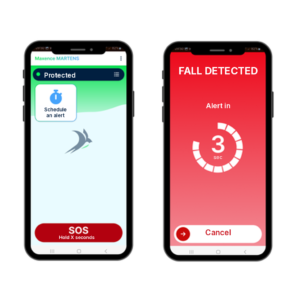
As you can see, the safety of lone workers is very important. Given the risks they face, you must be able to provide them with protection. With PTI solutions, your employees can work safely. These devices are typically equipped to allow workers to stay in contact with their employer or another designated contact person in case of an emergency. Equipped in this way, a lone worker can trigger an alert in the event of an accident or injury and receive help quickly. PTI safety devices can detect a fall or prolonged inactivity using motion sensors, enabling a rapid response if the lone worker is unable to alert others on their own.
LWP Security: What type of device for the protection of your isolated workers?
To enhance the safety of your isolated workers, various LWP devices are available:
- GSM LWP phone: A GSM phone offering different types of possible alerts in case of danger detection or lack of movement for a certain time.
- LWP watch: Here, the isolated worker wears a connected watch. This accessory allows the employee to send an alarm directly in case of issues at the workplace.
- LWP walkie-talkie: A more old-school LWP solution, this radio communication device is practical in specific cases. Its advantage is that it doesn’t require a network to communicate directly with its receiver.
- LWP application: This application can be downloaded on a smartphone and is generally used in addition to a GSM phone or a connected watch.
- DECT LWP phone: This LWP security device is a wireless phone. It can send alarms and also geolocate an employee.
- Connected PPE: This security system involves personal protective equipment (PPE) that is connected to a network. They must be adapted to the employee, and the connected part adds an additional layer of security.
Nomadia provides reliable LWP security solutions to help companies protect their isolated employees in all possible conditions.
LWP and Safety: Implementing the security system
-
The Work Environment and Type of Task
To effectively protect a lone worker, you need to know what type of task they will be performing and in what environment. If you have a mobile worker, you must provide them with geolocation equipment. It is also necessary to know which network covers the area in which they are traveling (GSM or DECT).
Choosing the Right Tool
As we’ve seen, there are various devices available to equip your employees. These tools can be activated manually or automatically. Depending on your employee’s assignment, it’s wise to choose the right device to maximize their protection
- Handling Alarms
For your PTI safety device to be effective, you must decide in advance how emergency responders should respond:
- Who receives the alarm? You can program multiple numbers to be alerted. The recipient can be an in-house staff member or emergency responders.
- Who will respond on-site? Either the in-house staff member is trained to provide first aid, or they contact emergency responders.

LWP and Safety: What are the regulations?
As an employer, you are obliged to implement a prevention approach according to article L. 4121-1: “The employer has the obligation to implement a prevention approach in the company aimed at ensuring the health and safety of employees, including actions for the prevention of occupational risks, information, and training (article L4154-2), as well as the implementation of appropriate organization and means.” As seen earlier in the article, you must define the risks your employees face to establish an appropriate protocol. You are also required to provide adequate assistance in case of risks to your employees.
In conclusion, LWP and the safety of your isolated employees are topics not to be neglected. You must adapt your security system to the environment and risks faced by your employees. By implementing LWP security devices, you ensure providing optimal safety to your employees and comply with the relevant legal obligations.
Frequently Asked Questions
FAQ – The Most Frequently Asked Questions About Nomadia
Why Choose Nomadia?
As France’s leading publisher of Smart Mobility SaaS solutions, Nomadia supports more than 175,000 field professionals every day. Our solutions are easy to use, quick to deploy, and deliver significant and immediate return on investment.
Drawing on the expertise of both a software publisher-integrator and a consulting firm, Nomadia’s teams provide tailored support, from data consulting to the deployment of mobile devices. Finally, our technical support team is available 24/7 to assist you.
Who Are Nomadia Solutions Designed For?
Nomadia solutions support the digital transformation of all mobile professionals: field sales representatives, delivery drivers, technicians, auditors, healthcare workers, inspectors, service providers, security patrol officers, experts, and more.
Whether for SMEs or large enterprises, our solutions adapt to businesses of all sizes and across all industries.
How Much Does It Cost?
Nomadia Delivery offers transparent and flexible pricing, which primarily depends on the number of users (for example, planners and dispatchers) rather than a fixed cost per parcel.
Thanks to this model, you can control your delivery costs based on the number of resources (users) involved in route management, providing great flexibility to adjust your subscription according to the size of your fleet and your operational needs.
Is It Compatible with My Current ERP System?
Yes! Nomadia Delivery has been designed to integrate quickly and easily into your existing environment thanks to our powerful and secure APIs. Our solution is compatible with most ERP systems on the market. API integration enables the automatic synchronization of your transport orders, customer orders, and customer information, ensuring smooth and error-free delivery tracking. The solution also offers user-friendly import capabilities with data validation controls, as well as export options in multiple customizable formats.
Is It Suitable for Our Delivery Volume?
Yes, Nomadia Delivery is ideal for companies that manage a high volume of deliveries and want to optimize their routes, create balanced territories for their drivers, and ensure precise tracking of every parcel. Nomadia Delivery adapts to fleets of all sizes!
Can Multiple Warehouses or Depots Be Managed?
Yes, our solution allows you to manage multiple warehouses or depots. It centralizes data and optimizes routes or service operations for each of them.
Is There a Limit to the Number of Stops in Route Optimizations?
No, there is no strict limit to the number of stops in route optimizations. Our solution can handle large volumes of stops and quickly calculate optimized routes.
Project, request for a demonstration or a free trial?