The FIFO Method: Definition, Benefits, and Calculation
- 23/07/2026
- 14:02
reading time : 2 min

Content Marketing Manager
Table of Contents
Difference between FIFO, FILO, and FEFO
When should you use the FIFO method?
- Perishable products: ideal for food or medicines, where losses due to expiration must be avoided.
- Avoiding obsolescence: for technology or fashion products, FIFO allows older items to be sold before newer ones.
- Maintaining quality: for products whose quality deteriorates over time (materials, chemicals).
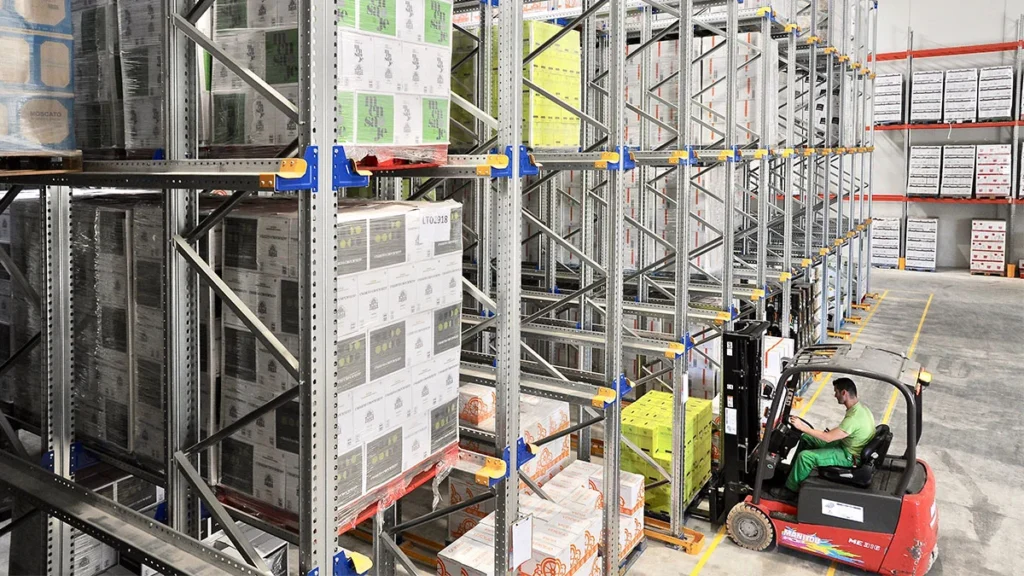
- Warehouse management: simplifies the physical management of stock by avoiding unnecessary handling.
What is the FIFO method ? 🔎
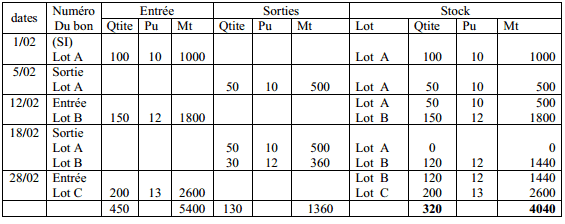
Calculating the FIFO method
- 80 × €10 = €800
- If a new order takes 30 units (20 at €10 and 10 at €12), the calculation would be: (20 × €10) + (10 × €12) = €200 + €120 = €320
- 40 × €12 = €480
Advantages and disadvantages of the FIFO method
-
Disadvantages
Challenges in high-turnover environments: in high-turnover warehouses or those with large items, the physical management of stock can be complex. It may be difficult to organize products in a way that ensures the oldest are always easily accessible. This can result in additional handling and increased labor costs.
Tools to help you implement the FIFO method
- Product traceability: automatic batch tracking, with notifications for the use of older products.
- Location management: ensures that older products are placed so as to be easily accessible.
- Analysis and reports: generates reports on stock turnover and alerts about expiration risks.
- Fast reading: rapid scanning of items to check entry date.
- Smart labels: RFID technologies allow the history of each product to be tracked without manually scanning each label.
- Continuous flow: items automatically move to the front as older ones are removed.
- Quick accessibility: workers can remove older products without moving newer ones, saving time and effort.
- Centralized data management: the ERP centralizes product information, enabling the tracking of stock in and out with FIFO rules.
- Requirements planning: uses FIFO data to plan replenishments and avoid surpluses or stockouts.
- Automatic alerts: sends alerts when older items should be used or sold as a priority.
- Accessibility and mobility: stock tracking from anywhere in the warehouse.
- Real-time updates: information on stock movements is instantly updated in the central system, facilitating the application of FIFO.
Frequently Asked Questions
FAQ – The Most Frequently Asked Questions About Nomadia
Why Choose Nomadia?
As France’s leading publisher of Smart Mobility SaaS solutions, Nomadia supports more than 175,000 field professionals every day. Our solutions are easy to use, quick to deploy, and deliver significant and immediate return on investment.
Drawing on the expertise of both a software publisher-integrator and a consulting firm, Nomadia’s teams provide tailored support, from data consulting to the deployment of mobile devices. Finally, our technical support team is available 24/7 to assist you.
Who Are Nomadia Solutions Designed For?
Nomadia solutions support the digital transformation of all mobile professionals: field sales representatives, delivery drivers, technicians, auditors, healthcare workers, inspectors, service providers, security patrol officers, experts, and more.
Whether for SMEs or large enterprises, our solutions adapt to businesses of all sizes and across all industries.
How Much Does It Cost?
Nomadia Delivery offers transparent and flexible pricing, which primarily depends on the number of users (for example, planners and dispatchers) rather than a fixed cost per parcel.
Thanks to this model, you can control your delivery costs based on the number of resources (users) involved in route management, providing great flexibility to adjust your subscription according to the size of your fleet and your operational needs.
Is It Compatible with My Current ERP System?
Yes! Nomadia Delivery has been designed to integrate quickly and easily into your existing environment thanks to our powerful and secure APIs. Our solution is compatible with most ERP systems on the market. API integration enables the automatic synchronization of your transport orders, customer orders, and customer information, ensuring smooth and error-free delivery tracking. The solution also offers user-friendly import capabilities with data validation controls, as well as export options in multiple customizable formats.
Is It Suitable for Our Delivery Volume?
Yes, Nomadia Delivery is ideal for companies that manage a high volume of deliveries and want to optimize their routes, create balanced territories for their drivers, and ensure precise tracking of every parcel. Nomadia Delivery adapts to fleets of all sizes!
Can Multiple Warehouses or Depots Be Managed?
Yes, our solution allows you to manage multiple warehouses or depots. It centralizes data and optimizes routes or service operations for each of them.
Is There a Limit to the Number of Stops in Route Optimizations?
No, there is no strict limit to the number of stops in route optimizations. Our solution can handle large volumes of stops and quickly calculate optimized routes.