The Isolated Worker and Labor Code Regulations
- 03/08/2023
- 10:56
reading time : 2 min

Content Marketing Manager
The isolated worker is defined as an employee performing a task alone. Employers are required to protect their isolated workers by implementing appropriate safety measures to prevent occupational risks. In this article, we will examine the risks faced by isolated workers, prohibited activities, existing protection devices, and the obligations of employers regarding the health and safety protection of their isolated workers according to the Labor Code.
Tables of Contents

Isolated Worker: Definition according to the Labor Code
There is no official definition of an isolated worker according to the labor code. However, it is generally defined as an employee who performs a task or operation alone, out of sight of other workers and without immediate assistance in case of need. This situation can occur in various professions, such as:
- agriculture,
- commercial delivery services,
- home healthcare, and many others.
The risks associated with this situation are diverse, as the isolated worker may face issues related to safety, health, and communication.
Isolated Worker and Labor Code: What Regulations?
The issue of regulations regarding isolated workers has become increasingly important in recent years. With the increase in isolated workers, it is essential to ensure their safety at work. To protect an isolated worker according to the labor code, employers must implement safety measures to prevent risks. The employer must ensure to identify all isolation situations to determine the appropriate measures to put in place. They must ensure that each worker is trained and equipped to work safely. Employers must establish clear procedures and regular checks to monitor the workers’ health status. In case of an incident, they must be able to provide a prompt intervention to ensure their safety. Ultimately, the employer is responsible for managing the health and safety of their isolated worker according to the labor code. Therefore, they have the obligation to take all necessary measures to guarantee them a safe and healthy work environment.
Isolated Worker and Labor Code: the Encountered Risks
The isolated worker is exposed to various occupational risks that can have serious consequences on their health and safety.
- Psychological Risks
Isolated workers may experience increased stress, generalized anxiety, or feelings of loneliness. These factors can have long-term effects on their mental health. Additionally, risky behaviors may develop more easily, such as alcohol consumption at the workplace, absenteeism, or failure to use protective equipment.
- Medical Risks
Working alone can be a significant source of distress for some individuals. Medical conditions may arise, such as dizziness, anxiety attacks, etc. Other risks may include hypothermia, dehydration, respiratory problems, or even a heart attack. This is why the isolated worker is protected by the labor code.
- Physical Risks
When working alone, employees are much more exposed to physical and verbal violence. They may be more vulnerable to attacks because the aggressor knows there are no witnesses or the possibility of calling for help. These risks are more prevalent for individuals working from home or delivery personnel, for instance.
Isolated Worker and Labor Code: Prohibited Activities
Isolated workers are exposed to increased occupational risks, and some activities cannot be performed alone. Among these activities, we have:
- Working at heights,
- Handling trucks and machinery,
- Using equipment for lifting loads,
- Electrical work performed on or off power, work exposing to the risk of falling into water, as well as all work performed on elevators.
Note, however, that it is possible to obtain an exemption in certain cases. Despite these prohibitions, the employer must still pay close attention to the health of employees by implementing regular checks. Since the employer is not on-site with them, isolated workers could unintentionally break the rules and put themselves in danger. This is even more crucial as the labor code explicitly protects the isolated worker.
Isolated Worker and Labor Code: What are the Devices?
For isolated workers protected by the labor code, there are devices available to enhance their safety. First and foremost, organizational measures must be put in place. The employer must always know the location of each isolated worker to react as quickly as possible. Workers must also be trained and informed about the risks they face. To improve on-site protection, the following measures exist:
- The presence of someone who periodically checks that everything is going well on the field,
- Fixed alarm systems such as beacons or presence badges,
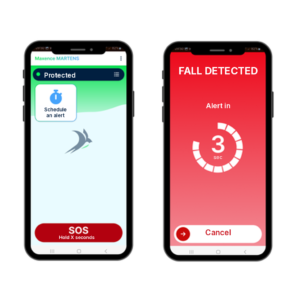
- Personal alarm devices (DATI) or automatic alarm systems are tools that allow the worker to notify of danger more quickly. Depending on the device, alarms can automatically trigger in various situations (significant tilt indicating distress, no movement for a certain period, etc.).
Nomadia offers solutions for the protection of your isolated workers! They provide geolocation devices, portable alarm buttons, mobile applications, and fall detection systems. The offers can be customized according to the specific needs of each company and are accompanied by training and maintenance services.
Nomadia offers you a solution to protect your isolated workers!
Frequently Asked Questions
FAQ – The Most Frequently Asked Questions About Nomadia
Why Choose Nomadia?
As France’s leading publisher of Smart Mobility SaaS solutions, Nomadia supports more than 175,000 field professionals every day. Our solutions are easy to use, quick to deploy, and deliver significant and immediate return on investment.
Drawing on the expertise of both a software publisher-integrator and a consulting firm, Nomadia’s teams provide tailored support, from data consulting to the deployment of mobile devices. Finally, our technical support team is available 24/7 to assist you.
Who Are Nomadia Solutions Designed For?
Nomadia solutions support the digital transformation of all mobile professionals: field sales representatives, delivery drivers, technicians, auditors, healthcare workers, inspectors, service providers, security patrol officers, experts, and more.
Whether for SMEs or large enterprises, our solutions adapt to businesses of all sizes and across all industries.
How Much Does It Cost?
Nomadia Delivery offers transparent and flexible pricing, which primarily depends on the number of users (for example, planners and dispatchers) rather than a fixed cost per parcel.
Thanks to this model, you can control your delivery costs based on the number of resources (users) involved in route management, providing great flexibility to adjust your subscription according to the size of your fleet and your operational needs.
Is It Compatible with My Current ERP System?
Yes! Nomadia Delivery has been designed to integrate quickly and easily into your existing environment thanks to our powerful and secure APIs. Our solution is compatible with most ERP systems on the market. API integration enables the automatic synchronization of your transport orders, customer orders, and customer information, ensuring smooth and error-free delivery tracking. The solution also offers user-friendly import capabilities with data validation controls, as well as export options in multiple customizable formats.
Is It Suitable for Our Delivery Volume?
Yes, Nomadia Delivery is ideal for companies that manage a high volume of deliveries and want to optimize their routes, create balanced territories for their drivers, and ensure precise tracking of every parcel. Nomadia Delivery adapts to fleets of all sizes!
Can Multiple Warehouses or Depots Be Managed?
Yes, our solution allows you to manage multiple warehouses or depots. It centralizes data and optimizes routes or service operations for each of them.
Is There a Limit to the Number of Stops in Route Optimizations?
No, there is no strict limit to the number of stops in route optimizations. Our solution can handle large volumes of stops and quickly calculate optimized routes.
Project, request for a demonstration or a free trial?