Complete Guide to Maintenance Intervention Planning

     Projet, demande de démonstration ou d’essai gratuit ?

reading time : 2 min

Picture of Lucie Monnot
Lucie Monnot

Content Marketing Manager

Effective equipment maintenance is essential for ensuring the smooth operation of businesses across a wide range of industries.
However, managing and planning maintenance interventions can be complex and requires a structured approach. This guide to maintenance intervention planning provides the knowledge and tools you need to optimize the process.

Table of contents

Planning intervention optimisation bonnes pratiques

What is maintenance intervention planning?

Maintenance intervention planning is the process of organizing and scheduling various maintenance activities. These activities are essential for ensuring the proper operation of a company’s equipment, facilities and infrastructure.
 
The process involves creating a forward-looking maintenance schedule that defines the tasks to be completed, the resources required, deadlines and priorities.

Maintenance intervention planning also aims to establish priorities.
Some maintenance tasks may be urgent or critical to the company’s operations, while others can be scheduled further in advance. It is therefore essential to prioritize interventions according to their impact on production, safety and compliance.
Professionnel analysant une carte numérique sur un écran pour planifier des interventions terrain

The importance of maintenance intervention planning

Maintenance intervention planning is important for every company. It helps ensure that equipment and facilities operate properly.
By planning maintenance interventions in advance, companies can identify and resolve potential problems before they turn into major breakdowns.
This reduces unexpected downtime and enables the company to maintain operations without excessive disruption.

Regular and planned maintenance keeps equipment in good working order. It prevents failures and extends equipment lifespan.
This improves equipment reliability and reduces the risk of costly breakdowns.

Maintenance intervention planning helps avoid delays caused by a lack of labor or tools.
It ensures that employees have everything they need to work effectively.
 
Effective planning also optimizes maintenance costs. It can reduce expenses associated with emergency repairs and extended production stoppages by anticipating resource requirements and scheduling interventions logically.

Maintenance intervention planning also takes employee safety into account.
It ensures that tasks are carried out in a safe and controlled environment. In addition, it supports compliance with applicable safety and maintenance regulations.
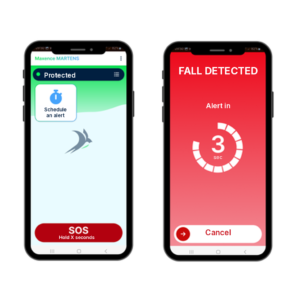
Nomadia offers a solution to protect lone workers.
Planning maintenance interventions also helps optimize work processes.
This includes team coordination, resource planning, task sequencing and procedure documentation. Better organization and intervention management improve the company’s overall efficiency.

Steps in maintenance intervention planning

Maintenance intervention planning involves several essential steps to ensure that work is carried out efficiently and in an organized manner.
The first step is to identify the equipment, facilities and systems that require maintenance.
This may be based on criteria such as manufacturer recommendations, regulatory requirements, maintenance histories and preventive inspection results.

It is important to create a clear list of the equipment concerned.
Once the equipment has been identified, the specific maintenance tasks to be performed must be determined. These may include replacing worn parts, cleaning and carrying out technical checks.

Each task should be clearly defined and described.
The next step is to determine how frequently maintenance interventions should be carried out.
This will depend on manufacturer recommendations, industry standards, regulatory requirements and operational constraints.
It is important to consider component lifespan, equipment reliability and potential risks.
Once the tasks and intervention frequency have been defined, the resources required to carry them out must be allocated.
These may include qualified labor, tools, spare parts and specialized equipment.

You must ensure that the necessary resources are available and plan their use according to the intervention schedule.
At this stage, create a forward-looking maintenance intervention schedule by assigning a date and estimated duration to each task.
It is important to take priorities, production impact, equipment availability constraints and resource availability into account.
The schedule should be realistic and flexible enough to adapt to potential changes.

Effective communication between maintenance teams and other stakeholders is essential.
The intervention schedule should be shared with the relevant teams. Activities must be coordinated with ongoing operations, and stakeholders should be informed about any changes or adjustments.
 
Once maintenance interventions have been planned and completed, their execution must be tracked and evaluated.
This makes it possible to verify that tasks were carried out according to requirements, identify potential problems and make the necessary adjustments to improve future planning cycles.

Tools and techniques for planning maintenance interventions

Several tools and techniques can be used to facilitate maintenance intervention planning. The most common include the following.
  • Calendar and schedule: A calendar or schedule is essential for visualizing and organizing maintenance tasks. It makes it possible to plan interventions according to available resources, deadlines and priorities. It also supports balanced workload distribution over a given period.
  • Priority management: It is important to establish priorities when planning maintenance interventions. Priorities may be based on the impact on production, safety and compliance. A careful assessment of risks and business requirements helps determine the order in which maintenance tasks should be completed.
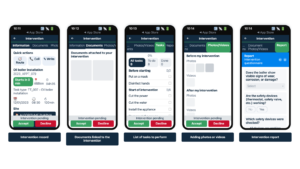
  • Computerized Maintenance Management System software: CMMS software is specifically designed to manage maintenance interventions. It centralizes equipment information, schedules work, assigns resources, tracks intervention histories and generates detailed reports. These systems facilitate the overall management of maintenance activities.
  • Predictive analytics: Predictive analytics uses historical data and statistical models to anticipate equipment breakdowns and failures. By using techniques such as machine learning and data analysis, companies can identify early warning signs of potential problems. Maintenance interventions can then be planned proactively.
  • Communication and collaboration: Smooth communication and effective collaboration between maintenance teams, managers and other stakeholders are essential for ensuring well-coordinated intervention planning. Communication tools such as messaging software, online collaboration applications and regular meetings make it possible to share relevant information and make decisions collectively.

Frequently Asked Questions

FAQ – The Most Frequently Asked Questions About Nomadia

Why Choose Nomadia?

As France’s leading publisher of Smart Mobility SaaS solutions, Nomadia supports more than 175,000 field professionals every day. Our solutions are easy to use, quick to deploy, and deliver significant and immediate return on investment.

Drawing on the expertise of both a software publisher-integrator and a consulting firm, Nomadia’s teams provide tailored support, from data consulting to the deployment of mobile devices. Finally, our technical support team is available 24/7 to assist you.

Who Are Nomadia Solutions Designed For?

Nomadia solutions support the digital transformation of all mobile professionals: field sales representatives, delivery drivers, technicians, auditors, healthcare workers, inspectors, service providers, security patrol officers, experts, and more.

Whether for SMEs or large enterprises, our solutions adapt to businesses of all sizes and across all industries.

How Much Does It Cost?

Nomadia Delivery offers transparent and flexible pricing, which primarily depends on the number of users (for example, planners and dispatchers) rather than a fixed cost per parcel.

Thanks to this model, you can control your delivery costs based on the number of resources (users) involved in route management, providing great flexibility to adjust your subscription according to the size of your fleet and your operational needs.

Is It Compatible with My Current ERP System?

Yes! Nomadia Delivery has been designed to integrate quickly and easily into your existing environment thanks to our powerful and secure APIs. Our solution is compatible with most ERP systems on the market. API integration enables the automatic synchronization of your transport orders, customer orders, and customer information, ensuring smooth and error-free delivery tracking. The solution also offers user-friendly import capabilities with data validation controls, as well as export options in multiple customizable formats.

Is It Suitable for Our Delivery Volume?

Yes, Nomadia Delivery is ideal for companies that manage a high volume of deliveries and want to optimize their routes, create balanced territories for their drivers, and ensure precise tracking of every parcel. Nomadia Delivery adapts to fleets of all sizes!

Can Multiple Warehouses or Depots Be Managed?

Yes, our solution allows you to manage multiple warehouses or depots. It centralizes data and optimizes routes or service operations for each of them.

Is There a Limit to the Number of Stops in Route Optimizations?

No, there is no strict limit to the number of stops in route optimizations. Our solution can handle large volumes of stops and quickly calculate optimized routes.

         Project, request for a demonstration or a free trial?

nomadia logo

Geoconcept becomes Nomadia

Geoconcept brands are officially
evolving into Nomadia

nomadia logo

TourSolver becomes
Nomadia TourSolver