Biose: The Challenges of Logistics in the Pharmaceutical Industry

reading time : 2 min

Picture of Lucie Monnot
Lucie Monnot

Content Marketing Manager

Pharmaceutical logistics is a demanding field governed by strict requirements relating to traceability, transportation and regulatory compliance. To understand these challenges, we spoke with Romain Calvet, Logistics Manager at Biose Industrie, a company specializing in the development and manufacture of bacteria-based medicines.
In this interview, he discusses the challenges of his profession, the innovations transforming the sector and the importance of optimized logistics in guaranteeing the quality of products delivered to pharmaceutical laboratories.

Table of Contents

Clé plate posée sur une fiche quadrillée entourée de vis et d’écrous.

Logistics under Close Supervision

Traceability and Goods Control

“Every item entering our warehouses is accompanied by certificates of origin and compliance. We record the products in our management software, which tracks their movements and monitors expiry dates.”
Traceability is a key issue in the pharmaceutical industry. Every batch of medicine must be tracked precisely to prevent errors that could compromise patient safety.
At Biose, management software tracks inventory and expiry dates, automatically blocking products that are no longer suitable for use.

Understanding GMP and GDP Standards

The pharmaceutical industry is governed by GMP, or Good Manufacturing Practices, and GDP, or Good Distribution Practices.
GMP standards apply to the manufacture of medicines. They ensure that every product is manufactured and tested according to strict quality standards. They involve detailed procedures covering production, documentation, process validation and quality control.
GDP standards, meanwhile, govern the distribution of medicines. Their purpose is to ensure that product quality is preserved throughout the logistics chain, from the warehouse to the end customer.

Meeting Pharmaceutical Requirements

Biose applies strict control and traceability protocols at every stage of its logistics chain. The company relies on an ERP system to track batches, conducts regular inspections and manages storage and transportation conditions rigorously.
Compliance with GMP and GDP standards involves:
  • Increased documentation: Every item entering the warehouses must be accompanied by certificates of origin and compliance. This requires comprehensive document tracking, which can sometimes slow down logistics flows.
  • Enhanced quality control: Before being added to inventory, products undergo strict checks, including expiry-date verification and compliance with technical specifications.
  • Specific transportation requirements: Maintaining controlled temperatures, from -80°C to room temperature, requires rigorous procedures and the use of specialized carriers.
  • Frequent audits: Health authorities and customers may request unannounced inspections to verify compliance with applicable standards. Any deviation may result in a rejected batch or even financial penalties.
Thanks to its rigorous protocols, Biose reduces the risk of errors and guarantees consistently high quality for its customers.
Discover the different aspects of logistics traceability and the benefits it offers companies in the article Achieving Effective Logistics Traceability in 2025.

Temperature-Controlled Transportation
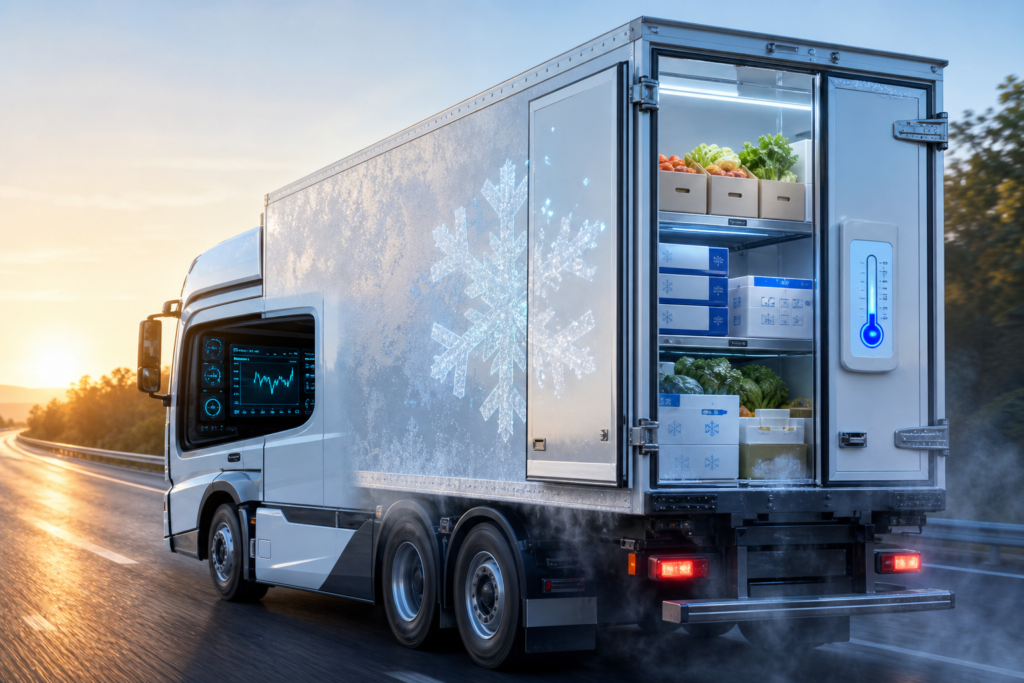
We ship some products at room temperature, but we also have shipments under controlled temperature conditions, between 15°C and 25°C, or even at -80°C for certain medicines.”
Transporting medicines is a major challenge, particularly because of strict storage requirements. The stability of medicines must be maintained throughout the logistics chain to guarantee their therapeutic effectiveness and regulatory compliance.
Some active substances are sensitive to variations in temperature and humidity. Poor transport management can alter their chemical composition, making the product ineffective or even dangerous for the patient.
In addition, strict standards imposed by regulators require continuous monitoring of storage and transportation conditions, reinforcing the need for suitable logistics solutions. At Biose, most shipments are transported under controlled temperature conditions, requiring the involvement of specialized service providers.
The most sensitive products, such as biological medicines, are transported in cryotubes at temperatures below -80°C to preserve their stability. Rigorous logistics management ensures that products remain intact until they reach their destination.

Key Management Practices for Logistics Efficiency

Organization and Performance Monitoring

« Mon rôle ne se limite pas à gérer les stocks, il s’agit aussi d’organiser et d’optimiser le travail des équipes sur le terrain. »

Romain Calvet est à la tête d’une équipe de 12 personnes, comprenant des magasiniers, des techniciens en logistique et des spécialistes des expéditions. Son quotidien consiste à coordonner ces collaborateurs afin d’assurer un fonctionnement fluide des flux logistiques.

Pour suivre et améliorer la productivité, il a mis en place à son arrivée dans l’entreprise des tableaux de suivi permettant de mesurer la performance des équipes et de détecter les points d’amélioration. L’objectif est d’obtenir des KPI qui lui permettront d’optimiser les flux de marchandises tout en minimisant les erreurs humaines.

L’importance du terrain dans la gestion logistique

«My role is not limited to managing inventory. It also involves organizing and optimizing the work of field teams.”

Romain Calvet leads a team of 12 people, including warehouse workers, logistics technicians and shipping specialists. His day-to-day role involves coordinating these employees to ensure that logistics flows run smoothly.
When he joined the company, he introduced performance-monitoring dashboards to measure team productivity and identify areas for improvement. The objective is to obtain relevant KPIs that will help optimize goods flows while minimizing human error.

The Importance of Field Operations in Logistics Management

“It is essential to spend time in the field to understand the realities of the work and adjust processes accordingly.”
Although he is based in an office, Romain Calvet spends a great deal of time in the warehouses observing his teams’ work and ensuring that operations run smoothly.
This close contact with field operations enables him to identify problems quickly and implement suitable solutions. This pragmatic approach ensures greater responsiveness when dealing with the day-to-day challenges of logistics.
  • An ERP System for Inventory Management
“Sage gives us an overall view of our logistics flows, but we still need to optimize certain tasks that remain manual.”
At Biose, logistics flows are managed primarily through Sage, an integrated ERP system used to track goods movements, manage inventory and ensure product traceability. The tool plays a central role in organizing daily operations.
Sage gives Biose a real-time view of incoming and outgoing goods. Each product batch is recorded with its references, expiry dates and compliance certificates. Thanks to this enhanced traceability, the company can:
  • Guarantee delivery compliance by ensuring that only compliant products are shipped.
  • Anticipate expiry dates and avoid losses by optimizing the order in which goods are dispatched.
  • Provide detailed reports in the event of an audit or inspection by regulatory authorities.
Sage also helps structure storage and shipping operations by recording every inventory movement. However, some tasks are still performed manually:
  • Goods movement records must be entered by the teams.
  • Logistics performance monitoring is carried out using data exports and external dashboards.
Moving towards greater connectivity with mobile equipment and automation solutions could further improve the efficiency of logistics processes and increase team productivity.


The Need to Modernize Management Tools

Gestion des stocks avantages et astuces efficaces !
“Today, we manage orders using a manual tracking process, which makes inventory and logistics-flow management more complex.”
Integrating an advanced WMS, or Warehouse Management System, could optimize logistics-flow management.
A WMS is specialized software designed to manage and optimize warehouse operations. It provides real-time inventory tracking, automates logistics flows and improves inventory accuracy.
By reducing human error and speeding up receiving, storage and shipping processes, a WMS contributes to improved traceability and more efficient management of logistics resources.
Today, goods movements are still entered manually, increasing the risk of errors and slowing down operations. Adopting a WMS could provide:
  • Automated data entry to reduce human error and save time.
  • Real-time flow monitoring to improve inventory management and prevent stockouts.
  • Optimized storage space by making better use of available areas and reducing unnecessary handling.
A WMS combined with mobile terminals and barcode scanners would make it easier to track product movements and improve team efficiency.

Towards Logistics 2.0

Innovation at the Service of Logistics

“Today, we are seeing the emergence of inventory drones and route-optimization tools that enable trucks to be loaded more efficiently.”
Artificial intelligence and robotics are transforming logistics, offering new ways to optimize operations and improve the efficiency of logistics flows. Some companies have already adopted these tools, although they represent a significant investment.


Inventory Drones for Optimized Stock Management

Some warehouses now use autonomous drones to carry out inventory checks. These drones scan the barcodes and RFID tags of stored products, enabling:
  • Instant inventory updates in the WMS, eliminating human error associated with manual counting.
  • Reduced inventory-checking time, since drones can operate at night without interrupting the teams’ work.
  • Improved goods traceability, by quickly identifying discrepancies between theoretical and actual inventory levels.
At Biose, where expiry-date management is critical, this type of technology could improve inventory reliability and simplify regulatory audits.

AI for Forecasting and Resource Optimization

Artificial intelligence is a major asset for optimizing logistics by forecasting demand and adjusting inventory levels. It can be used to:
  • Anticipate supply requirements, thereby preventing stockouts and overstocking.
  • Optimize purchasing and production processes by taking demand fluctuations and supplier lead times into account.
  • Improve workforce management by assigning tasks to the operators who are closest or most available, using real-time geolocation.
At Biose, this approach could help speed up order preparation and optimize the use of storage space.

TMS Solutions for Transport Route Optimization

TMS, or Transport Management Systems, play a key role in optimizing deliveries. These tools make it possible to:
  • Plan routes while taking controlled-temperature requirements and delivery deadlines into account.
  • Reduce the number of kilometers driven, thereby lowering transportation costs, drivers’ working time and the company’s carbon footprint.
  • Maximize truck fill rates, improving the profitability of shipments.
At Biose, where many shipments are international, integrating an advanced TMS could improve shipment visibility and streamline communication with logistics service providers.

A Necessary but Gradual Transition

“The priority has been to increase production capacity, but we know that logistics will also need to evolve.”
In recent years, Biose has experienced rapid growth, resulting in a significant increase in the volumes handled and the accelerated structuring of its logistics operations.
In response to this expansion, the company has prioritized the development of its production capacity and the adaptation of its infrastructure to meet the requirements of the pharmaceutical market.
Against this backdrop, investments in more automated logistics were not introduced immediately. The initial focus was on managing increasing flows and complying with the sector’s strict regulations.
However, to sustain this growth and improve logistics performance, automation could become a strategic priority.
Optimizing logistics processes is a key lever for supporting this expansion and ensuring increasingly reliable and efficient deliveries.
In an industry where precision and rigor are essential, pharmaceutical logistics must constantly adapt to new requirements. With increased traceability, storage constraints and technological innovation, Biose illustrates the challenges and changes taking place in an industry undergoing major transformation.
The companies that succeed in combining digitalization with logistics performance will shape the future of pharmaceutical logistics, providing customers with an increasingly seamless and secure service.
Pharmaceutical logistics is not simply one link in the chain. It is a strategic pillar that is essential to the smooth operation of the global healthcare system.
Nomadia offers logistics management solutions that help companies optimize inventory management, streamline their sales operations and improve delivery efficiency.

     Projet, demande de démonstration ou d’essai gratuit ?

Frequently Asked Questions

FAQ – The Most Frequently Asked Questions About Nomadia

Why Choose Nomadia?

As France’s leading publisher of Smart Mobility SaaS solutions, Nomadia supports more than 175,000 field professionals every day. Our solutions are easy to use, quick to deploy, and deliver significant and immediate return on investment.

Drawing on the expertise of both a software publisher-integrator and a consulting firm, Nomadia’s teams provide tailored support, from data consulting to the deployment of mobile devices. Finally, our technical support team is available 24/7 to assist you.

Who Are Nomadia Solutions Designed For?

Nomadia solutions support the digital transformation of all mobile professionals: field sales representatives, delivery drivers, technicians, auditors, healthcare workers, inspectors, service providers, security patrol officers, experts, and more.

Whether for SMEs or large enterprises, our solutions adapt to businesses of all sizes and across all industries.

How Much Does It Cost?

Nomadia Delivery offers transparent and flexible pricing, which primarily depends on the number of users (for example, planners and dispatchers) rather than a fixed cost per parcel.

Thanks to this model, you can control your delivery costs based on the number of resources (users) involved in route management, providing great flexibility to adjust your subscription according to the size of your fleet and your operational needs.

Is It Compatible with My Current ERP System?

Yes! Nomadia Delivery has been designed to integrate quickly and easily into your existing environment thanks to our powerful and secure APIs. Our solution is compatible with most ERP systems on the market. API integration enables the automatic synchronization of your transport orders, customer orders, and customer information, ensuring smooth and error-free delivery tracking. The solution also offers user-friendly import capabilities with data validation controls, as well as export options in multiple customizable formats.

Is It Suitable for Our Delivery Volume?

Yes, Nomadia Delivery is ideal for companies that manage a high volume of deliveries and want to optimize their routes, create balanced territories for their drivers, and ensure precise tracking of every parcel. Nomadia Delivery adapts to fleets of all sizes!

Can Multiple Warehouses or Depots Be Managed?

Yes, our solution allows you to manage multiple warehouses or depots. It centralizes data and optimizes routes or service operations for each of them.

Is There a Limit to the Number of Stops in Route Optimizations?

No, there is no strict limit to the number of stops in route optimizations. Our solution can handle large volumes of stops and quickly calculate optimized routes.

         Project, request for a demonstration or a free trial?

Et si vos clients étaient, eux aussi,
otages des créneaux d’intervention ?

Notre étude OpinionWay, révèle l’ampleur du problème.
Parlons de vos enjeux

pour

Les français, otages des créneaux d’intervention

Etude exclusive OpinionWay x Nomadia

pour
nomadia logo

Geoconcept becomes Nomadia

Geoconcept brands are officially
evolving into Nomadia

nomadia logo

TourSolver becomes
Nomadia TourSolver