
Nomadia FSM, the dashboard for
of all your field operations
Managing field teams without real-time visibility is like navigating blind. Nomadia Field Service Management gives managers complete control over operations, wherever technicians are working and whatever the complexity or duration of interventions, enabling fast decisions and consistent service quality.
-
An instant view of all your mobile teams
GPS locations, intervention statuses, and real-time progress. Nomadia FSM centralizes all field activity in a single interface, accessible from the back office at any time of day.
-
Multi-day and multi-site intervention management
Do your technicians work across multiple days or sites? Nomadia FSM structures and tracks every step without information loss, ensuring smooth management even for the most complex assignments.
-
Reoptimization in just a few clicks when disruptions occur
Delay, absence, or last-minute emergency? Nomadia FSM recalculates and adjusts the schedule in real time, without disrupting the rest of the day or mobilizing the entire planning team.
-
GPS territories for structured and fair monitoring
Define intervention areas by technician and monitor compliance through integrated GPS geolocation. Clear territory organization for a more balanced workload and reduced travel.










Monitoring and Management
Tracking and Geolocation
Activity Management
PDF Report Generation
No real-time visibility into mobile teams
Planners do not know where technicians are, what stage of their intervention they have reached, or whether delays are occurring. Reassignment decisions are made blindly, by phone, often too late to prevent customer impact.
Insufficient responsiveness to field emergencies
When an emergency arises, finding the nearest available technician takes valuable time. Without real-time geolocation, dispatching relies on the planner’s memory and a series of phone calls, unnecessarily extending intervention times.
No way to prove attendance or intervention times
In the event of a customer dispute, it is often impossible to prove that the technician arrived at the scheduled time. Without timestamped GPS records, contractual commitments are difficult to defend and SLA penalties may be imposed without any way to challenge them.
Unoptimized travel and excessive consumption
Without visibility into technicians’ actual locations, routes are planned without accounting for travel already underway. Overlapping routes, unnecessary detours, and excessive fuel consumption accumulate day after day.
Instant visibility into all mobile teams
Real-time tracking and optional geolocation provide instant visibility into mobile teams and make reassignments easier in the event of an emergency or disruption. The dispatch map centralizes statuses, locations, and progress on a single screen.
Intervention statuses updated automatically
As soon as a technician starts, pauses, or closes an intervention from the mobile app, the status is updated in real time in the back office. Planners have an accurate, up-to-date view of progress without needing to call the field.
Reassignment in a few clicks when a disruption occurs
Unexpected absence, priority emergency, or cascading delay: as soon as a disruption is detected, the planner immediately identifies the nearest and most qualified available technician. The reassignment is automatically notified in the relevant technician’s mobile app.
Timestamped GPS records for every intervention
Every journey is recorded with a timestamp and precise GPS coordinates. This data provides irrefutable evidence in the event of a customer dispute over arrival times. It also feeds travel-time analyses to refine predictive models.
Greater responsiveness to unexpected events
Every field disruption is detected immediately and handled in a few clicks. Customers are informed of delays, SLAs are met more consistently, and the company’s image improves over time.
Travel Optimization
Real-time visibility into locations makes it possible to assign emergencies to the nearest technician, avoid overlapping routes, and reduce unnecessary kilometers. This has a direct impact on fuel costs and the carbon footprint.
Improved operational visibility
Planners and managers have a unified, up-to-date view of all ongoing operations. Decisions are based on real data rather than estimates, improving operational management quality.
Stronger compliance with customer commitments
Timestamped GPS records make it possible to substantiate intervention times and defend contractual commitments in the event of a dispute. Unjustified SLA penalties are avoided, strengthening the business relationship.
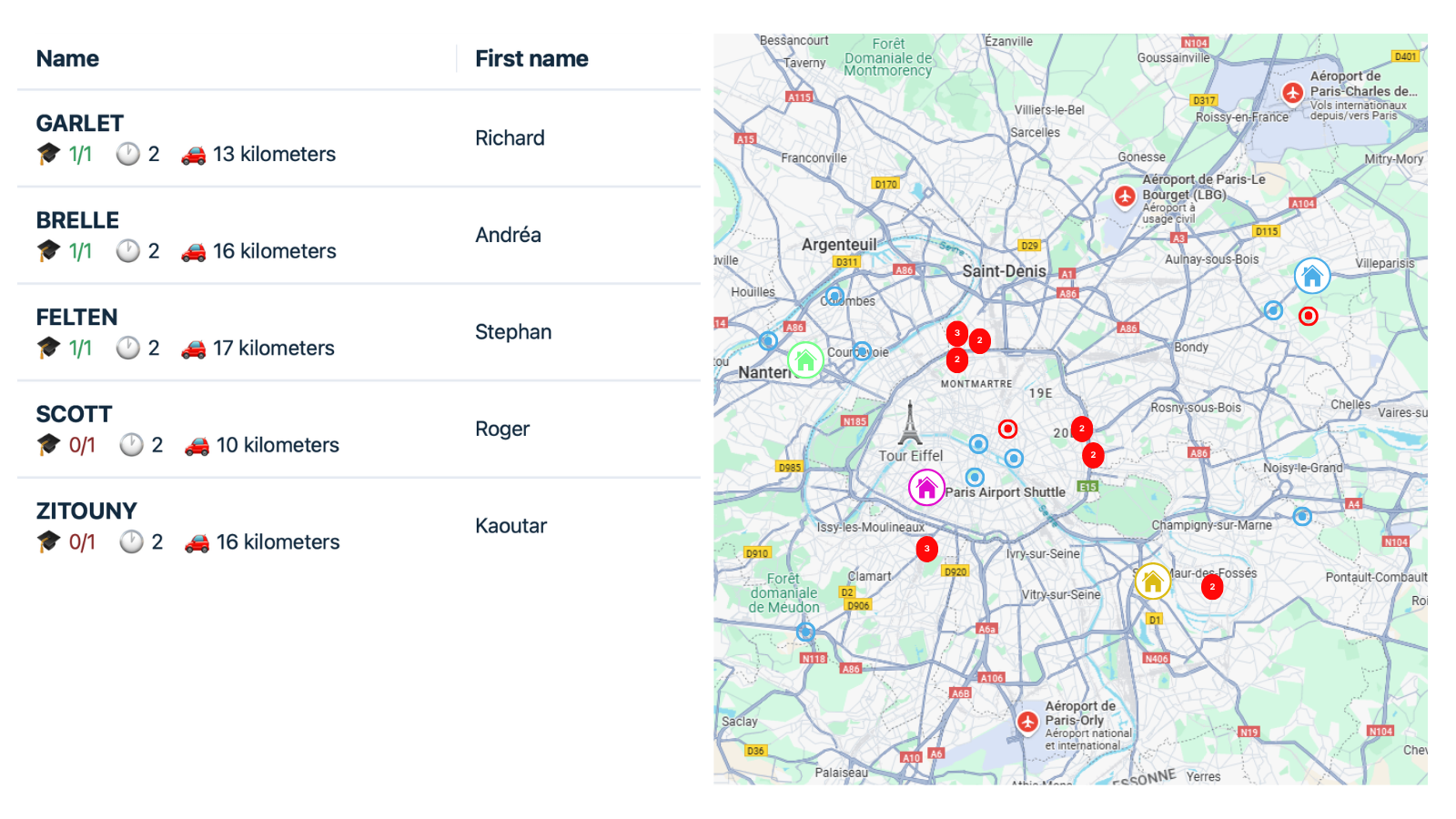
Real-time tracking: the list displays progress, the number of tasks, and kilometers driven by technician, while the map geolocates ongoing interventions in Paris, with clusters grouping nearby points.
Difficulty measuring operational performance
Without consolidated dashboards, managers operate on instinct: they do not know exactly how many interventions have been completed, what the first-time fix rate is, or which technicians or territories are underperforming. You cannot improve what you do not measure.
Data scattered across multiple tools
Key indicators are scattered across the ERP, CRM, planning software, and Excel files. Building reliable reports takes hours and consumes resources that could be devoted to higher-value activities. The data is often already outdated by the time it is analyzed.
Management meetings without reliable data
Strategic decisions are made in meetings based on partial figures that have been manually aggregated and are often disputed. Meeting time is spent aligning sources instead of analyzing gaps and defining concrete action plans.
Areas for improvement identified too late
Without automatic alerts for deviations, performance problems are detected only several weeks later, after SLAs have already been missed and the first customer complaints have arrived. The result is remediation that is far more costly than an early correction.
Dynamic, customizable dashboards
Dynamic, customizable dashboards consolidate key performance indicators to track activity in real time and quickly identify areas for improvement. Each profile (director, manager, planner) has its own view tailored to its needs.
Operational KPIs consolidated in real time
First-time fix rate, SLA compliance, productivity by technician and territory, utilization rate, and average cost per intervention: all key indicators are available in one click and continuously updated with field data reported by technicians.
Automatic alerts for deviations
Configurable alert thresholds trigger automatic notifications when a KPI exceeds defined limits: SLAs at risk, abnormal utilization rates, or cascading delays. Managers are alerted before the problem becomes critical, enabling early intervention.
Native connectors for existing BI tools
Nomadia FSM natively integrates with the leading Business Intelligence solutions on the market. Field operations data enriches your existing analyses without manual exports or intermediate transformations. A unified data foundation for faster, better-informed decisions.
Faster, more reliable decision-making
Real-time consolidated KPIs replace manual reporting. Managers immediately have the data they need to make decisions, without waiting for the weekly meeting or cross-referencing multiple files.
Control of operational costs
Precise visibility into costs by intervention, technician, and territory makes it possible to quickly identify sources of waste and optimize resource allocation. A direct lever for field operations profitability.
Accurate performance tracking
Every technician, territory, and intervention type is measured objectively. Performance gaps are detected early and addressed through targeted action plans, progressively improving overall operational quality.
Continuous process improvement
Historical data analysis reveals recurring patterns of underperformance and the best practices of the most effective teams. These insights drive concrete, measurable improvement actions over time.
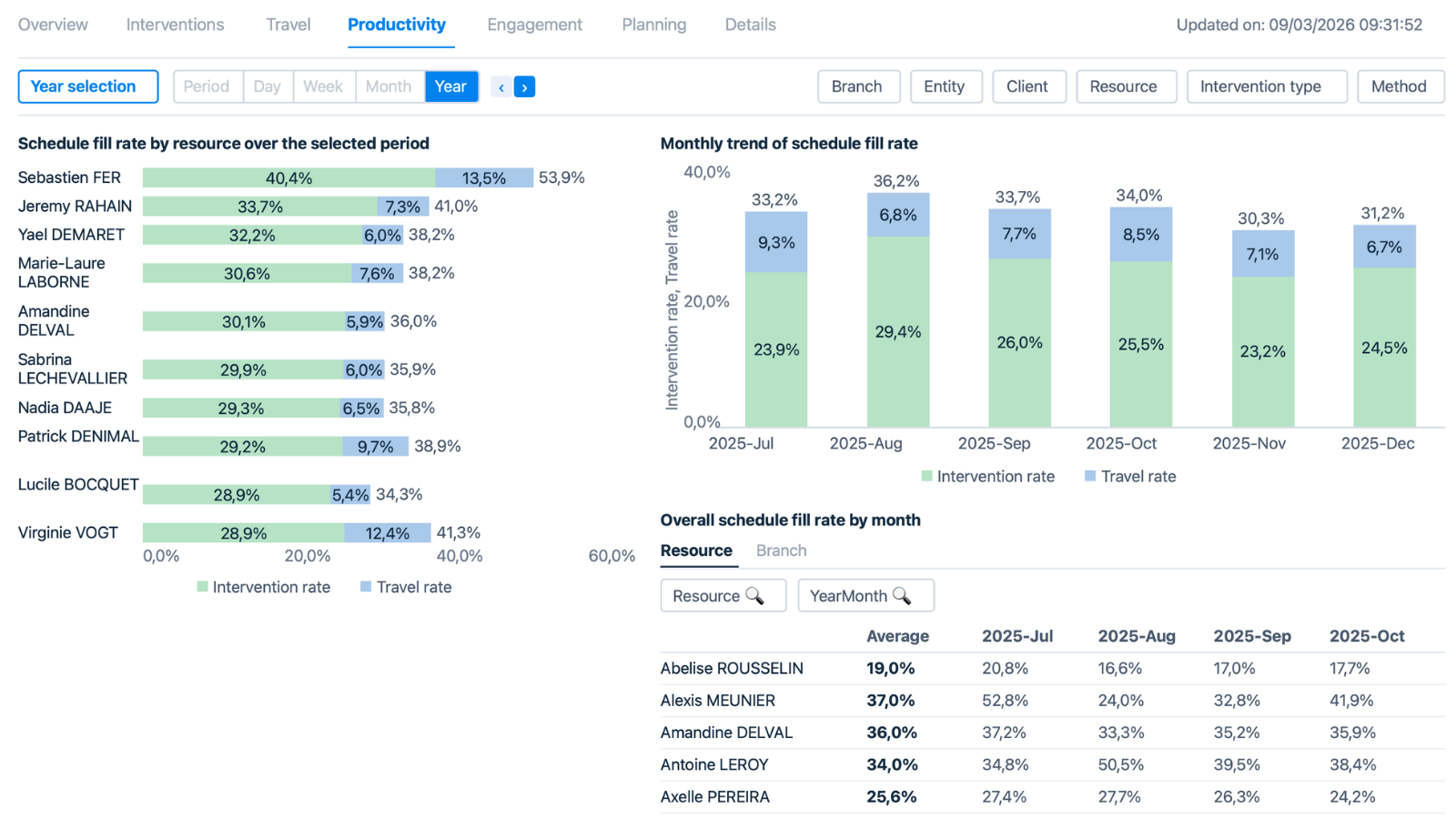
Performance indicators: tracking schedule utilization by technician and its monthly trend (intervention versus travel), with a detailed resource table to manage field productivity over time.
Manual, time-consuming report production
After every intervention, technicians and the back office spend valuable time producing service report documents: formatting, data entry, and sending them to the customer. This repetitive, low-value work consumes resources that could be assigned to operations.
Reports that do not meet customer documentation requirements
Each customer has their own standards: logo, layout, mandatory fields, and delivery format. Without a dedicated tool, teams produce generic reports that do not meet contractual requirements and generate repeated correction requests.
Data-entry errors and missing data
Manual production multiplies the risk of errors: forgotten data, incorrectly transcribed figures, and missing photos. These gaps slow file processing, damage team credibility, and may have contractual or regulatory consequences.
Delivery times for deliverables are too long
When report production depends on human resources, delivery times inevitably lengthen during activity peaks. Some customers wait several days for their end-of-intervention documents, delaying invoicing and warranty approval while harming the customer experience.
Automatic generation when the intervention is closed
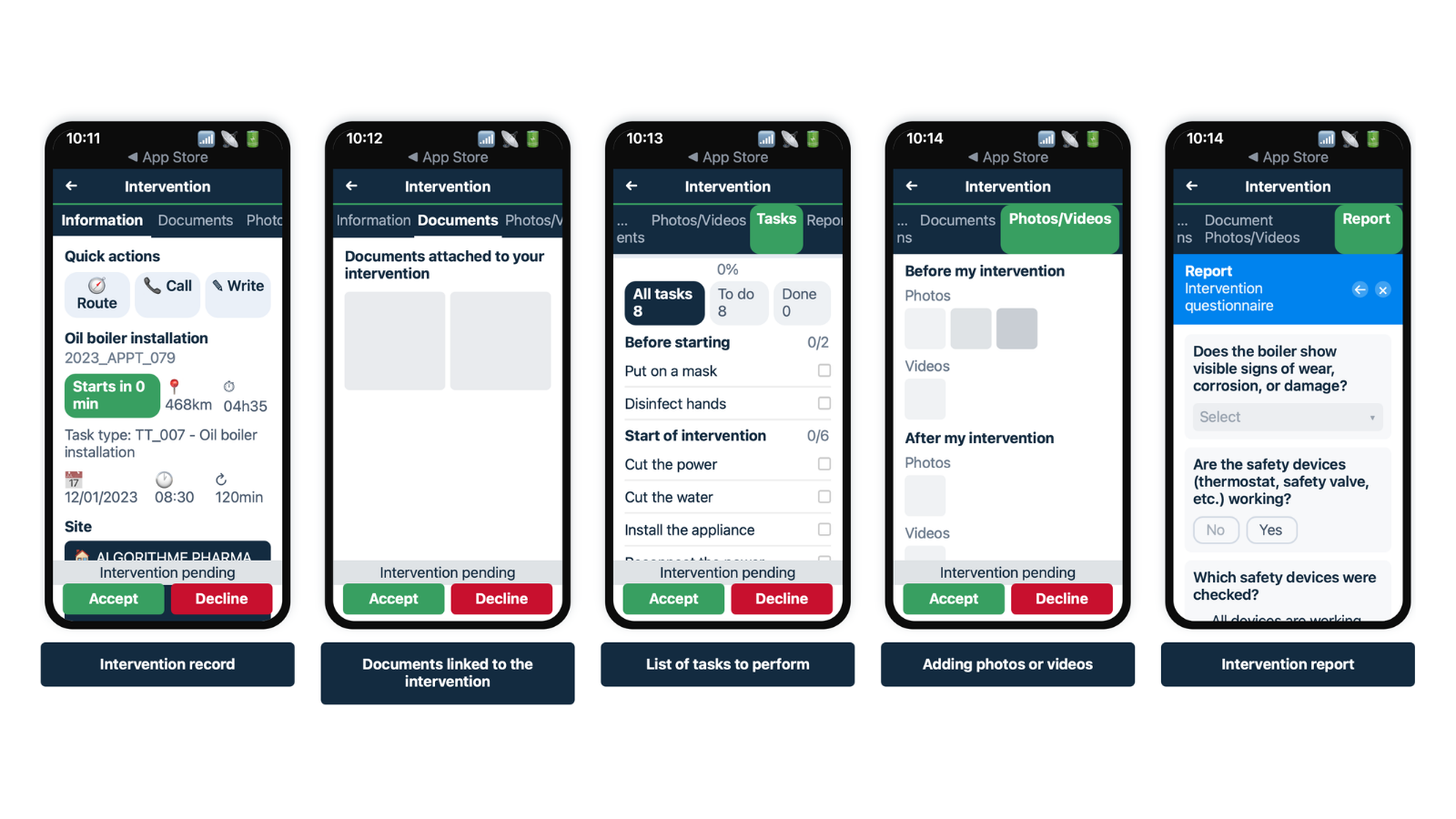
PDF reports are automatically generated from intervention data: customer information, details of completed operations, measurements, photos, signatures, and part references. As soon as the technician closes the intervention, the document is produced without any manual work.
Customization to each customer’s branding and requirements
Reports can be customized to each customer’s branding and documentation requirements. Logo, header, specific fields, and section structure: each template is configured once and automatically applied to all corresponding interventions, without re-entry.
Automatic delivery to the customer and immediate archiving
As soon as it is generated, the report is automatically emailed to the customer or deposited in their dedicated portal. It is simultaneously archived in the company’s document management system, timestamped, and attached to the intervention history. No document is lost or delivered late.
Consolidated activity reports for management
Beyond intervention reports, Nomadia FSM automatically generates periodic activity reports (weekly or monthly) consolidating KPIs by territory, technician, or customer. A turnkey deliverable for performance reviews and contract assessments.
Significant time savings
Full automation of document production frees technicians and the back office from time-consuming, repetitive tasks. The time saved is reinvested in higher-value activities: additional interventions, customer relationships, and continuous improvement.
Reduced manual errors
Data comes directly from the system: no re-entry and no manual transcription. Reports are reliable, complete, and compliant the first time, with no corrections or follow-ups required from the back office.
Stronger professional image
Reports in the company’s branding, automatically sent within minutes of the intervention, reinforce the perception of professionalism and responsiveness. A strong commercial differentiator in tenders and contract renewals.
Improved customer satisfaction
Customers receive their documents immediately, in the format that suits them, without needing to follow up. This smooth process reduces post-intervention friction and sustainably improves NPS and renewal rates.
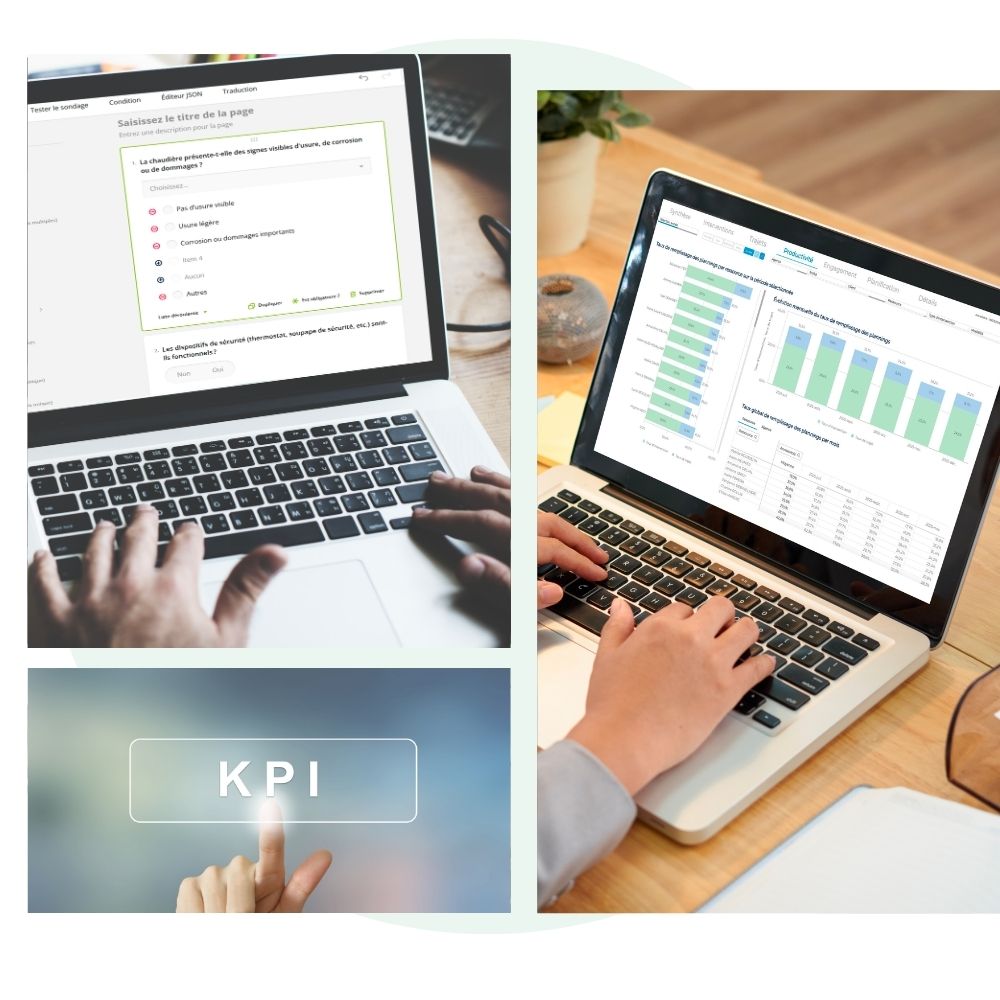
Report editor: the back office lets you build a custom service report questionnaire (single choice, checkboxes, ratings, and more) to standardize field data entry and automatically feed generated reports.
Concrete results,
visible in real time
Our customers gain visibility into their operations from the first few weeks. Here is what they have to say:
- Schedules accessible to everyone in real time, with no re-entry
- Automatically generated service reports for every technician
- Contractual penalties avoided through better SLA tracking
Optimized schedules for every mobile resource are now accessible to everyone in real time, improving customer satisfaction. More time is devoted to customers, and precise reports on technicians’ mobile interventions are generated.
on penalty fees
in real time