To understand the danger with INRS
- 12/12/2023
- 10:32
reading time : 2 min

Content Marketing Manager
Danger is a vital concept in the field of workplace safety. It represents a systematic assessment of risks associated with a specific task or process within a company. In this article, we will delve deep into the meaning of INRS danger and its significance for worker safety.
Tables of Contents

What is INRS?
INRS, or the National Institute for Research and Safety for the Prevention of Occupational Accidents and Diseases, is a French institution dedicated to preventing workplace accidents and occupational diseases. Their mission is to promote health and safety at work by providing essential resources, information, and recommendations to professionals across all sectors, including itinerant workers.
How to define danger?
- What are the different types of dangers?
INRS identifies several types of dangers to which itinerant professionals and other workers may be exposed. It is essential to understand them for better prevention. Among the most common types of dangers are:
- Physical hazards
These include risks associated with machinery, equipment, falls from heights, hazardous chemicals, excessive noise, and more. These hazards can lead to severe injuries or even death if appropriate preventive measures are not in place.
- Biological hazards
They are related to exposure to pathogens such as viruses, bacteria, or molds. Itinerant professionals may be exposed to these hazards in environments such as hospitals, laboratories, or healthcare facilities.
- Chemical hazards
Resulting from exposure to toxic, corrosive, or irritant chemicals. Workers may come into contact with these substances when using cleaning products, industrial chemicals, or other hazardous materials.
- Ergonomic Hazards
These are related to physical constraints in the workplace, such as poor posture, repetitive movements, or lifting heavy loads. Itinerant professionals are particularly susceptible to encountering these hazards due to the varied nature of their tasks.
- Psychosocial Hazards
These encompass workplace stress, harassment, psychological violence, and other factors that can impact the mental and emotional health of workers.
What is the difference between a hazard and a hazardous situation?
It is necessary to distinguish between a “hazard” and a “hazardous situation” for effective workplace safety management.
A “hazard” is a condition or substance intrinsically capable of causing harm, either to the health of workers or to the work environment.
On the other hand, a “hazardous situation” refers to specific circumstances where a worker is exposed to a potential hazard.
For example, a toxic chemical is a “hazard,” but it only becomes a “hazardous situation” when that chemical is stored improperly, mishandled, or in the presence of a worker without adequate protective equipment.
Importance of Understanding INRS Danger
Understanding the INRS definition of danger is crucial for itinerant professionals for several reasons:
- Personal Safety
By understanding INRS recommendations, you can reduce the risk of accidents and illnesses in your workplace, protecting your employees’ health.
- Legal Responsibility
Ignoring INRS guidelines can have serious legal consequences in case of workplace accidents. You are responsible for your teams’ health.
- Process Improvement
Knowledge of INRS recommendations can help you improve your work processes and identify safer methods for task execution.

How to Combat Hazards in the Workplace?
- Risk Assessment: Risk assessment is a fundamental step in understanding and managing hazards in your business. Identify tasks and activities that carry potential risks for itinerant professionals. This may include the use of specific equipment, travel to construction sites or different environments, and interactions with hazardous substances. Once you have identified these risks, you can implement appropriate prevention measures.
- Training and Awareness: Ensure that your itinerant workers are well-trained and informed about potential hazards they may face. They should be aware of safety procedures, the necessary personal protective equipment (PPE), and emergency measures to take in case of an accident.
- Personal Protective Equipment (PPE): Provide your workers with appropriate PPE based on identified risks. This may include helmets, safety glasses, gloves, specific clothing, and any other equipment necessary to minimize risks.
- Communication and Monitoring: Establish an effective communication system so that workers can report potential hazards and incidents. Ensure regular monitoring of safety measures and update them as necessary.
- Safety Culture: Create a culture of safety within your company by encouraging workers to take safety seriously. Reward compliance with safety procedures and ensure that safety is a constant priority.
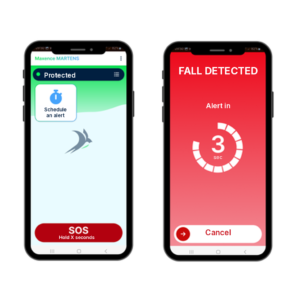
Nomadia supports you in safeguarding your employees with its PTI solutions.
Frequently Asked Questions
FAQ – The Most Frequently Asked Questions About Nomadia
Why Choose Nomadia?
As France’s leading publisher of Smart Mobility SaaS solutions, Nomadia supports more than 175,000 field professionals every day. Our solutions are easy to use, quick to deploy, and deliver significant and immediate return on investment.
Drawing on the expertise of both a software publisher-integrator and a consulting firm, Nomadia’s teams provide tailored support, from data consulting to the deployment of mobile devices. Finally, our technical support team is available 24/7 to assist you.
Who Are Nomadia Solutions Designed For?
Nomadia solutions support the digital transformation of all mobile professionals: field sales representatives, delivery drivers, technicians, auditors, healthcare workers, inspectors, service providers, security patrol officers, experts, and more.
Whether for SMEs or large enterprises, our solutions adapt to businesses of all sizes and across all industries.
How Much Does It Cost?
Nomadia Delivery offers transparent and flexible pricing, which primarily depends on the number of users (for example, planners and dispatchers) rather than a fixed cost per parcel.
Thanks to this model, you can control your delivery costs based on the number of resources (users) involved in route management, providing great flexibility to adjust your subscription according to the size of your fleet and your operational needs.
Is It Compatible with My Current ERP System?
Yes! Nomadia Delivery has been designed to integrate quickly and easily into your existing environment thanks to our powerful and secure APIs. Our solution is compatible with most ERP systems on the market. API integration enables the automatic synchronization of your transport orders, customer orders, and customer information, ensuring smooth and error-free delivery tracking. The solution also offers user-friendly import capabilities with data validation controls, as well as export options in multiple customizable formats.
Is It Suitable for Our Delivery Volume?
Yes, Nomadia Delivery is ideal for companies that manage a high volume of deliveries and want to optimize their routes, create balanced territories for their drivers, and ensure precise tracking of every parcel. Nomadia Delivery adapts to fleets of all sizes!
Can Multiple Warehouses or Depots Be Managed?
Yes, our solution allows you to manage multiple warehouses or depots. It centralizes data and optimizes routes or service operations for each of them.
Is There a Limit to the Number of Stops in Route Optimizations?
No, there is no strict limit to the number of stops in route optimizations. Our solution can handle large volumes of stops and quickly calculate optimized routes.
Project, request for a demonstration or a free trial?