Inside Nomadia: Meeting the Specific Needs of FMCG Sales Forces

reading time : 2 min

Picture of Lucie Monnot
Lucie Monnot

Content Marketing Manager

Patrick Tellouck leads the Nomadia team that supports manufacturers in the fast-moving consumer goods (FMCG) sector with their commercial strategy and the optimization of their sales forces. We revisit with him the challenges facing this sector, its recent developments, and the responses provided by Nomadia’s solutions.

Table of Contents

Inside Nomadia besoins forces ventes PGC

Where does Nomadia's expertise in large-scale retail come from, and what does it cover?

This expertise is rooted in the 30 years of experience developed by the company B&B Market before its integration into the Nomadia group in 2021. It translates concretely into an offering of consulting services and software solutions that enable FMCG manufacturers to optimize the organization and field operations of their sales force within large-scale retail networks (mass-market retail), as well as specialist networks such as hospitality and food service, pharmacies, beauty, DIY, and organic retail.
The dynamics of FMCG and large-scale retail are inseparable: it is precisely because we have a deep knowledge of large-scale retail, its mechanisms, and its developments that we are able to support manufacturers across the various FMCG segments (food and beverage, personal care and beauty, household products, etc.) in defining and executing their commercial strategy.
We intervene upstream — helping National Sales Directors (NSDs) to structure their teams and establish optimal territory allocation, based on their strategic objectives and the potential of stores from different retail chains for their brand(s). Downstream, for effective field execution, a growing number of our manufacturer clients choose to rely on our Nomadia Sales solution (formerly Solvnet) — a CRM specifically designed for FMCG sales forces that takes into account all facets of the area manager (AM) role.

How did the need for a dedicated CRM for FMCG area managers emerge?

Nomadia Sales is both a pragmatic and comprehensive response to the evolution of the area manager role. Over recent decades, what is asked of an area manager on a daily basis has become increasingly complex, with an ever-heavier administrative burden and more and more data to analyze. The role had an urgent need to digitalize so that AMs could spend the maximum amount of time where they generate the most value: in-store, interacting with department managers to defend their shelf space, present innovations, and negotiate their promotions.
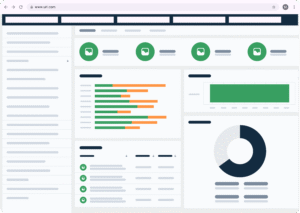
With Nomadia Sales, the AM is able to handle all of their missions within a single piece of software: they find their daily agenda, their KPIs, and sector analyses enabling them to know which stores to visit and in which order to organize their route; their sales book, always up to date — unlike paper versions; their sales arguments; tools that allow them to place point-of-sale display orders directly from the store, carry out shelf surveys by filming the aisle, and complete their visit reports in just a few moments at the end of each appointment. Digitalization accelerates and simplifies processes, enabling the AM to make more value-added visits per day — while also covering fewer kilometers, thanks to route optimization tools. Only software that integrates all of these processes, all of this business logic, and the specificities of large-scale retail in different countries enables today’s area managers to achieve their objectives without spending their evenings and weekends preparing visits, carrying out analyses, and writing up reports. This is what differentiates Nomadia Sales from generic CRM/SFA tools.

You mention the specificities of large-scale retail in different countries. Could you give us some examples?

Taking the French market as an example, it has two specificities compared to most European countries. The first concerns the weight of independent and franchised stores, with chains such as Super U, Leclerc, Intermarché, and increasingly Carrefour — two thirds of whose supermarkets and one third of whose hypermarkets are now franchised. Unlike integrated networks such as Auchan or Casino group chains, these independents have considerable latitude in their choice of product assortments, with a much more local approach centered on the characteristics of demand in their catchment area. To ensure strong product presence and visibility among independents, the area manager must visit them frequently, develop a relationship of trust with the owner of each store and with department managers.

Force de Vente GMS Transformer les données en actions et gagner en influence

A second specificity concerns commercial negotiations between manufacturers and large-scale retailers. In France, these negotiations are annual and traditionally take place between 1 December and 1 March, whereas in other countries they are more frequent — or even ongoing — allowing prices to be readjusted throughout the year in line with changes in production costs. In the current inflationary context, French retailers requested and obtained an earlier start to negotiations. Closing them by 31 December 2023 will enable the price reductions that manufacturers have benefited from over several months on agricultural raw materials and packaging products to be passed on to in-store prices more quickly.
 
The international companies we work with choose our sales force CRM because it is capable of taking into account the specificities that have a direct influence on how operations are managed and how sales force activity is organized in the field in each country. They can thus rely on the same CRM in all countries and have a global overview while adapting their strategy to each market.

Staying on the French market, what are the most notable recent developments in large-scale retail? What impact does this have on sales forces?

What made headlines in July 2023 was Carrefour’s acquisition of the 60 Cora hypermarkets and 115 Match supermarkets — two chains particularly well established in the north and east of France. At a national level, this means we now have two champions, Carrefour and Leclerc, who together account for almost 45% of the market. Beyond this latest stage of consolidation, there is also all the news surrounding the Casino group, which is in the process of being acquired by billionaire D. Kretinsky and his partners Fimalac and Attestor. While awaiting the finalization of this acquisition and confirmation of the investments that will condition the group’s revival, the transfer by Casino of 61 of its points of sale to Intermarché was officially confirmed in early October. The ongoing transfer of these points of sale to Intermarché, which will continue into 2024, will significantly alter visit plans, as there will be more actions to carry out in an Intermarché than in an integrated Casino or Géant store. The market teaches us that we must continuously adapt our territory allocation to keep it optimal and delivering maximum value. Finally, it is worth highlighting the progress of Lidl with its “soft discount” strategy, and Aldi in “hard discount.” Both chains continue to densify their networks and, due to inflation, are recording strong results. The impact on FMCG sales forces is zero, since they do not visit these stores where everything is negotiated and locked in at headquarters level. However, a growing number of companies are integrating drive-through stores (Leclerc in particular) into their area managers’ portfolios.

What is the overall brand dynamic and how is the in-store offering evolving?

One of the standout features of the last decade is the proliferation and rise of SMEs and “small brands” in large-scale retail. They are gaining ground thanks to innovative products and/or a differentiating positioning (local, ethical, eco-responsible, etc.) that resonates positively with consumers. The beer aisle is a prime example: craft and local beers are riding a wave of popularity and are establishing themselves on shelves alongside the sector’s giants. For example, the Britt brewery — with which we work — has taken a share of the beer market in Brittany against the global giants of the industry. These SMEs must take a highly strategic approach to the market due to the generally smaller size of their sales force. We are fortunate to accompany them and help them focus on the most promising points of sale for their brands. This involves territory allocation work, an in-depth sociodemographic study of catchment areas, and the development of action plans specifying visit frequencies for each target store.
Persistent inflation is changing the game for SMEs and large groups alike. What we have been observing in-store for the past 18 months is the strong growth of private label products (PLPs). Consumers are switching from national brands to PLPs on purchasing power grounds. As demand moves in this direction, retailers are allocating more shelf space to PLPs, which intensifies the battle among national brands to maintain a significant presence. To achieve this, the frequency and relevance of area manager visits is decisive, as is the support they can provide to the retailer in execution tasks.

Has the sales promoter function become widespread? What tools does Nomadia offer them?
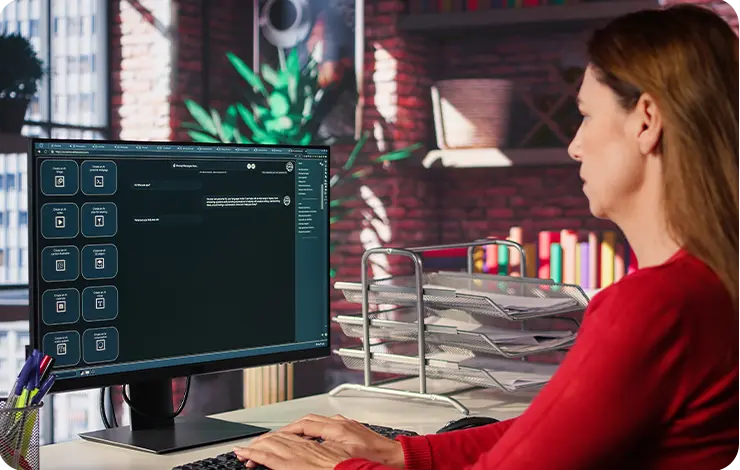
The AM-sales promoter duo is an increasingly established trend that is indeed becoming widespread in large groups. The sales promoter generally takes charge of all execution tasks — including all the product handling involved in setting up promotions, stocking shelves and end-of-aisle displays. Since they go into the stockroom, they are extremely well placed to detect and prevent the risk of stockouts — knowing that a stockout represents a revenue loss of 5% to 6%. In a market where sales volumes are declining, this can quickly become catastrophic. Nomadia Sales is designed to be used by both area managers and sales promoters. Working within the same tool facilitates coordination between the AM and their sales promoter, as well as the transmission and sharing of information. The sales promoter knows exactly what they need to do in each store based on what has been negotiated by their AM, and they can report on their actions and flag any potential issues without resorting to external tools.
 
What is important to understand is that Nomadia Sales is designed to meet the needs of all stakeholders: area managers and sales promoters of course, but also National Sales Directors and Regional Sales Managers, who need visibility over figures and field realities in order to propose realistic approaches and objectives.
Femme en pull rouge consultant une interface logicielle sombre avec icônes de modules sur grand écran dans un bureau lumineux

What recommendation would you make to a National Sales Director looking to improve their sales force performance?

I would advise them to start with a serious piece of work on territory allocation, in order to build on solid foundations. Large companies and SMEs alike still have too great a tendency not to regularly revisit and improve their territory allocation. Yet over time, a territory allocation loses its relevance. Changes in strategic priorities, the integration of new product lines and brands, changes in headcount and store portfolios all result in imbalances between the sectors assigned to each area manager. These imbalances — whether in terms of number of stores, revenue potential, or geographic dispersion — are a major source of dissatisfaction among sales representatives and an obstacle to achieving objectives. Defining balanced commercial territories and equitable portfolios is a prerequisite that enables teams to make full use of the tools we offer to optimize the organization of their work — from the preparation of visits to their execution — while giving full importance to the quality of relationships with their contacts in each point of sale, all without ever losing sight of their objectives. Thanks to today’s tools and the deep understanding we have of the professional imperatives of area managers and the developments in large-scale retail, we offer our manufacturer clients a dynamic approach to territory allocation that at all times guarantees optimal alignment between sales force headcount, company objectives, and current market realities. It is fair to say that this is a significant asset in the current context!

Frequently Asked Questions

FAQ – The Most Frequently Asked Questions About Nomadia

Why Choose Nomadia?

As France’s leading publisher of Smart Mobility SaaS solutions, Nomadia supports more than 175,000 field professionals every day. Our solutions are easy to use, quick to deploy, and deliver significant and immediate return on investment.

Drawing on the expertise of both a software publisher-integrator and a consulting firm, Nomadia’s teams provide tailored support, from data consulting to the deployment of mobile devices. Finally, our technical support team is available 24/7 to assist you.

Who Are Nomadia Solutions Designed For?

Nomadia solutions support the digital transformation of all mobile professionals: field sales representatives, delivery drivers, technicians, auditors, healthcare workers, inspectors, service providers, security patrol officers, experts, and more.

Whether for SMEs or large enterprises, our solutions adapt to businesses of all sizes and across all industries.

How Much Does It Cost?

Nomadia Delivery offers transparent and flexible pricing, which primarily depends on the number of users (for example, planners and dispatchers) rather than a fixed cost per parcel.

Thanks to this model, you can control your delivery costs based on the number of resources (users) involved in route management, providing great flexibility to adjust your subscription according to the size of your fleet and your operational needs.

Is It Compatible with My Current ERP System?

Yes! Nomadia Delivery has been designed to integrate quickly and easily into your existing environment thanks to our powerful and secure APIs. Our solution is compatible with most ERP systems on the market. API integration enables the automatic synchronization of your transport orders, customer orders, and customer information, ensuring smooth and error-free delivery tracking. The solution also offers user-friendly import capabilities with data validation controls, as well as export options in multiple customizable formats.

Is It Suitable for Our Delivery Volume?

Yes, Nomadia Delivery is ideal for companies that manage a high volume of deliveries and want to optimize their routes, create balanced territories for their drivers, and ensure precise tracking of every parcel. Nomadia Delivery adapts to fleets of all sizes!

Can Multiple Warehouses or Depots Be Managed?

Yes, our solution allows you to manage multiple warehouses or depots. It centralizes data and optimizes routes or service operations for each of them.

Is There a Limit to the Number of Stops in Route Optimizations?

No, there is no strict limit to the number of stops in route optimizations. Our solution can handle large volumes of stops and quickly calculate optimized routes.


nomadia logo

Geoconcept becomes Nomadia

Geoconcept brands are officially
evolving into Nomadia

nomadia logo

TourSolver becomes
Nomadia TourSolver