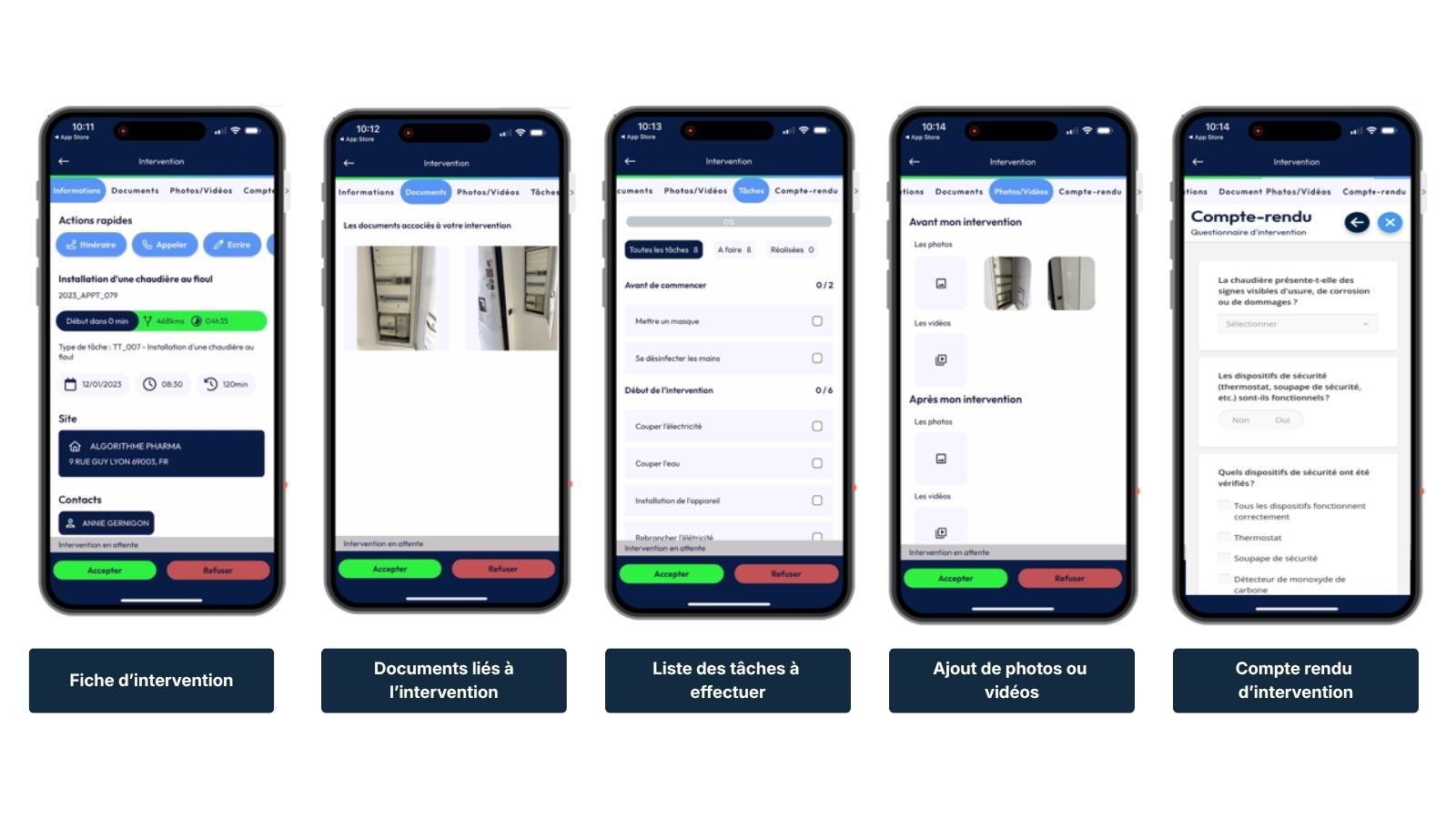

The field service management market is going through a strange phase: every vendor is announcing AI, and most are showing the same thing: a conversational assistant perched on top of a scheduling tool that hasn't changed underneath. At Nomadia Field Service Management, we took the opposite path. That path has a name: the Field Service Management AI module, the major new release of our solution, launched in October 2026. This article explains what's inside, and why it genuinely changes the way your jobs get done.
Contents
- What is "AI by design" field service management software?
- Why AI is arriving in field service management now
- Computed, not generated
- Agents that talk to the engine, not to your database
- Five modules, one mechanism
- What it changes, role by role
- Frugal AI, by conviction and by design
- How to assess a vendor that claims to do AI
- FAQ
What is "AI by design" field service management software?
An "AI by design" FSM solution is one where the artificial intelligence is wired into the heart of the system (the optimisation engine) rather than layered on top. In practice, when an AI agent proposes an appointment slot, reschedules a route or assigns a technician, it isn't guessing. It queries an engine that arbitrates more than 200 native business constraints (certifications, contractual windows, vehicle capacities, statutory breaks, service commitments) and that has been running in production for thirty years, serving 200,000 users in 95 countries.
The difference fits in one sentence: the result is computed and reproducible, not generated.
Why AI is arriving in field service management now
Three forces are converging. Technology first: voice recognition and image analysis have finally reached the reliability that production use demands: dirty hands, noisy environments, patchy network coverage. Economics next: the technician shortage makes every minute more expensive, and operations leaders are looking for gains that don't depend on recruitment. Regulation last: the EU AI Act requires explainability, which disqualifies black boxes and mechanically favours architectures built on explicit rules.
In other words: the timing is ideal for vendors that have an engine, and uncomfortable for those that only have a model.
Computed, not generated
Nobody should hand a job schedule to a language model. An LLM produces a plausible answer; an optimisation engine produces an optimal one, under constraints, that can be demonstrated. Our routes are built by a deterministic engine, fed by predictive models that learn from your history, such as the actual duration of a job for a given piece of equipment and context. Generative AI steps in exactly where it is irreplaceable: understanding a voice, a photo, a sentence.
"The day a vendor offers to replace a constraint-based optimiser with a language model, ask them one question: how do you prove the schedule respects my rules?"
Laurent Pichon, CTO, Nomadia
Agents that talk to the engine, not to your database
Our AI agents connect to the engine through MCP (Model Context Protocol) connectors. They never access your data directly: they call authorised application functions, within the permissions of the signed-in user. Your existing access rights apply, and every figure displayed comes from the computation, never from the model. That is what makes the system auditable: an engine built on named rules can say exactly which constraints produced an assignment, which is what the EU AI Act will require of any automated scheduling by December 2027.
Five modules, one mechanism
This architecture powers five modules, each born from a pain point we kept seeing at our customers:
- Smart Reporting: the service report is dictated, cleans itself up and reaches the customer ready to send.
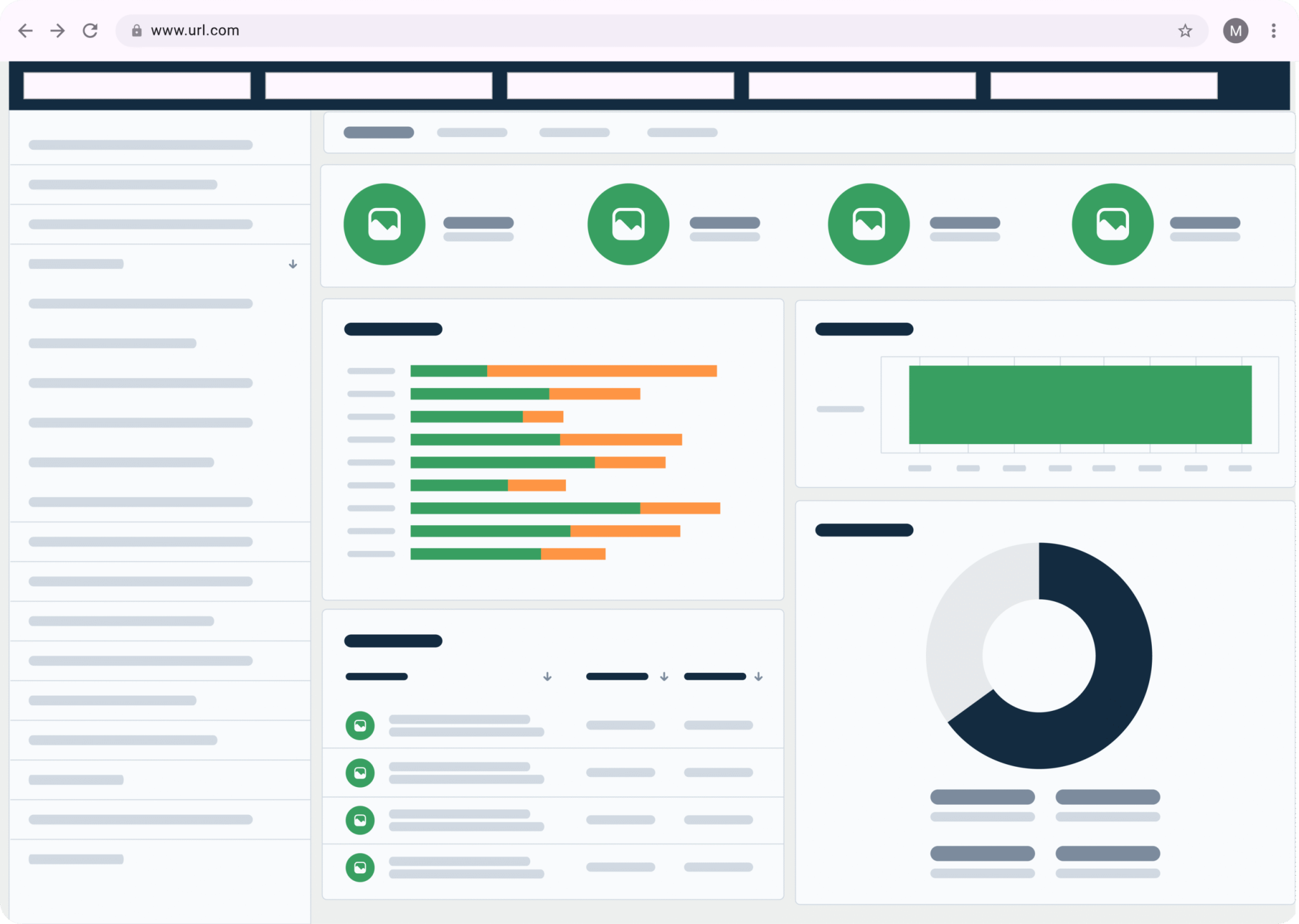
- Smart Control: managers query their operations in natural language, on today's data, and act within the minute.
- Smart Ticketing: a photographed issue report is qualified, prioritised and dispatched without manual triage, with proof of resolution attached.
- Smart Booking: customers book their own appointments 24/7, on slots that work for the route.
- Strategic Planning: the jobs from an upcoming contract are fed into the engine, which returns the capacity, skills and recruitment required.
Key concept: Computation vs generation
A language model produces a plausible answer; an optimisation engine produces an optimal answer under constraints, reproducible and demonstrable. The first is fit for conversation, the second for decisions. AI by design means never confusing the two.
What it changes, role by role
AI in field service doesn't transform "a business" in the abstract: it changes specific people's working days.
- Technicians stop re-keying data: they dictate their service report, photograph the fault and leave with a recommendation.
- Assistants stop rewriting reports: they check and send, the same day.
- Planners stop triaging issue reports: they handle the exceptions the engine escalates to them.
- Managers stop waiting for the BI extract: they ask the question and act in the same conversation.
- Leadership stops costing contracts by gut feel: they simulate the contract on real data before signing.
- End customers stop queueing on the phone: they book at any hour, on a slot that works for the route.
Frugal AI, by conviction and by design
Nomadia is a mission-driven company, and that applies to our AI too: we use the lightest model that does the job. A deterministic engine consumes a fraction of the energy of a large generative model, and the biggest carbon lever remains optimisation itself, which takes kilometres off our customers' routes every single day. Your data, meanwhile, stays in your own Nomadia environment, hosted in the European Union and ISO 27001 certified.
How to assess a vendor that claims to do AI
Five questions asked during pre-sales are enough to sort the field:
- How many business constraints does your engine arbitrate: native, or to be developed during the project?
- How long has it been running in production, and at how many customers?
- Do your AI agents access my database, or do they call authorised functions within my users' permissions?
- Can you explain, constraint by constraint, why this technician was assigned to this job?
- Where does my data reside, and are your models trained on anonymised datasets?
Because AI-washing has a cost: a project chosen on the strength of a demo and regretted in production. Our answer lies in our track record: cited in the Gartner® Market Guide for Field Service Management (July 2026), the solution orchestrates the daily jobs of more than 200,000 professionals. And the best way to check hasn't changed: come with your ten hardest scheduling rules.
Your ten hardest scheduling rules against our engine?
Book a demo with a Nomadia expertFAQ
What are the use cases for AI in field service management?
Is Nomadia's AI compliant with GDPR and the EU AI Act?
Do the AI modules require an integration project?
What is the best AI-powered field service management software?
How much does AI cost in Nomadia Field Service Management?
Will AI replace planners and back-office teams?
Read our latest articles: